LobeHub Alternatives: 5 Chat and Agent Workspaces Compared (Nov 2026)
LobeHub is an agent workspace for web, desktop and your own server, under its own licence. Five alternatives by licence and setup, checked 16 Nov 2026.
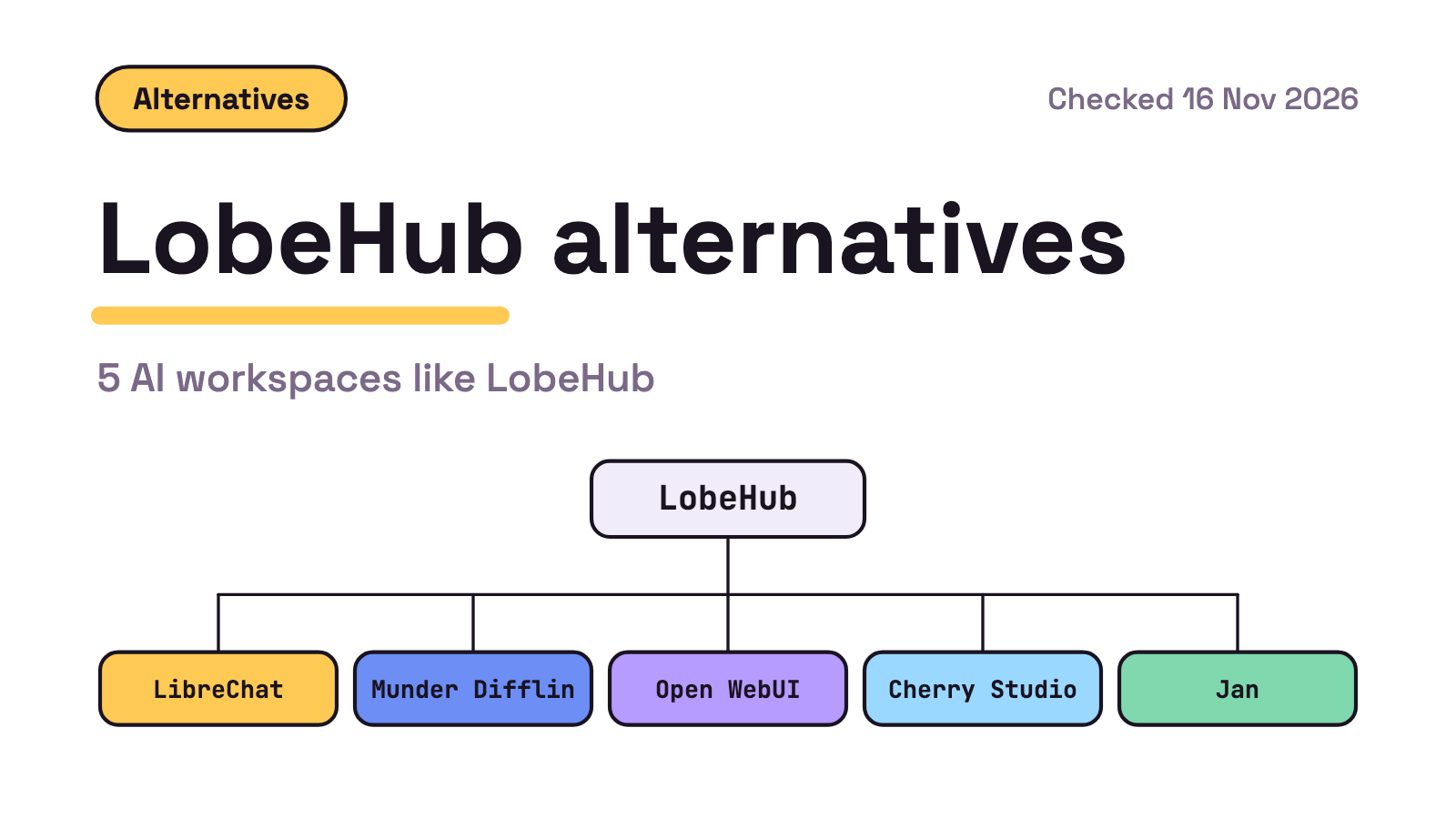
Our view: LibreChat is the closest LobeHub alternative, because it is also a self hosted chat and agent workspace with MCP, skills and many model providers, under the MIT licence. LobeHub stays a strong pick if its licence terms fit your plans. Checked 16 Nov 2026.
We make Munder Difflin, which is free and open source: a desktop app that runs a team of AI agents for all kinds of knowledge work, coding included, on your own computer. More lists sit in the Comparisons hub and OmniAgent alternatives.
What is LobeHub?
LobeHub is a workspace where AI agents join your team’s chats and take on work. Its README, read 16 Nov 2026, calls it “Super-Agents on Your Team” and says: “Add super-agents to the chats your team already uses.” It lists a marketplace of agents, MCP servers and skills, and setup guides for “40+ providers, inference platforms and local models”.
The licence file still calls the project LobeChat, and the old lobehub/lobe-chat repo address now leads to lobehub/lobehub.
How does LobeHub run?
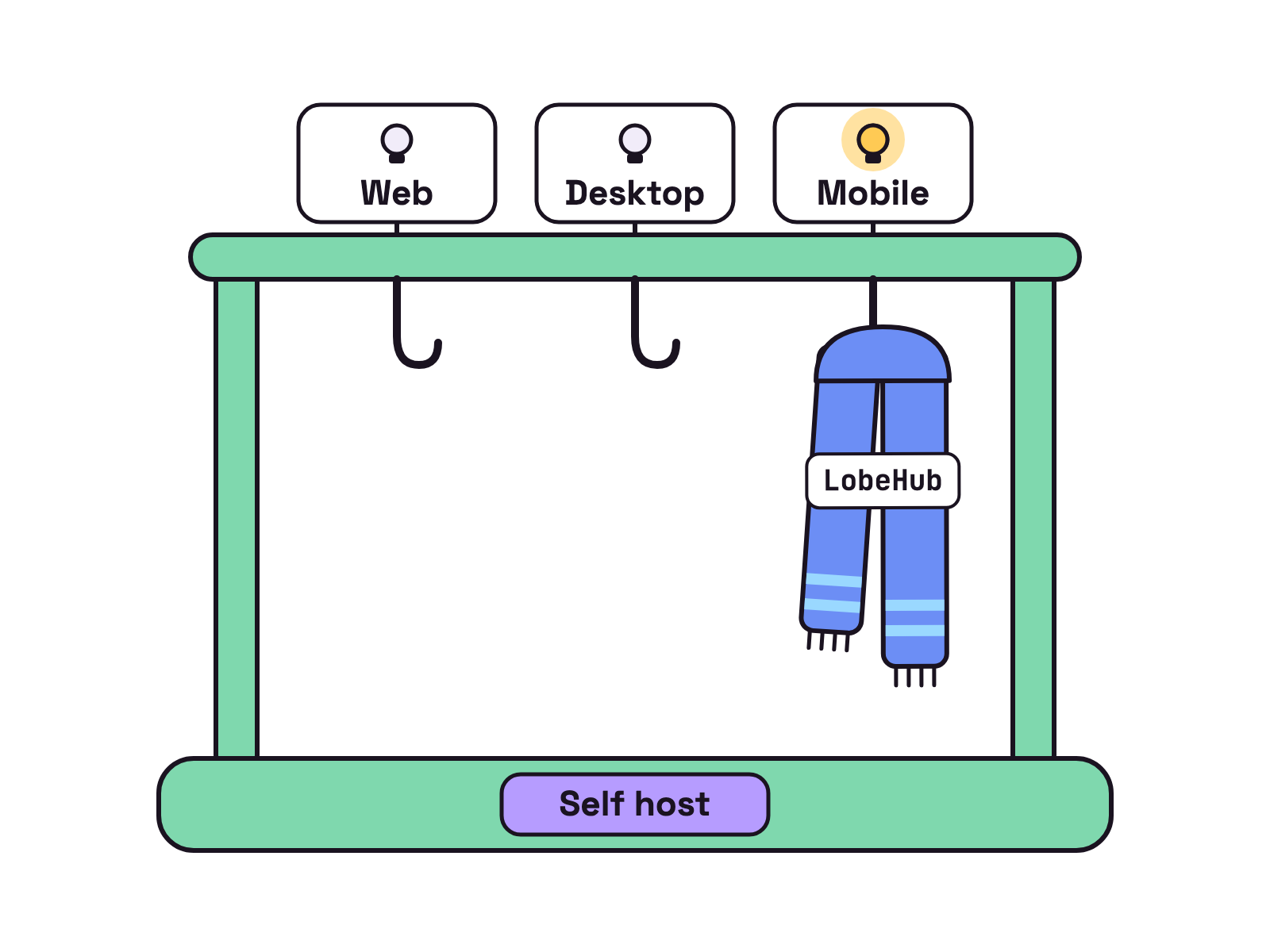
LobeHub runs in the browser, as an app, or on your own server. Its getting started doc says “You can use LobeHub on the web, desktop, and mobile”, with builds for macOS, Windows, Linux, iOS and Android, and warns: “Desktop does not mean fully offline.” To self host, the README’s Docker Compose setup “Starts LobeHub with PostgreSQL, Redis, RustFS file storage, SearXNG search and the agent gateway.”
Is LobeHub open source?
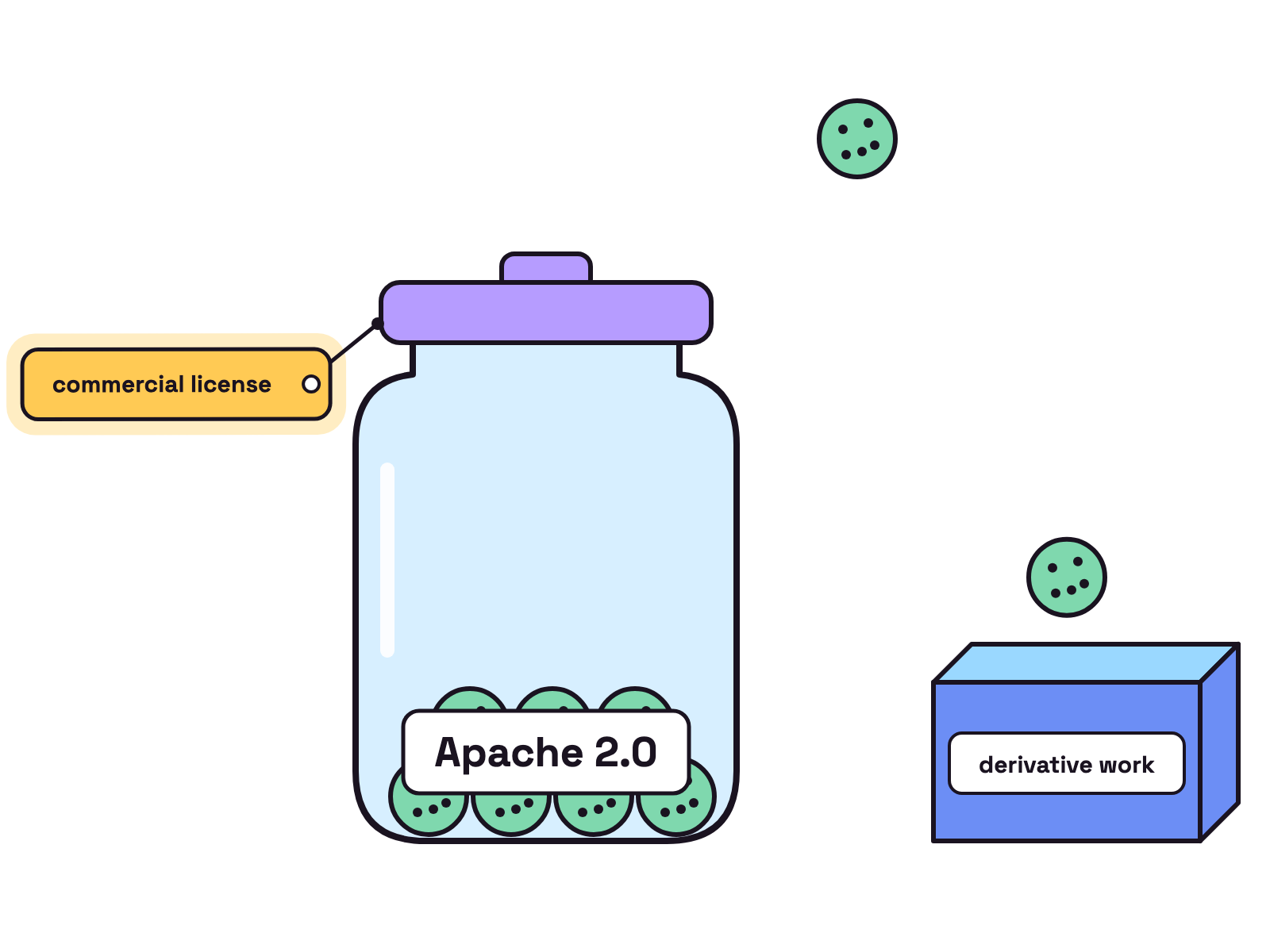
Its code is public under the LobeHub Community License, which is “based on Apache License 2.0 with the following additional conditions”. Commercial use “without modifying the source code” is allowed, but “a commercial license must be obtained from the producer if you want to develop and distribute a derivative work based on LobeChat.” Contributors agree that “The producer can adjust the open-source agreement to be more strict or relaxed as deemed necessary.”
The repo had 85,632 stars on 16 Nov 2026, and v2.3.3 came out on 12 Nov 2026.
Why look for a LobeHub alternative?
Our view: the licence and the setup are the two reasons with a source behind them. Distributing a derivative work of the code needs a commercial licence first. Hosting it yourself means a database, Redis, file storage and search, and the README says “LobeHub is currently under active development”. If neither applies, keep it: switching tools to fix a problem you do not have is a hobby, not a plan.
What are the best LobeHub alternatives?
Five tools, as of 16 Nov 2026, each with a release or commit in the previous 30 days.
| Tool | What it is | Runs | Licence | Last release or commit |
|---|---|---|---|---|
| LibreChat | Self hosted chat with agents | Your server | MIT | Commit, 16 Nov 2026 |
| Munder Difflin | A team of AI agents for knowledge work | Desktop app; Cloud Office | MIT | Commit, 16 Nov 2026 |
| Open WebUI | Self hosted AI platform | Server or desktop app | Open WebUI License | v0.13.3, 8 Nov 2026 |
| Cherry Studio | Desktop AI workstation | Desktop; mobile | AGPL-3.0 | v2.2.2, 13 Nov 2026 |
| Jan | Offline chat app | Desktop | Apache 2.0 | v0.8.8, 28 Oct 2026 |
AionUi has its own AionUi alternatives page.
1. LibreChat: the closest match to LobeHub
LibreChat is a self hosted chat platform with agents, and we think the nearest match to LobeHub’s model. Its README, read 16 Nov 2026, says it “unifies all major AI providers in a single, privacy-focused interface” and lists an “Agent Marketplace”, MCP servers, skills and subagents. The MIT repo now lives at LibreChat-AI/LibreChat. We think it suits a team that wants one shared chat over many models.
2. Munder Difflin: a team of agents on your computer or in the cloud
Munder Difflin runs a team of AI agents for you, on your computer or in the Cloud Office. Its README, read 16 Nov 2026, describes “a self-coordinating team: each agent gets long-term memory, a mailbox, and a desk on a 2D office floor”. Agents run on engines such as Claude Code, Codex and Gemini CLI, with MCP servers, skills and plugins, and take work from Slack or a webhook. The Cloud Office keeps your agents in the cloud, always on, so work goes on with your computer off. The README adds: “The source code is licensed under the MIT License.” We think it suits research, writing, ops and code side by side. Setup is in how to install and use Munder Difflin.
3. Open WebUI: self hosted and built to run offline
Open WebUI is a self hosted AI platform that also works with no internet. Its README, read 16 Nov 2026, calls it “a home for AI: an extensible, easy-to-use, self-hosted platform built to run entirely offline”, for Ollama or “OpenAI-compatible APIs”. Its licence bars changing the branding unless end users do “not exceed fifty (50) within any rolling thirty (30) day period”, or you have written permission or an enterprise licence. We think it suits a group running local models on one server.
4. Cherry Studio: a desktop workstation with agents
Cherry Studio is a desktop app for chat, agents and knowledge bases. Its README, read 16 Nov 2026, calls it “an AI workstation for Windows, macOS, and Linux” and lists agents with skills, MCP servers and scheduled tasks, plus mobile apps for iOS and Android. The licence is AGPL-3.0, and commercial use is “permitted, subject to full compliance with the terms and conditions of the AGPL-3.0 license.” We think it suits one person who wants agents on the desktop without a server.
5. Jan: private chat with local models
Jan is a desktop chat app that runs models on your own computer. Its repo, read 16 Nov 2026, calls it “an open source alternative to ChatGPT that runs 100% offline on your computer”. It also connects to cloud models and supports MCP. The licence is Apache 2.0, and “Attribution is requested in user-facing documentation and materials, where appropriate.” We think it suits private chat on one machine more than team agents.
How to choose
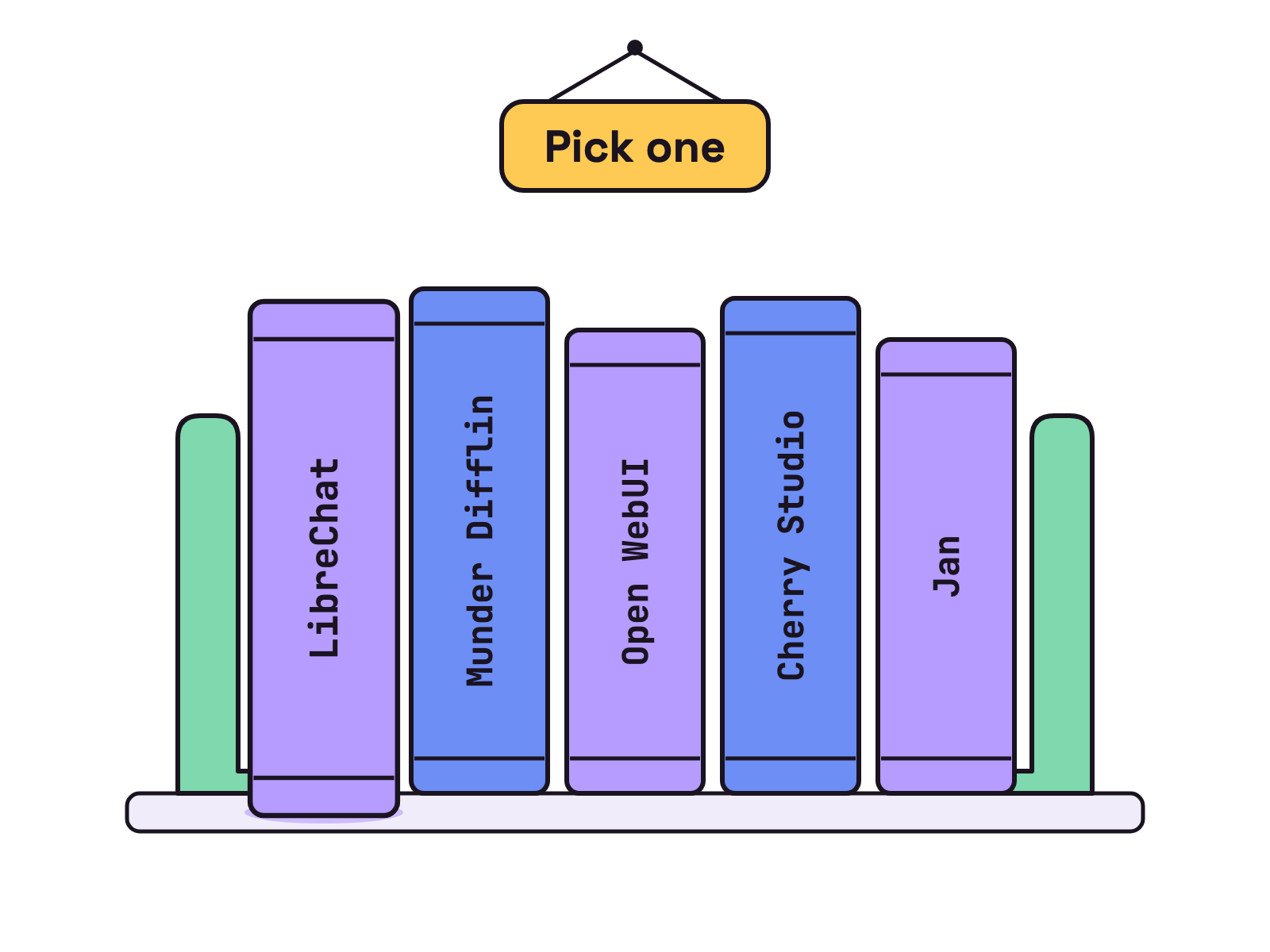
Pick one by where the work runs and who shares it. Our view:
- LibreChat for one self hosted team chat with agents.
- Munder Difflin for a team of AI agents for all kinds of knowledge work, on your computer or in the Cloud Office.
- Open WebUI for local models on your own server.
- Cherry Studio for a desktop app with agents and no server.
- Jan for offline chat on one computer.
- LobeHub if its licence fits and you want web, desktop and mobile in one account.
More picks by job sit in open source AI agents.
FAQ
What is LobeHub?
Its README, read 16 Nov 2026, calls it "Super-Agents on Your Team" and says "Add super-agents to the chats your team already uses." Its docs say you can use it on the web, desktop and mobile, and the README covers hosting it yourself with Docker Compose.
Is LobeHub open source?
Its code is public on GitHub under the LobeHub Community License, which the licence file says is "based on Apache License 2.0 with the following additional conditions". One of them: "a commercial license must be obtained from the producer if you want to develop and distribute a derivative work based on LobeChat."
Is LobeChat the same as LobeHub?
The licence file in the lobehub/lobehub repo still names the project LobeChat, and on 16 Nov 2026 the old lobehub/lobe-chat repo address led to lobehub/lobehub. The README's text calls it LobeHub.
What is the closest LobeHub alternative?
Our view: LibreChat. Its README, read 16 Nov 2026, lists agents, an agent marketplace, MCP servers and skills over many model providers, and the repo is MIT. Munder Difflin is the pick for a team of AI agents for all kinds of knowledge work, on your computer or in the Cloud Office.
Which LobeHub alternative works offline?
Jan's repo, read 16 Nov 2026, describes it as "an open source alternative to ChatGPT that runs 100% offline on your computer". Open WebUI's README calls it a platform "built to run entirely offline".