GTA 6 Clipping Farm: How to Run One With a Team of AI Agents
An honest GTA 6 clipping farm: a few real accounts, paid clipping campaigns, Rockstar's video rules, and AI agents that cut, caption and track.
A GTA 6 clipping farm is worth running only as a few honest accounts posting clips for paid campaigns, with agents doing the prep and you approving every clip. Payouts depend on views, campaign budgets and approval, and can be zero. Checked 16 Nov 2026.
Grand Theft Auto VI launches on November 19 on PlayStation 5 and Xbox Series X|S, per Rockstar’s Newswire. You can do the cutting, captions and tracking by hand, or use Munder Difflin, free and open source: a desktop app that runs a team of AI agents for all kinds of knowledge work, coding included, on your own computer.
What is a clipping farm?
Here, a clipping farm is a few real short video accounts, each with a clear niche, posting clips for paid clipping campaigns. It is not fake accounts, bots or bought views. YouTube’s fake engagement policy says it “doesn’t allow anything that artificially increases the number of views, likes, comments, or other metrics either by using automatic systems or serving up videos to unsuspecting viewers”, and views are exactly what a campaign pays for.
The campaigns come from creators and brands. Whop’s Content Rewards docs, read 16 Nov 2026, describe clipping this way: “Creators turn your existing long-form content (podcasts, livestreams, webinars) into short clips for TikTok, YouTube Shorts, X, and Instagram Reels.” The owner sets “how much you will pay per 1,000 views and your campaign budget”, writes requirements, and reviews each submission, “approving the ones that do and rejecting the ones that don’t”. After approval, Whop “automatically pays the content creator based on the number of views they got.”
For GTA 6, the source is a creator’s or brand’s own video of the game, so two rulebooks apply: the campaign’s and Rockstar’s. For every other way to earn from the launch, see our guide to making money with GTA 6, or GTA 6 channel ideas.
Which GTA 6 clips are safe to post?
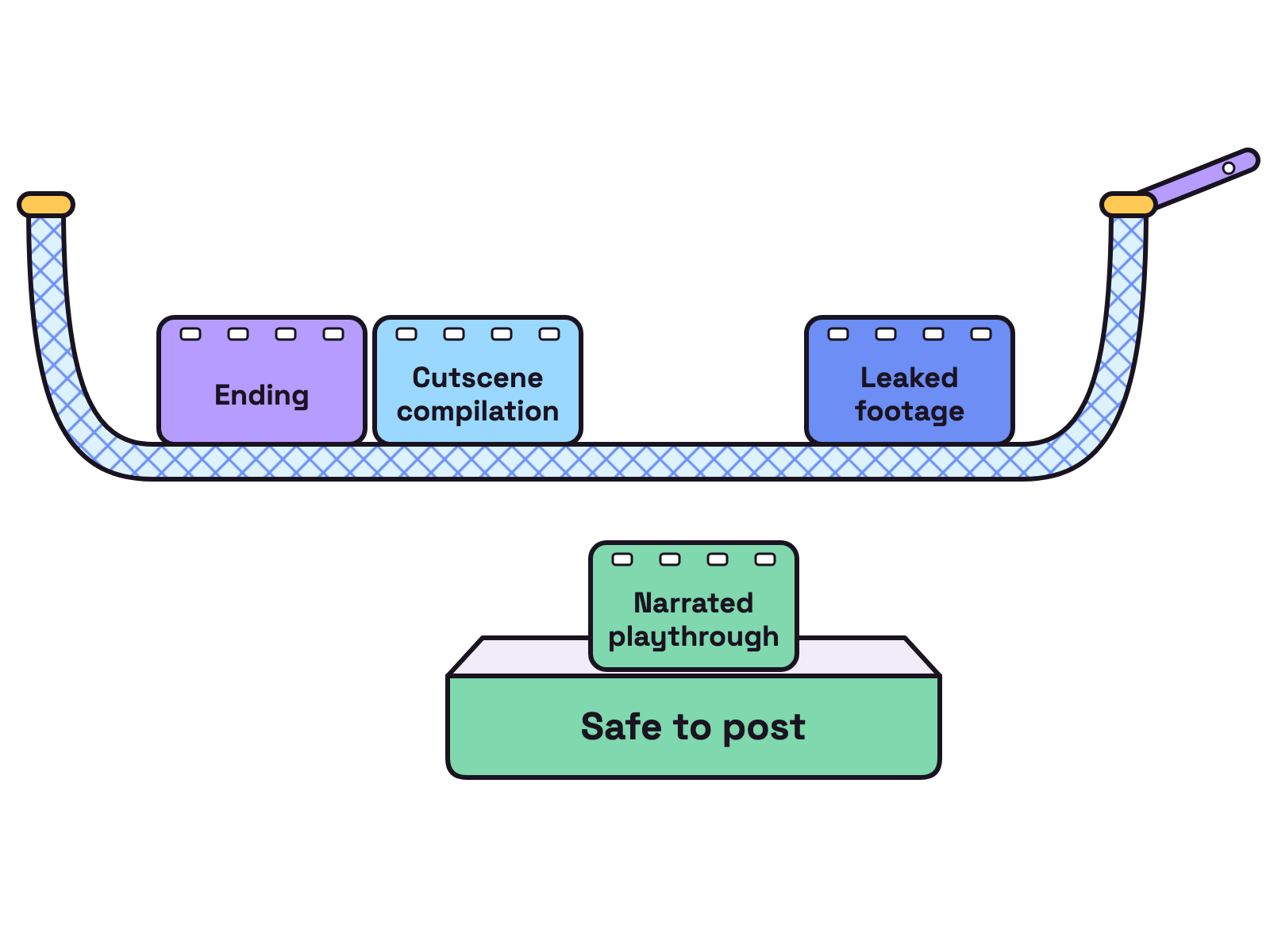
Gameplay moments with context are the safest; endings and cutscene edits are not. tbreak reports (4 Nov 2026, updated 8 Nov) that Rockstar’s video policy, last updated January 2025, applies to GTA 6. Per tbreak and Metro (4 Nov 2026), Rockstar removes:
- endings, edited cutscene and dialogue compilations, and other big story reveals
- isolated cinematics
- footage from before release, including leaked clips and early unboxing videos
- in game TV shows or comedy performances shown on their own (Metro)
Cutscenes inside a longer playthrough and narrated Let’s Play videos are allowed. tbreak also reports that the policy page frames the permission to upload “around non-commercial use”, and, citing Prepublish’s reading, that Rockstar can take material down “at any time”. A paid campaign is commercial, so read Rockstar’s policy page yourself before you earn from footage, then the campaign’s own terms. This is not legal advice.
Our view: a short clip of a cutscene is an isolated cinematic, even if the stream it came from was a full playthrough. Leave the story out entirely. No ending, no twist, no plot in a title.
The agent team
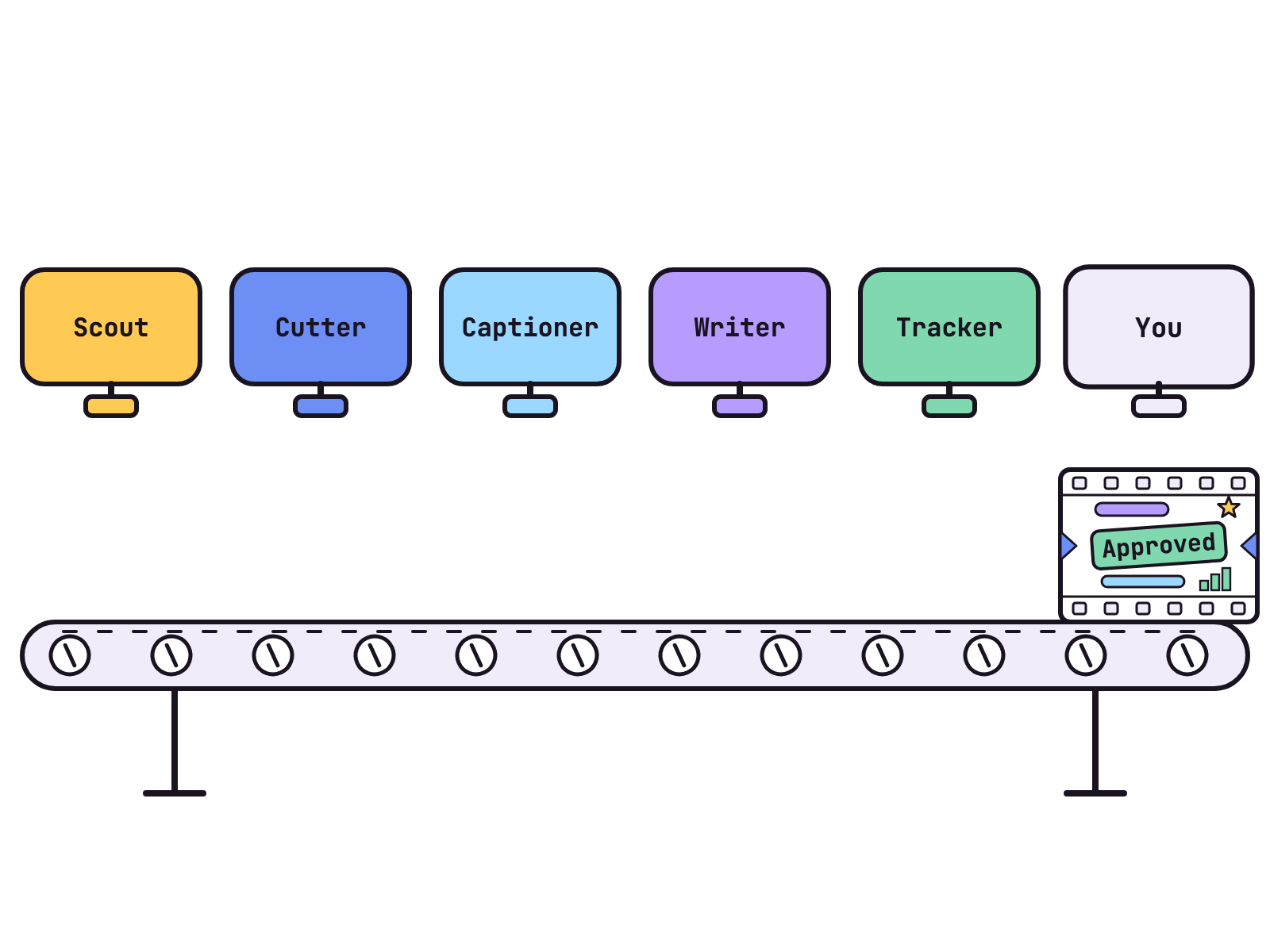
Six roles run in a line, and five of them are agents.
- Scout reads the campaigns you point it at and notes each one’s rate, budget, platforms and requirements. You join by hand.
- Cutter cuts clips with ffmpeg from the footage the campaign provides (Whop’s docs tell owners to share it), skipping anything on Rockstar’s list.
- Captioner turns a transcript of each clip into subtitles.
- Writer drafts a hook and a title per platform, inside the campaign’s requirements, with no spoilers.
- Tracker keeps one sheet: clip, post link, views, approval, payout. You paste in the views from each app.
- You watch every clip in full, post it from your own account and submit the link.
A coding agent such as Claude Code can run ffmpeg and a transcription tool you install. The cutting is ffmpeg’s work, not a Munder Difflin feature. What Munder Difflin adds is the team: one job per agent, and its README, read 16 Nov 2026, lists “Kanban tasks with dependencies, scheduled missions + heartbeat”. So the Cutter’s task waits for the Scout’s, and a schedule can start the Scout each morning. harnessmd.com puts the task board and automations in “the Pro workspace”: “The free plan lets you use Pro features up to a monthly allowance of work tokens”. The Cloud Office is live too, with agents in the cloud, always on; harnessmd.com says “Close your laptop and a Cloud Office keeps going”.
It is the shape of the agent that writes this blog: agents prepare, a person approves. More teams: every agent on our floor, agents that run overnight and the use cases hub.
The money, honestly
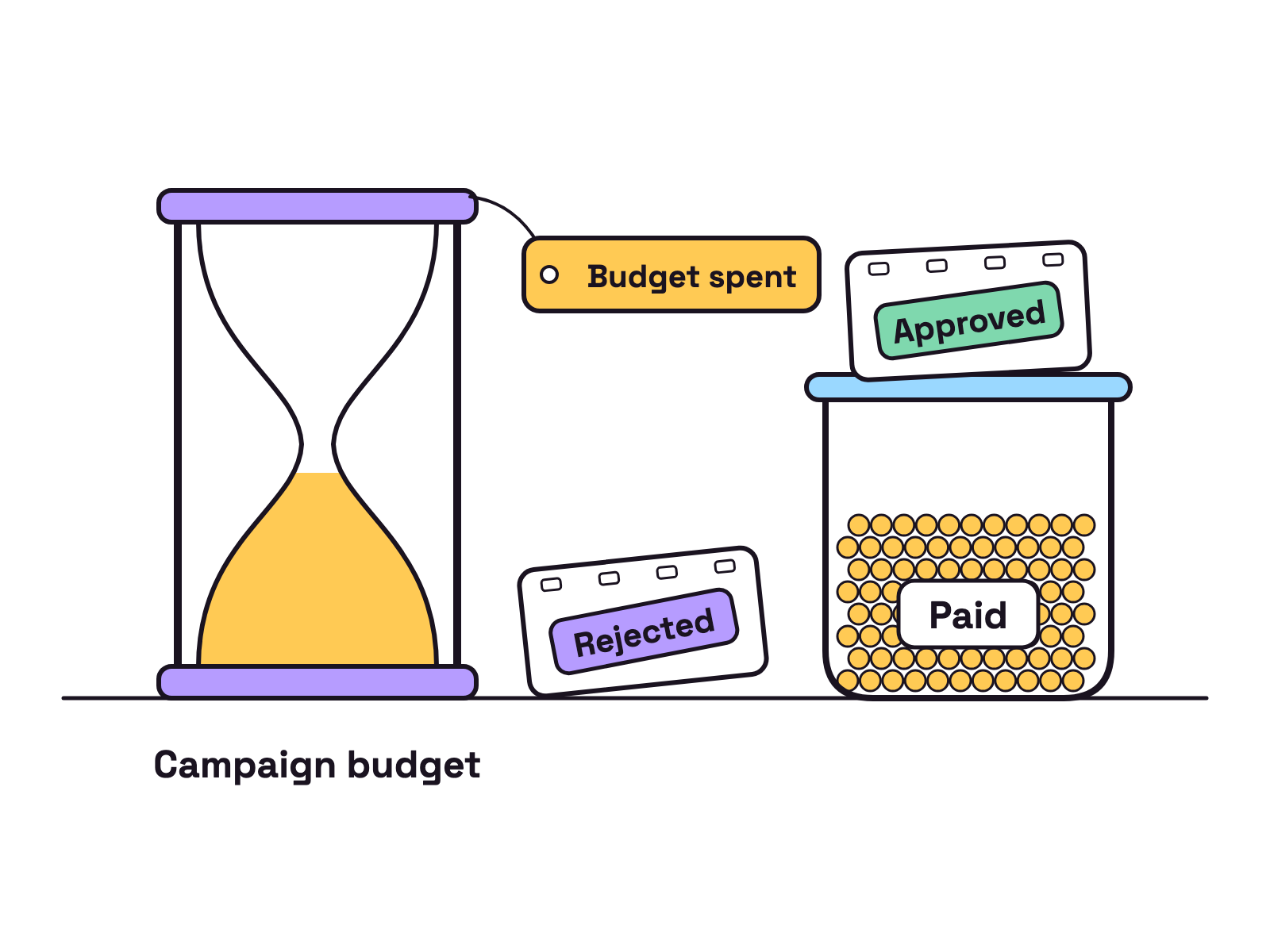
The money is whatever approved views earn at each campaign’s own rate, and it can be zero. Whop’s docs give the owner a budget (“Enter the total amount you’re willing to spend on this campaign”), a reward rate per 1,000 views, a minimum payout before a video “reaches your review queue” and a maximum payout per video. Without that cap, Whop writes, “one video with hundreds of millions of views could consume your entire budget, leaving nothing for other creators.”
So three things stop a payout: few views, a rejection, or a spent budget. Rates are set per campaign, so trust the campaign page, not a screenshot. Our view: start with two or three campaigns and drop any you cannot meet with clean footage. Agents make more clips possible; they do not make anyone approve them.
Which platform rules apply?
Each platform’s rules apply on top of the campaign’s, and YouTube’s are explicit about clips. YouTube’s channel monetization policies, read 16 Nov 2026, say: “If you borrow content from someone else, you need to change it significantly to make it your own.” Under reused content, what is “not allowed to monetize” includes “Clips of moments from your favorite show edited together with little or no narrative”, and the policy “applies even if you have permission from the original creator.” A campaign’s permission does not make a clip original.
On tools: “If you use automated tools or templates to help create your content, the final product must still demonstrate your creative vision and provide educational or entertainment value.” A July 15, 2025 update renamed the “repetitious content” policy “inauthentic content”, covering “content that is repetitive or mass-produced”.
TikTok, Instagram and X set their own rules; read each platform’s help pages before you post. Our view: give each account one niche, such as driving, stunts or funny moments, and add something of yours to every clip. A pile of near identical clips is a template, not a niche.
FAQ
Is a GTA 6 clipping farm allowed?
It can be, if the farm is a few real accounts with real views posting clips that follow Rockstar's policy and the campaign's terms. Fake accounts and bought views break YouTube's fake engagement policy, and spoiler clips are what Rockstar removes, as tbreak and Metro reported on 4 Nov 2026. Read Rockstar's own policy page before you earn from footage.
How do clipping campaigns pay?
In Whop's Content Rewards docs, the campaign owner sets a rate per 1,000 views and a budget, reviews each submission, and Whop pays approved posts based on their views. Rates and budgets differ per campaign. A rejected clip or a spent budget pays nothing.
Can AI agents post the clips for me?
Not in this workflow. The agents scout campaigns, cut, caption, draft titles and keep the tracking sheet. You watch every clip, post it from your own account and submit it to the campaign.
Which GTA 6 clips does Rockstar take down?
tbreak and Metro reported on 4 Nov 2026 that Rockstar removes endings, edited cutscene and dialogue compilations, isolated cinematics and footage from before release. Cutscenes inside a longer playthrough and narrated Let's Play videos are allowed. tbreak adds that Rockstar can take material down "at any time".
Do I need Munder Difflin to run a clipping farm?
No. You can run ffmpeg, a transcription tool and a spreadsheet by hand. Munder Difflin is free and open source and gives each step to its own agent, which helps once you run several campaigns at once.