Start a GTA 6 Guide Site or Newsletter With AI Agents (the Way This Blog Runs)
Run a GTA 6 guide site, newsletter or Discord the way this blog runs: you play and take notes, agents draft and fact check, you approve and publish.
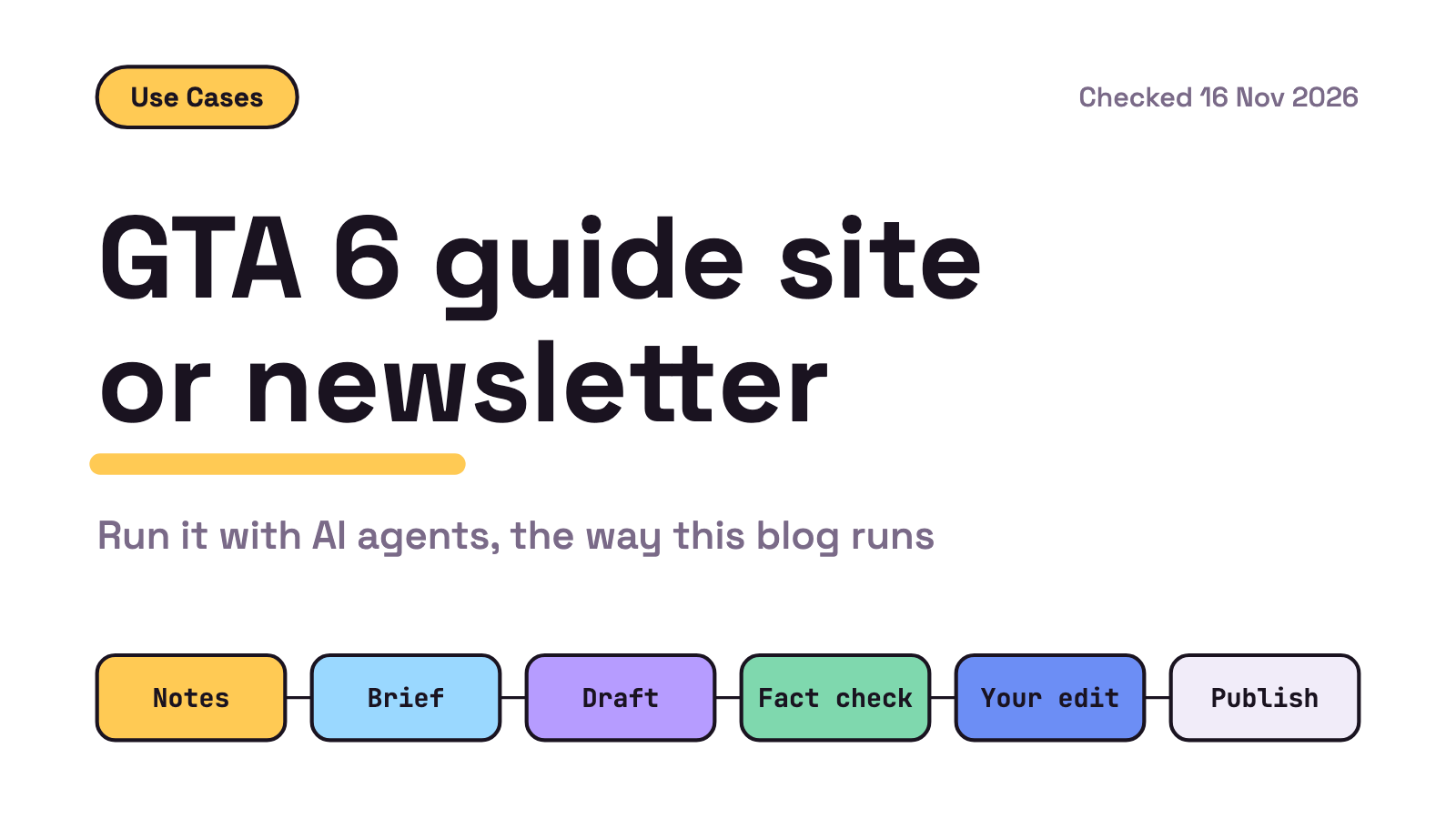
A GTA 6 guide site or newsletter is worth starting if every page comes from your own play, with agents drafting and checking and you publishing. Checked 16 Nov 2026. It can earn through paid subscriptions or ads, but that depends on readers, views and platform approval, and can be zero.
Rockstar’s GTA VI page, read 16 Nov 2026, says “Coming November 19, 2026” on PlayStation 5 and Xbox Series X|S. You can write guides by hand, or run the prep in Munder Difflin, free and open source: a desktop app that runs a team of AI agents for all kinds of knowledge work, coding included, on your own computer. Other launch hustles are in the GTA 6 money hub.
Why start a written GTA 6 guide?
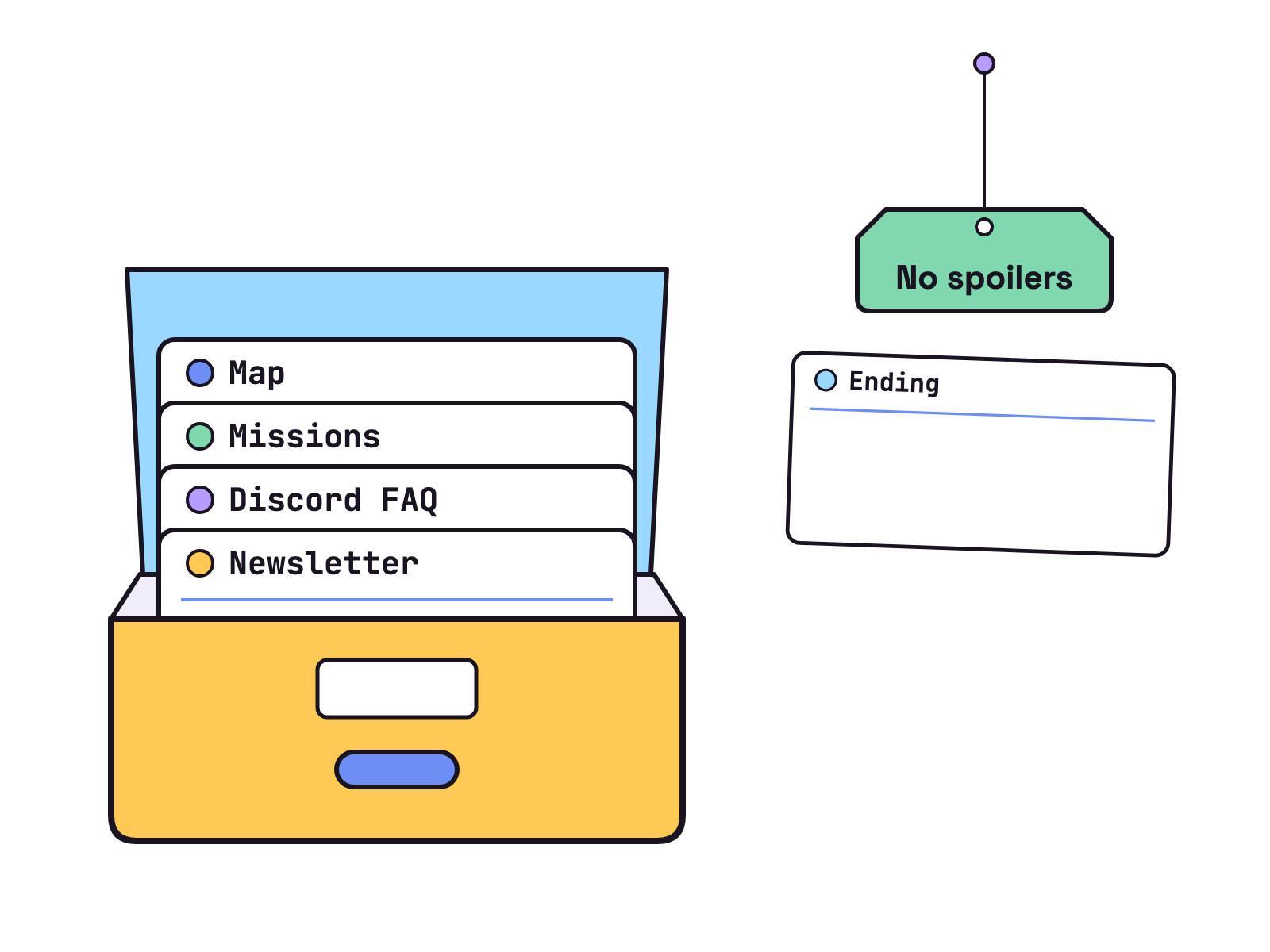
Because it runs on your own notes, readers can search it, and we think text is less exposed to the video takedowns Rockstar reportedly makes.
tbreak reports (4 Nov 2026, updated 8 Nov) that Rockstar’s video policy, last updated January 2025, applies to GTA 6. Per tbreak and Metro (4 Nov 2026), removed: endings, edited cutscene and dialogue compilations, isolated cinematics and footage from before release. Allowed: cutscenes inside a longer playthrough and narrated Let’s Play videos.
tbreak also reports that the policy page “frames that permission around non-commercial use”, and, citing Prepublish’s reading, that Rockstar can take material down “at any time”. Neither report mentions screenshots. Our view: a screenshot is still Rockstar’s material, so treat it like a clip. Read Rockstar’s policy page yourself before you earn from captures or footage. This is not legal advice.
What does Google expect from AI written pages?
Google says AI is fine when the page helps readers, and spam when it is used to game rankings. Its Search Central post of 8 Feb 2023 says: “Appropriate use of AI or automation is not against our guidelines.” It adds: “Using AI doesn’t give content any special gains. It’s just content.”
The spam policies, last updated 28 Aug 2026, draw the line: “Scaled content abuse is when many pages are generated for the primary purpose of manipulating search rankings and not helping users.” The first example: “Using generative AI tools or other similar tools to generate many pages without adding value for users”.
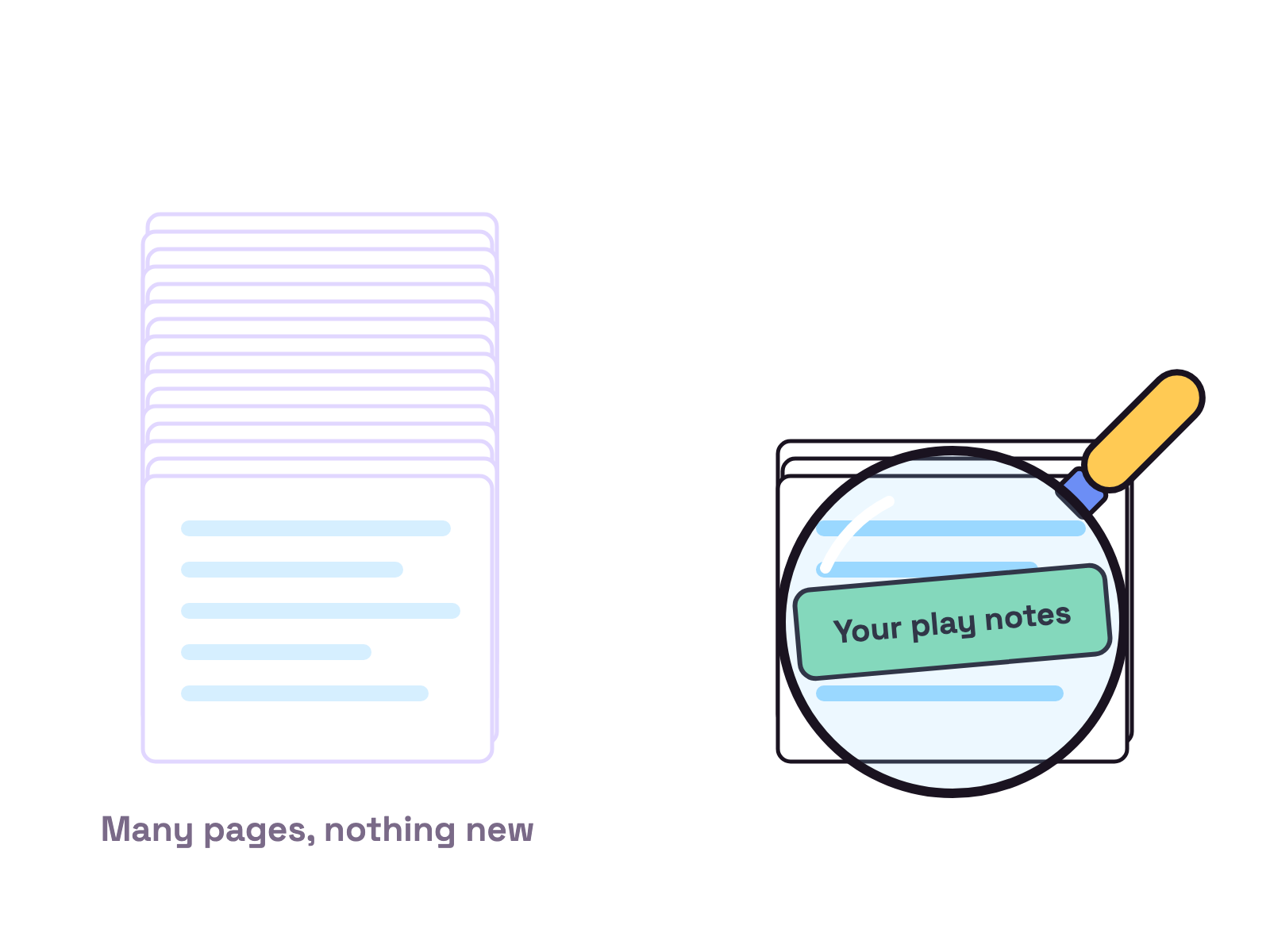
Our view: your play notes are the value. A page per weapon with nothing from your own game is that pattern.
How does the pipeline work?
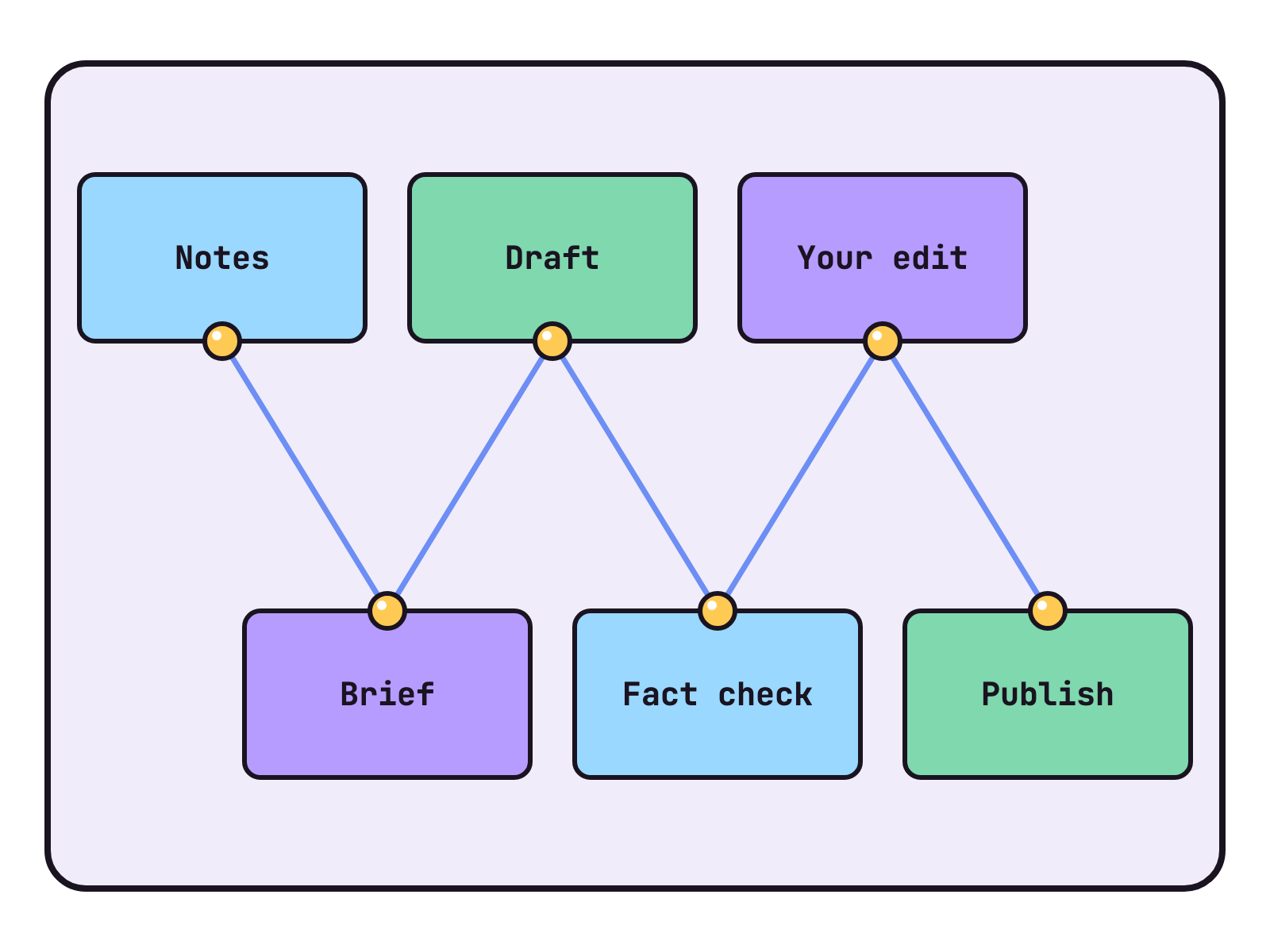
You play and approve; agents do the steps between.
- Notes and screenshots. You play and write down what you found and where. Screenshots stay your reference.
- Brief. A research agent turns a note into a brief: the reader’s question, your answer, and what is missing.
- Draft. A writer agent drafts the page in your house style.
- Fact check. A reviewer agent checks every claim against your notes and flags unsupported lines and your listed spoiler words. It is the friend who asks “source?” on every line, minus the attitude.
- Your edit. You fix it and confirm anything flagged in your own game.
- Publish. Under your own name.
- Weekly newsletter. A news agent drafts a digest linking each Rockstar Newswire post; the GTA VI page features three, dated November 3 to November 10, 2026. You add picks and send it.
- Discord for readers. You run and moderate a server where readers ask questions and report mistakes. Corrections you copy in become tasks.
This blog runs the same shape, as our blog writer post describes: a brief, a draft in its own worktree, a check, pictures drawn in code, and a pull request one person merges. Writing is automated; publishing is reviewed.
In Munder Difflin each step is one agent’s task. Its README, read 16 Nov 2026, lists “Kanban tasks with dependencies, scheduled missions + heartbeat”, so the draft waits for the brief and a schedule starts the news agent. harnessmd.com, read 16 Nov 2026, puts both in “the Pro workspace”: “The free plan lets you use Pro features up to a monthly allowance of work tokens.” It also lists “Slack & webhooks: message a channel or POST a webhook”, so drafts reach you where you read messages. Engines include Claude Code, Codex and Gemini CLI. The Cloud Office runs agents in the cloud, always on; that page says “Close your laptop and a Cloud Office keeps going”.
Who does what on each page type?
Your notes supply the facts and agents supply the drafts. Checked 16 Nov 2026.
| Page type | What your notes provide | What the agents do |
|---|---|---|
| Mission help, no story | Your route, checkpoints and what failed | Draft steps, flag spoiler words |
| Map or collectible page | Where you found it, your screenshot | Outline, check each spot against notes |
| Weekly newsletter | Your picks and your opinion | Read the Newswire, draft a linked digest |
| Discord FAQ | Reader questions and your answers | Merge repeats into a draft FAQ page |
How do guide sites earn?
Through paid subscriptions or display ads, and both pay only once readers show up. Substack’s going paid page, read 16 Nov 2026, says “Writers keep 90% of their revenue minus credit card fees”, and you “Choose which posts you publish as free or only for paid subscribers.” Ghost’s pricing page, read the same day, says it processes premium subscriptions “without any additional transaction fees from Ghost. Payment processor fees still apply.”
For ads, Google’s AdSense eligibility page, read 16 Nov 2026, says: “If you have your own content that meets our policies and you’re 18 or over, you can sign up for AdSense.” It also warns “we may change our policies at any time”. Signing up is not earning: income depends on readers, views and approval, and can be zero.
Both routes are commercial, so read the policy page before screenshots go behind a paywall. Our view: grow a free list first, and charge only for work that is plainly yours.
What should you avoid?
Copying other guides, spoilers in titles, and many pages with nothing new. Google’s spam policies list scraping, including “Republishing content from other sites without adding any original content or value, or even citing the original source”. A title is read by people who never click, so an ending there spoils it for everyone.
House rules for every workflow here: no fake engagement, no bought views, no reuploads of other people’s videos without permission, no spoilers of the story or ending. One person reads and approves each piece and publishes it under their own account. The agents never play the game, log in to your accounts or post for you.
More teams: every agent on our floor and the Use Cases hub. Prefer video? See GTA 6 channel ideas or the clipping farm guide.
FAQ
Can I use AI to write a GTA 6 guide site?
Yes, if each page adds something from your own play. Google's Search Central post of 8 Feb 2023 says appropriate use of AI or automation is not against its guidelines. Its spam policies call many pages made to manipulate rankings, without helping users, scaled content abuse.
Can I put GTA 6 screenshots in a paid newsletter?
Check before you charge. tbreak and Metro reported on Rockstar's video rules on 4 Nov 2026 and say nothing about screenshots, and tbreak reports that the permission is framed around non commercial use. Read Rockstar's policy page yourself first.
How does a GTA 6 newsletter make money?
Through paid subscriptions or ads, and both can earn nothing. Substack's going paid page, read 16 Nov 2026, says writers keep 90% of their revenue minus credit card fees. On the same day, Ghost listed no transaction fees of its own on premium subscriptions. Income depends on how many readers pay.
What does the person do, and what do the agents do?
You play, take notes and screenshots, edit, approve and publish under your own name. The agents write briefs, draft pages, check each claim against your notes and draft the weekly digest. No agent plays the game, logs in to your accounts or posts for you.