OpenAI Decisions API: what it is, price and limits
OpenAI's Decisions API returns a probability, a pick or a score. Generally available since 22 Oct 2026. Price, limits and how to call it, checked 12 Nov 2026.
The OpenAI Decisions API is an endpoint that answers fixed questions with a probability, a pick or a score instead of written text. Generally available since 22 Oct 2026, it runs one model, gpt-6-luna, at $0.10 per 1M uncached input tokens. Our view: worth a test for classifying and routing, not a coding tool. Checked 12 Nov 2026.
Google launched a rival on 11 Nov 2026: Gemini Decisions API vs OpenAI Decisions API.
Agents need sorting and routing too, which is why we looked. Munder Difflin is free and open source: a desktop app that runs a team of AI agents for all kinds of knowledge work, coding included, on your own computer. The install guide covers setup and the Concepts hub explains the terms.
What is the OpenAI Decisions API?
It is an OpenAI endpoint, POST /v1/decisions, that reads text, images and JSON and returns a typed answer. OpenAI’s Decisions guide says it “returns typed answers about 10x faster than the Responses API”, and names three uses: classify content, route requests and prioritize work. The speed figure is OpenAI’s own.
The API changelog dates the beta release Oct 6, 2026, and its Oct 22 entry reads: “The Decisions API is now generally available with gpt-6-luna.” The guide’s changes since public beta include prompt caching, JSON input (input_json), hosted image URLs and up to 400 questions per request, “up from 200 during the public beta”.
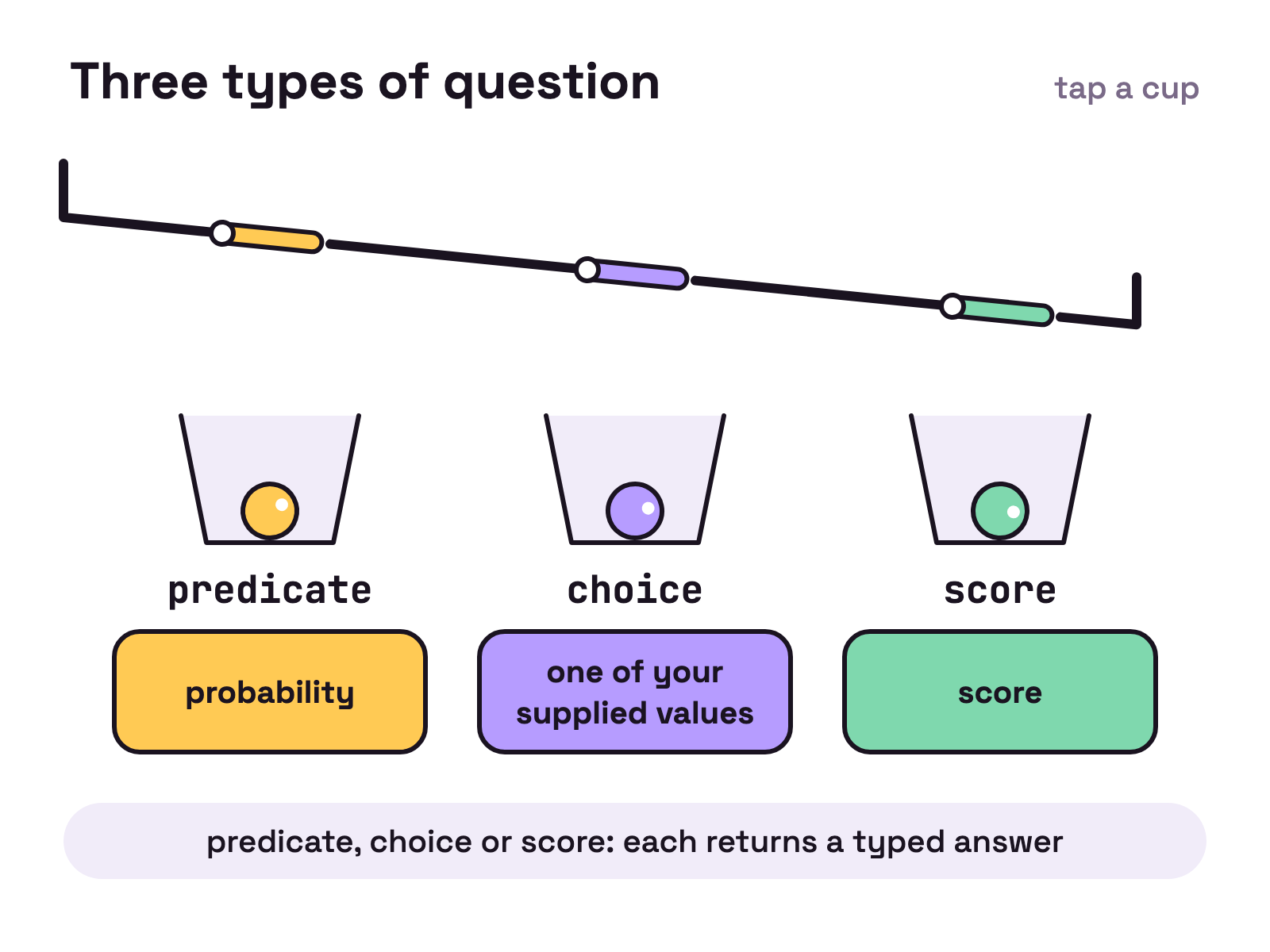
Each question has one of three types. From the guide, 12 Nov 2026:
| Type | Use it to | Main result |
|---|---|---|
predicate |
Check a condition, such as visible damage | probability: an estimate from 0 to 1 that the condition is true |
choice |
Select one option, such as a department | choice: one of your supplied values |
score |
Rate an input against ordered levels, such as issue severity | score: the probability-weighted average of the level indices |
The Hacker News thread had more than 250 points and 114 comments when we read it on 7 Oct 2026.
What is a decision model, and how is it different from a chat model call?
A decision model picks from options you supply and attaches a number, where a chat model writes free text. OpenAI’s guide does not use the term. This definition is from Strands’ post of 1 October 2026: “Unlike LLMs that can generate arbitrary output, decision models are designed to pick between sets of options” and “assign simple numerical scores”.
OpenAI’s guide describes an endpoint, not a new kind of model. The gpt-6-luna model page calls it OpenAI’s “most efficient model for focused, high-volume tasks” and lists the Responses endpoint as supported too. See also GPT-6 Luna in ChatGPT.
The practical difference is the reply. In a chat call you ask for a label and then parse a sentence. Here the answer arrives as fields: probability, choice or score, with a confidence field and per option probabilities on choice and score answers.
The guide draws the line: use Structured Outputs with the Responses API when you need “extracted fields or a written explanation”, and function calling when you need a tool call with arguments.
What does the Decisions API cost?
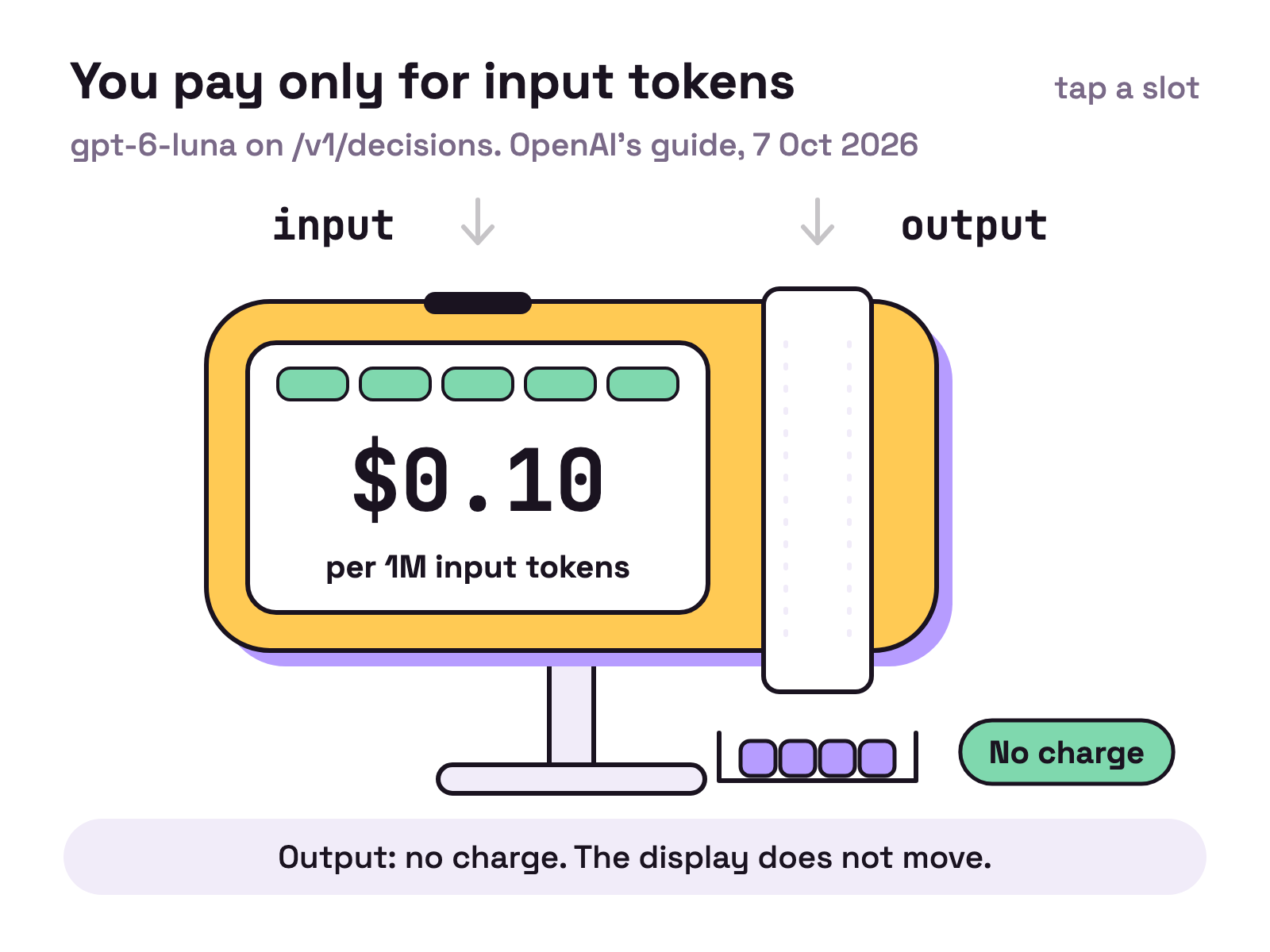
Uncached input costs $0.10 per 1M tokens on 12 Nov 2026, and output is not charged. OpenAI’s guide says: “Prompt cache hits receive discounted input pricing; cache writes are charged.” OpenAI’s pricing page lists gpt-6-luna Standard short context cached input at $0.01 per 1M tokens on 12 Nov 2026. The guide says caching needs a shared prefix of at least 1,024 tokens. The pricing page lists more tiers.
| Where gpt-6-luna runs (12 Nov 2026) | Input per 1M tokens | Output per 1M tokens |
|---|---|---|
/v1/decisions |
$0.10 | No charge |
| Other requests, Standard, short context | $0.10 | $0.50 |
The guide adds: “Regional processing premiums and long-context input pricing multipliers apply”, with no figures.
What are the limits?
One model, up to 400 questions and typed answers. From OpenAI’s guide, 12 Nov 2026:
- One model. “
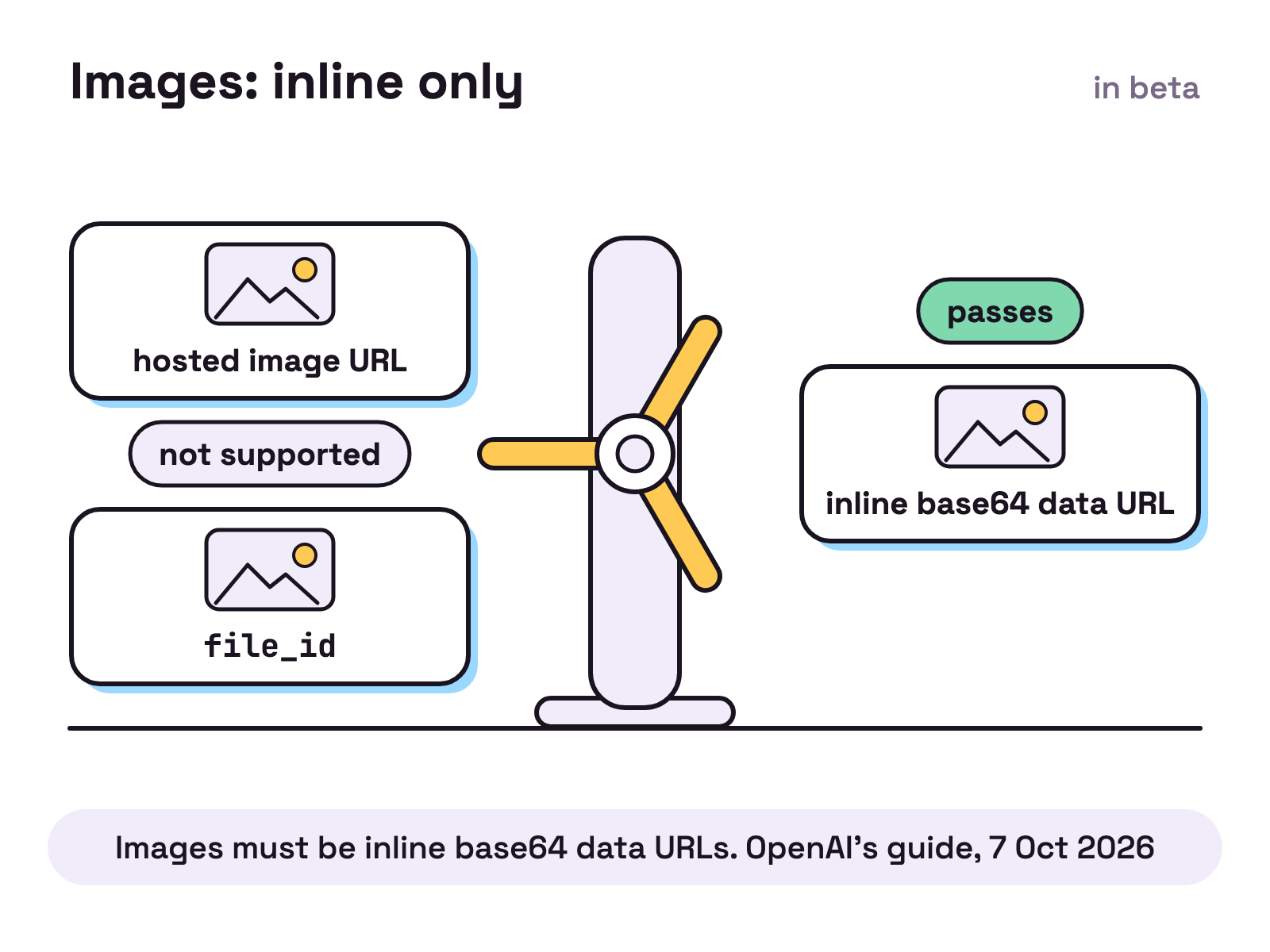
gpt-6-luna, the only currently supported model.” - Images. Inline base64 data URLs or “publicly accessible HTTP or HTTPS URLs”. “This endpoint doesn’t support
file_idinputs.” - No chained questions. Up to 400 independent questions can share one request. A decision that depends on an earlier answer needs a separate request.
- Compliance. Zero Data Retention and HIPAA use are supported “for eligible customers”.
The guide states no rate limit and no input size cap for the endpoint.
How do you call the Decisions API?
You send a POST with a model, an input and a list of questions. This request is trimmed from the guide’s routing example, which lists four choices:
curl https://api.openai.com/v1/decisions \
  -H "Authorization: Bearer $OPENAI_API_KEY" \
  -H "Content-Type: application/json" \
  -d '{
    "model": "gpt-6-luna",
    "input": "I was charged twice for my order.",
    "questions": [{
      "type": "choice",
      "name": "department",
      "instructions": "Which department should handle this complaint?",
      "choices": [
        {"value": "billing", "description": "Payments, invoices, and refunds."},
        {"value": "other", "description": "Requests outside these categories."}
      ]
    }]
  }'
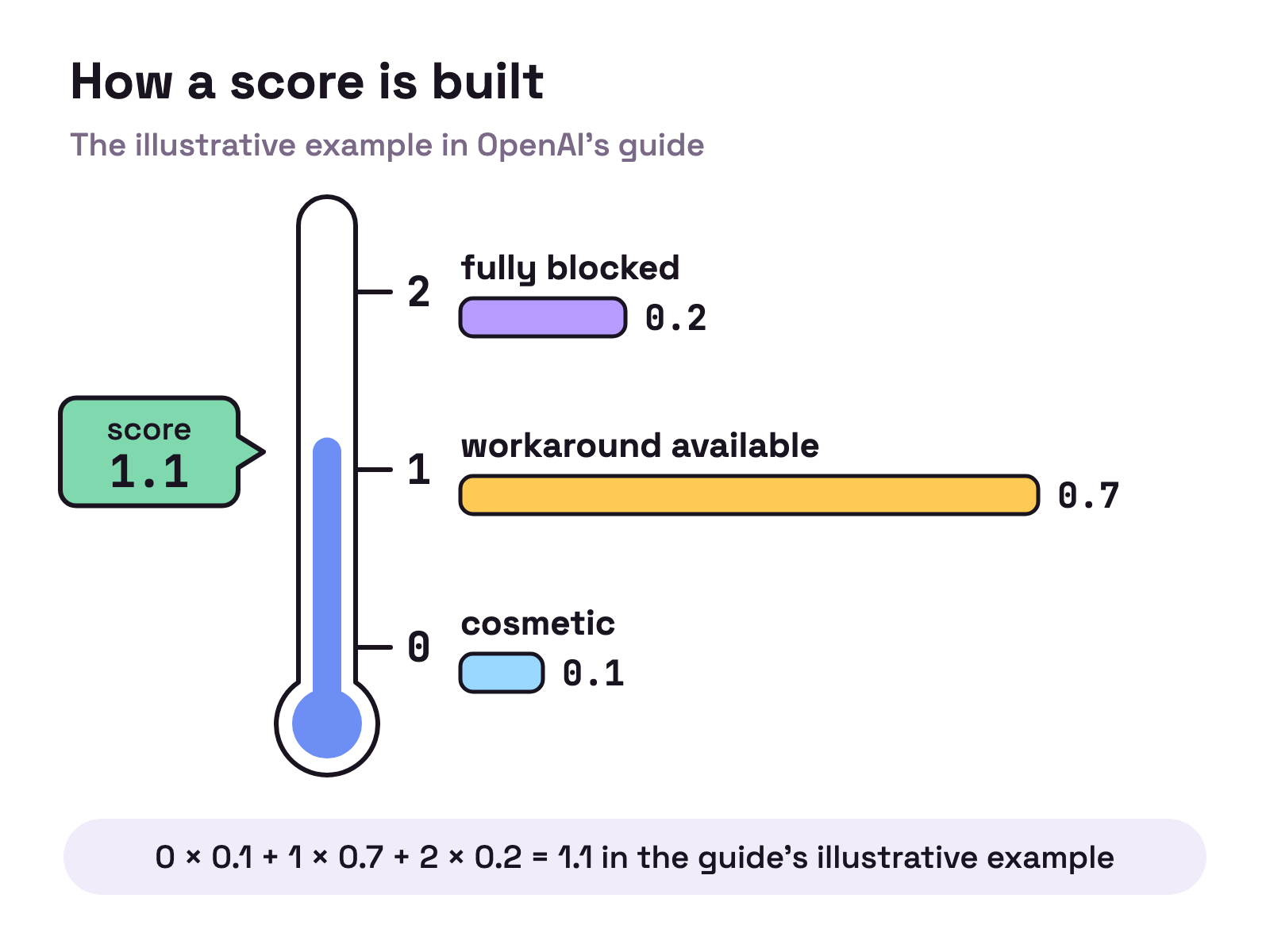
The guide’s score example shows how a score is built. Three severity levels, indexed 0, 1 and 2 from cosmetic to fully blocked, get probabilities of 0.1, 0.7 and 0.2, so the score comes out at 1.1. The guide calls that response illustrative.
Is there an open alternative?
Yes, Strands Decider 2B is one you can run yourself. The Strands post of 1 October 2026 describes “a 2 billion parameter model, suitable for running on a local CPU or GPU”, with weights on Hugging Face. GitHub listed the repo as Apache 2.0 on 7 Oct 2026.
The vendor’s own figures: a median of around 115ms on an Nvidia RTX3090, and “3rd of 33 in the 2B class” on JevBench’s public set. No source we opened compares it with OpenAI’s endpoint.
What does it mean if you run coding agents?
Little for the code writing itself, because the endpoint returns answers, not code. Strands says of this class of model that its “lack of ability to generate text makes it unsuited for coding”. No source we opened says the Decisions API works with Codex or any other coding agent.
Our view: the fit is the small jobs around an agent, such as model routing or scoring a bug report’s severity. Strands lists model routing, tool selection, evaluations and guardrails among early uses. These are ideas, not results.
What should you do now?
Our view: try it on one narrow labelling job first, especially if you already use the OpenAI API.
- Test your own inputs in the Playground.
- Set thresholds from labeled examples of your own, as the guide advises.
- Keep shared context identical at the start of
inputand vary the questions, so prompt caching can apply. - For the code writing, see best AI coding agents and what Codex is.
FAQ
Is the OpenAI Decisions API generally available?
Yes. OpenAI's API changelog entry dated Oct 22, 2026 says the Decisions API "is now generally available" with gpt-6-luna. It was released in beta on Oct 6, 2026. Checked 12 Nov 2026.
How much does the OpenAI Decisions API cost?
OpenAI's guide says that with gpt-6-luna, uncached input costs $0.10 per 1M tokens and "Output tokens are not charged." Prompt cache hits get discounted input pricing and cache writes are charged; OpenAI's pricing page lists gpt-6-luna Standard short context cached input at $0.01 per 1M tokens. The guide adds that "Regional processing premiums and long-context input pricing multipliers apply." Checked 12 Nov 2026.
Which models work with the Decisions API?
One. OpenAI's guide says to send requests to POST /v1/decisions using gpt-6-luna, "the only currently supported model." Checked 12 Nov 2026.
Can the Decisions API read images?
Yes. OpenAI's guide says to "Provide images as inline base64 data URLs or publicly accessible HTTP or HTTPS URLs." It adds: "This endpoint doesn't support file_id inputs." Hosted image URLs were added after the public beta. Checked 12 Nov 2026.
Can the Decisions API write code?
No. It returns typed answers: a probability, a choice from your options or a score. OpenAI's guide points you to Structured Outputs with the Responses API when you need an object in your own JSON schema, such as a written explanation, and to function calling when you need a tool call.