Google Let Gemini 4 Argon Loose on Its Own Coding Backlog. Here Are the Receipts.
Google's own numbers for Gemini 4 Argon on real code: 134 bugs triaged in under 3 hours, 30% fewer rollbacks, a framework tuned overnight. Checked 13 Oct 2026.
Our view: the Gemini 4 coding stories Google published are Google’s own account, and still the most useful part of the launch, because they describe dull work that agents suit. Google says Gemini 4 Argon cut a bug backlog, untangled Chrome code and tuned a framework overnight. Checked 13 Oct 2026.
Every number below is Google describing its own model on its own code. Munder Difflin is free and open source: a desktop app that runs a team of coding agents such as Claude Code, Codex and Gemini CLI on your own computer. The install guide covers setup, the Concepts hub explains the terms, and our Gemini 4 Argon page covers the launch.
How widely does Google use Gemini 4 Argon?
Widely, by Google’s count. Google’s Antigravity post of 13 Oct 2026 says “over 100K users across Alphabet” rely on Argon each month, inside Google’s internal version of Antigravity.
The same post reports the result: “Over a four-week period, we have seen a 35% increase in agentic code”, with “a 30% decrease in post-submit rollbacks”. More code and fewer reversals is the claim every vendor wants to make. Google is the one making it about Google.
What did it do to the bug backlog?
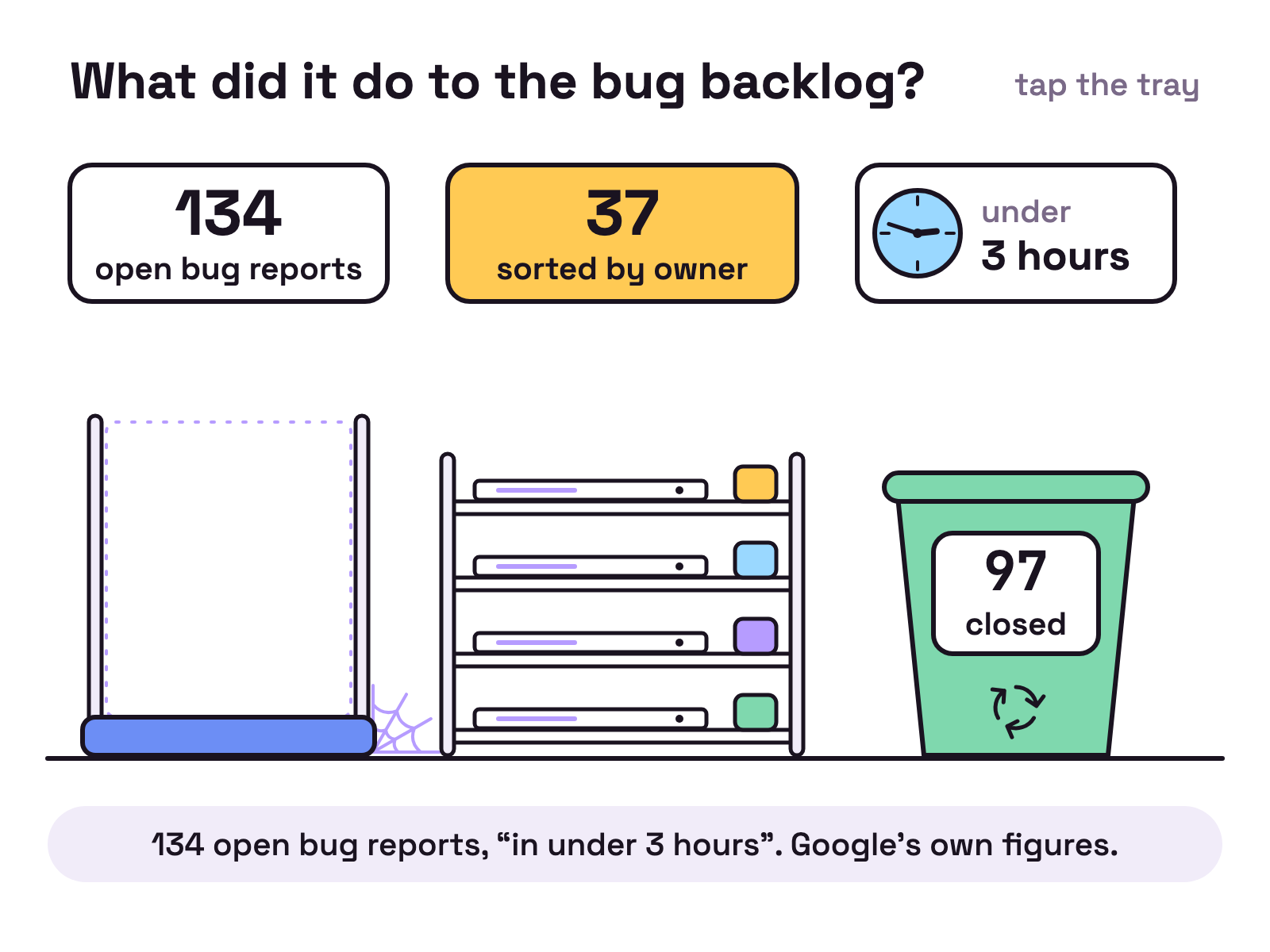
It closed most of it by proving the bugs were already dead. The Antigravity post says Argon took “an aging queue of 134 open bug reports spanning multiple services” and checked which were still real against commit histories and live telemetry.
“In under 3 hours it closed 97 stale or duplicate bugs with documented commit proof”, the post says, and sorted “the remaining 37 by owner”. The backlog was mostly a graveyard with a ticketing system.
What did it change in Chrome and YouTube?
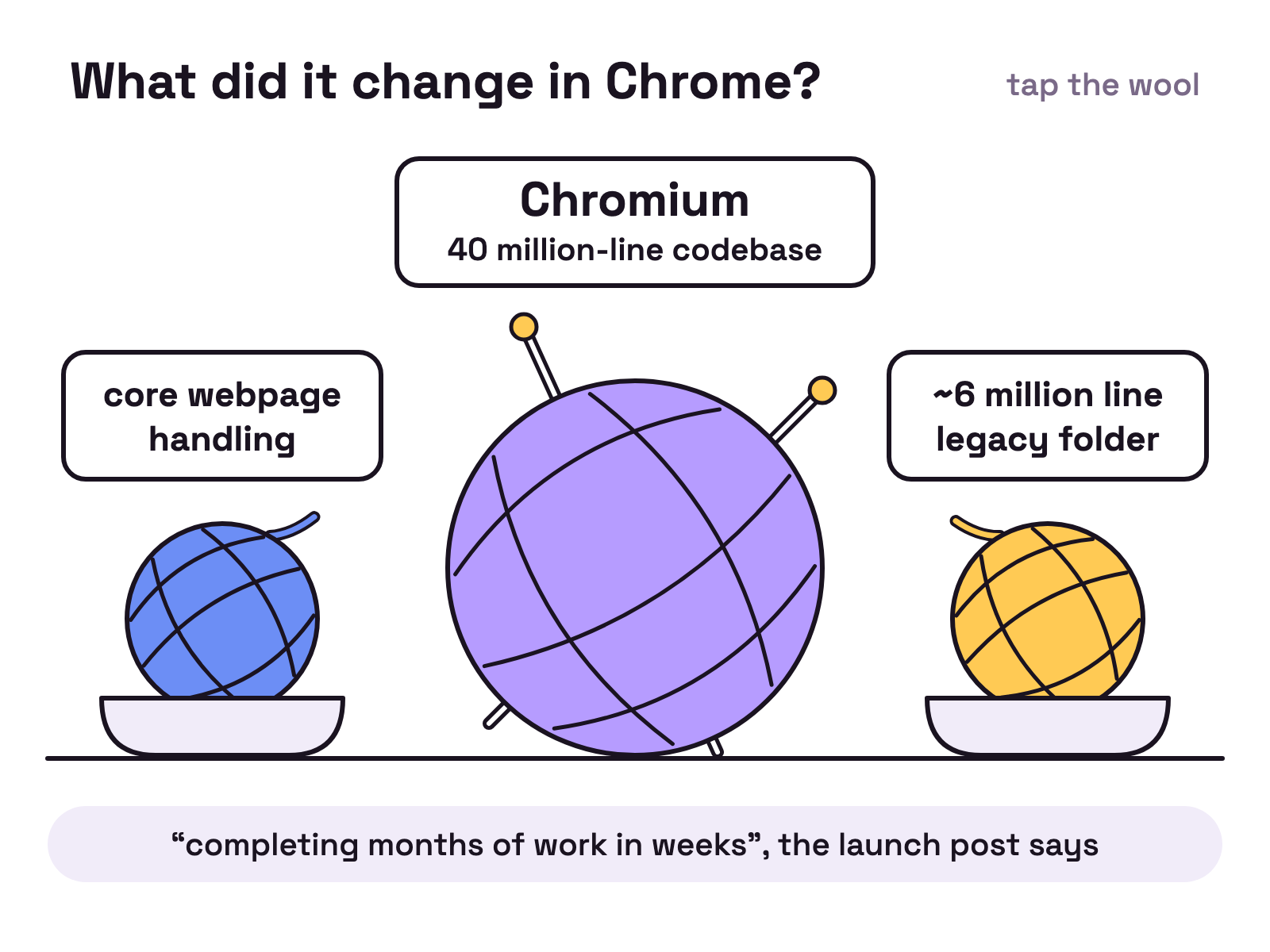
It split old code in Chrome and removed wasted work in YouTube comments. Google’s launch post says Argon helped the Chrome team separate core webpage handling from “a ~6 million line legacy folder of browser features held within Chromium’s 40 million-line codebase”, “completing months of work in weeks”.
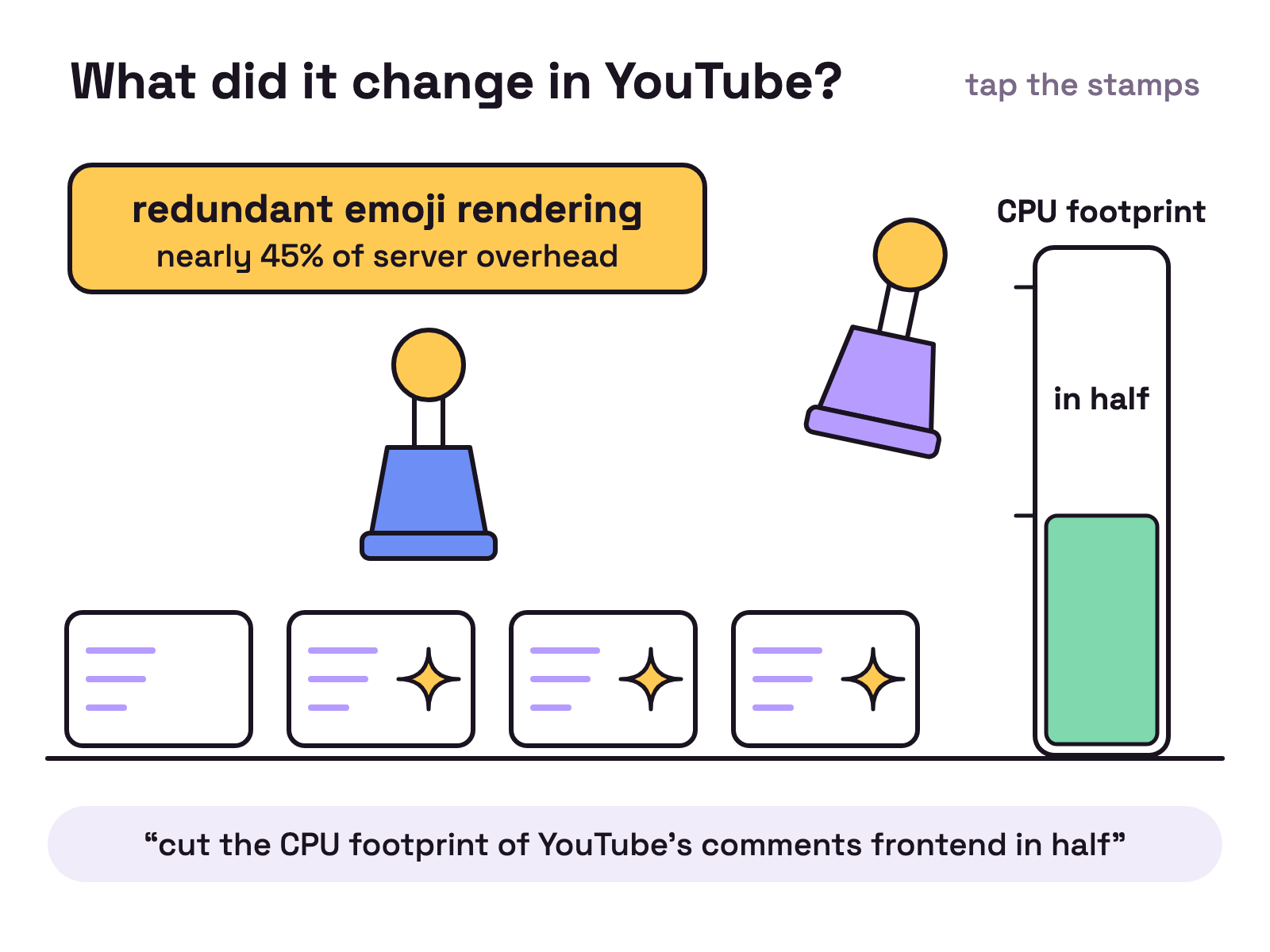
For YouTube, the Antigravity post says Argon “helped the team cut the CPU footprint of YouTube’s comments frontend in half”. It found that “redundant emoji rendering alone accounted for nearly 45% of server overhead, leading to 12 targeted optimizations”. Somewhere a server was drawing the same emoji twice, at scale.
What did it do overnight?
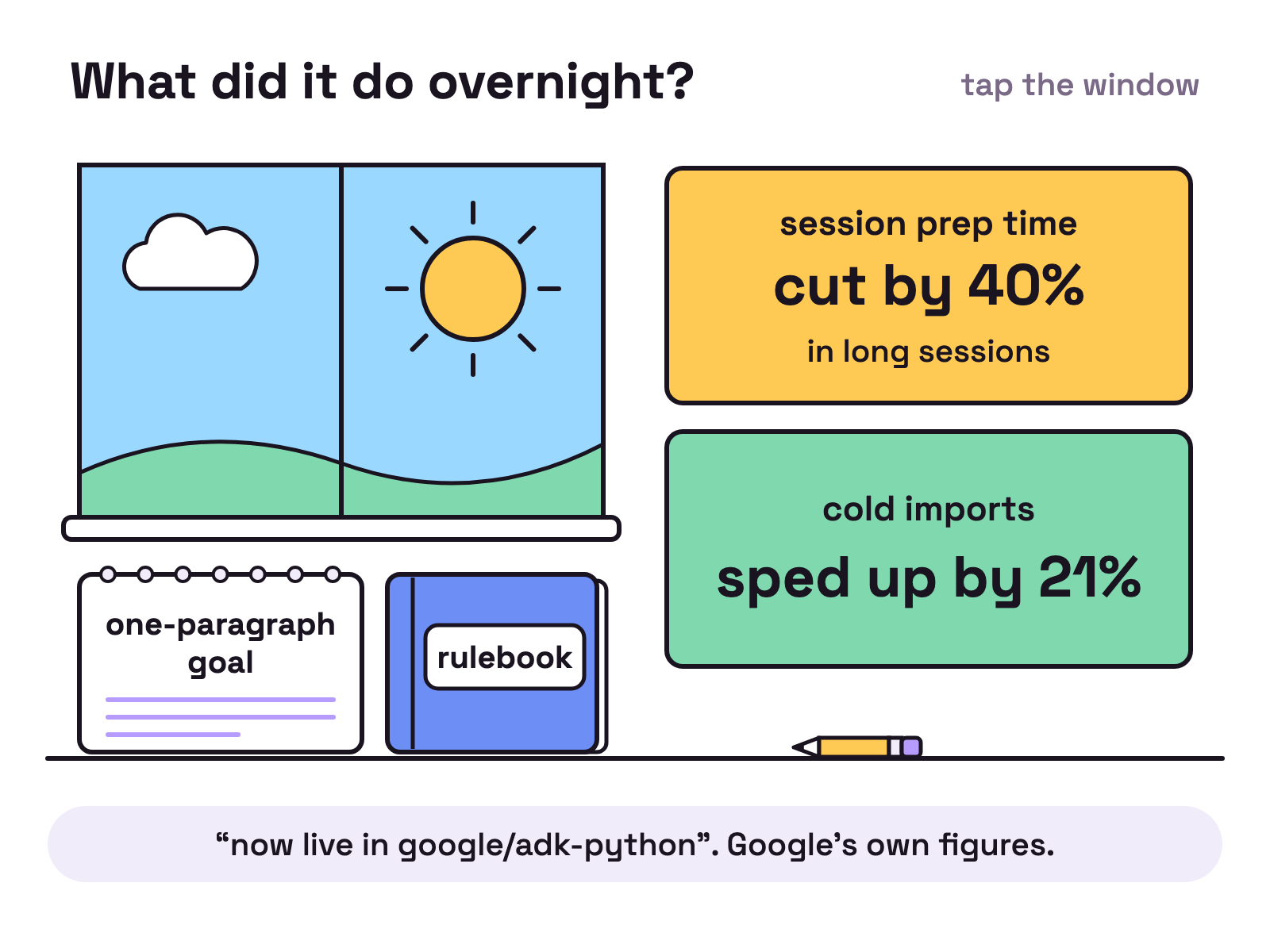
It tuned Google’s open source agent framework while the team was away. Google’s launch post says the team behind the Agent Development Kit gave Argon “their .agents/skills rulebook and a one-paragraph goal”.
“Working autonomously overnight, Argon surfaced optimizations, now live in google/adk-python, that cut in-memory session prep time by 40% in long sessions and sped up cold imports by 21%”, the launch post says. Working overnight is easier when you do not sleep.
What did it catch that other models missed?
Four security bugs, in Google’s telling. The Antigravity post says Argon audited a batch of access-control changes and “found four critical security bugs”, and that “Two earlier frontier models had audited the identical code and both concluded there were zero security holes”. The post does not name those two models.
How does Google keep it from cutting corners?
By training and by watching. Google’s launch post says it trained Argon “to respect system boundaries, report negative findings honestly, and pause for human confirmation before taking irreversible steps”, and that on “coding benchmarks where models have no incentive to hold back, shortcut attempts dropped to just 2%”. It also describes a monitor that reads the agent’s reasoning and actions to block workarounds.
What can a small team copy from this?
The method costs nothing to copy: a written rulebook, a one paragraph goal, proof attached to every closed item, and a person who approves anything that leaves the building. That is our reading of Google’s examples, not Google’s advice.
The same habits are in what a multi agent harness is, how agents verify their own work and long running agents.
FAQ
Is Gemini 4 Argon good at coding?
Google says so, with its own examples. Google's Antigravity post of 13 Oct 2026 reports a 35% increase in agentic code and a 30% decrease in post-submit rollbacks over a four-week period inside Alphabet. Those are Google's figures about its own tool, and the post cites no outside check.
How many people at Google use Gemini 4 Argon?
Google's Antigravity post of 13 Oct 2026 says over 100K users across Alphabet rely on Argon inside its internal version of Antigravity each month.
What did Gemini 4 Argon do with Google's bug backlog?
Google's Antigravity post says Argon took a queue of 134 open bug reports and, in under 3 hours, closed 97 stale or duplicate bugs with documented commit proof and sorted the remaining 37 by owner.
Can Gemini 4 Argon work overnight on its own?
Google describes one case. Its launch post says the team behind the Agent Development Kit gave Argon a rulebook and a one-paragraph goal, and that, working autonomously overnight, it surfaced optimizations that cut in-memory session prep time by 40% in long sessions and sped up cold imports by 21%.