llama.cpp 1.0: What Changed and What to Check Before Upgrading
llama.cpp 1.0 drops the deprecated API, adds FP8 KV caches and an MoE expert cache, and hardens llama-server. What changed. Checked 13 Nov 2026.
llama.cpp 1.0 is a cleanup release with a promise attached: it removes the deprecated public API, and from now on a breaking change to that API gets a new major version. It also adds FP8 KV caches, an MoE expert cache, new models and a hardened llama-server. Checked 13 Nov 2026.
The release went out on GitHub at 10:20 UTC on 13 Nov 2026, with a ggml-org blog post the same day. The Concepts hub explains the terms. If you mostly run hosted Claude, our Claude Code Max plan tips cover that side.
What is llama.cpp?
llama.cpp is an open source C/C++ engine for running large language models, locally or in the cloud. Its README describes it as “LLM inference in C/C++”, built on the ggml library, with the goal “to enable LLM (and VLM) inference with minimal setup and state-of-the-art performance on a wide range of hardware”.
The repo is MIT licensed and showed 134,841 GitHub stars on 13 Nov 2026. The Hacker News launch thread had 12 points at 16:12 UTC on 13 Nov 2026, two hours after it was posted.
What changed in llama.cpp 1.0?
Nine things stand out. Our selection from the v1.0.0 release notes, as of 13 Nov 2026:
| Change | What it does | Who it affects |
|---|---|---|
| Deprecated API removed | Drops llama_set_warmup, 35 deprecated functions, defrag_thold |
Code calling llama.h |
| NextN API promoted | Moves NextN from llama-ext.h into llama.h |
Speculative decoding code |
| FP8 KV caches | -ctk/-ctv f8_e4m3, optional static scales |
Anyone setting KV cache types |
| MoE expert cache | Experts cached in host memory, CPU share for misses | Mixture of experts users |
| New models | Kimi-K3.1-Pro, Ripple, xing4_0, drama-3 TTS, two vision models | Users of those models |
| Server hardening | SSRF, CORS and DNS rebinding fixes, MCP tool cancellation | Anyone running llama-server |
| Speech endpoint | OpenAI compatible /v1/audio/speech |
Text to speech apps |
| Web UI | Chat groups, markdown editor, phone layout | Web UI users |
| ggml 1.0.0 | Prunes deprecated API and DIAG_MASK ops, adds FP8 |
Direct ggml users |
What happened to the deprecated API?
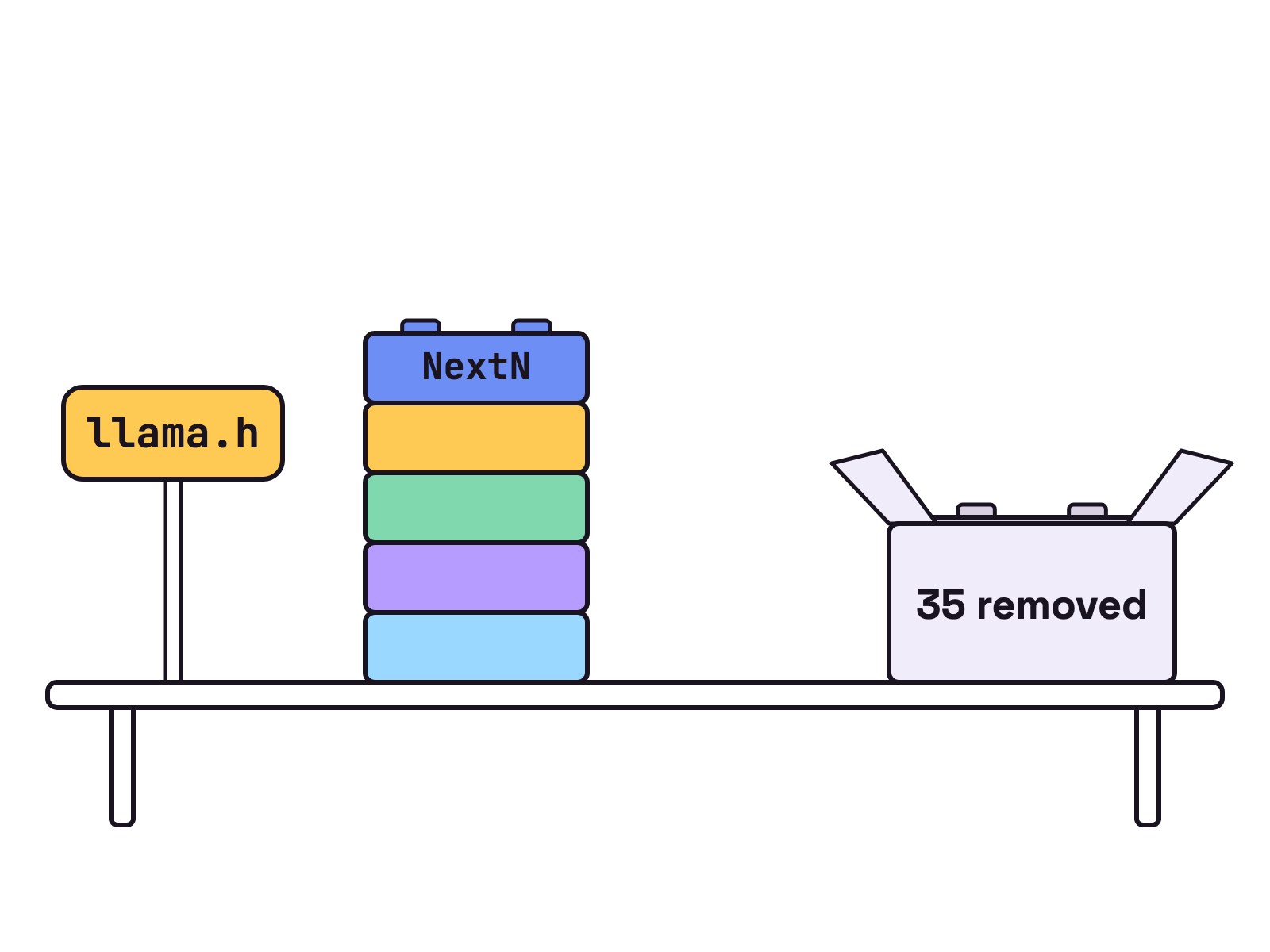
It is gone. The release notes list these removals under llama.h: llama_set_warmup, 35 deprecated functions, defrag_thold and the --defrag-thold flag, all in pull request #30565. Deprecation warnings tend to be ignored until the day the function disappears. For 35 functions, that day was 13 Nov 2026.
The same pull request promotes the NextN API out of llama-ext.h and into llama.h, and renames llama_set_embd_state_src to llama_set_ctx_state_src. The overview calls it the “NextN/speculative API”, so it now sits in the public header the new version rules cover.
What are the FP8 KV caches and the MoE expert cache?
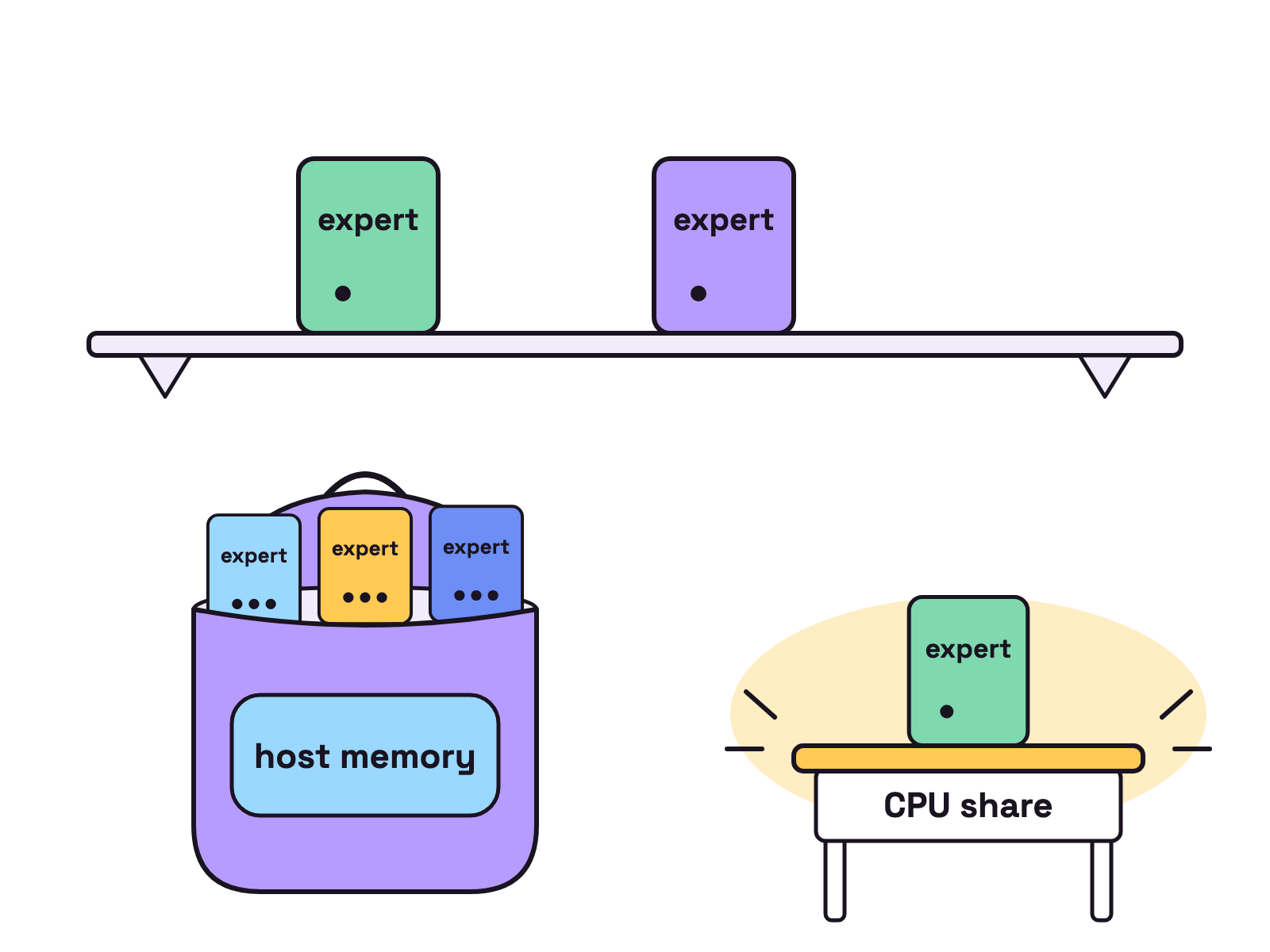
They are two memory features. The release notes add “OCP FP8 KV caches”, set with -ctk/-ctv f8_e4m3, with “optional static per-tensor scales”.
The MoE expert cache is for mixture of experts models. The overview calls it “a host-memory MoE expert cache with a configurable CPU share”, and the core notes add “LRFU/ClassLRU replacement” and “no CPU wait on cached experts”. Two new fields in llama_context_params, moe_cache_size and moe_cache_cpu_share, control it. 1.0 also loads external PLE shards from separate GGUF files with --shard or --ple.
Neither source gives speed figures, so we won’t guess.
Which new models does llama.cpp 1.0 support?
Three new text architectures, a speech model and two vision models, per the release notes:
- Kimi-K3.1-Pro, “K3 with the full-attention MLA layers replaced by DSA”
- Ripple-65B-Preview, a “new dense 65B architecture, no new ops”
- xing4_0, with “mHC, MLA, MoE and MTP”
- drama-3 TTS from fishaudio
- MageVL-Cowork and Kimi-K3.1 vision
The blog post says llama.cpp now supports “more than 150 architecture variants as well as all mainstream speculative decoding methods”.
What changed in llama-server?
It is harder to misuse, and it can now speak. The release notes list fixes for --cors-origins, DNS rebinding, SSRF through the CORS proxy and child instance access, plus two new opt in flags: --allow-unauthenticated-tools and --media-allow-private-urls. A changelog entry describes the change behind the first flag as “explicit opt-in tools via non-loopback addr”.
The server also limits HF_TOKEN to huggingface.co hosts, and cancels MCP tool calls on client disconnect or timeout, notifying the MCP server. For audio, there is the OpenAI compatible /v1/audio/speech endpoint and a temperature option for /tts.
The redesigned web UI adds named chat groups, a live preview markdown editor, a native phone layout, and Models, MCP and Settings in a sidebar footer.
What should you check before upgrading?
Six removed or changed items, all named in the release notes:
- Calls to
llama_set_warmupor the 35 removed deprecated functions. - Any
defrag_tholdor--defrag-tholdin code, scripts or configs. - Calls to
llama_set_embd_state_src, nowllama_set_ctx_state_src. - Includes of
clip.h, which is removed; its code now lives inmtmd. - Tools on a network address without an API key, or private media URLs, which now need the opt in flags above.
- Code on
ggmlitself: ggml 1.0.0 “prunes the deprecated public API and the legacyDIAG_MASKops”.
What does the 1.0 number mean?
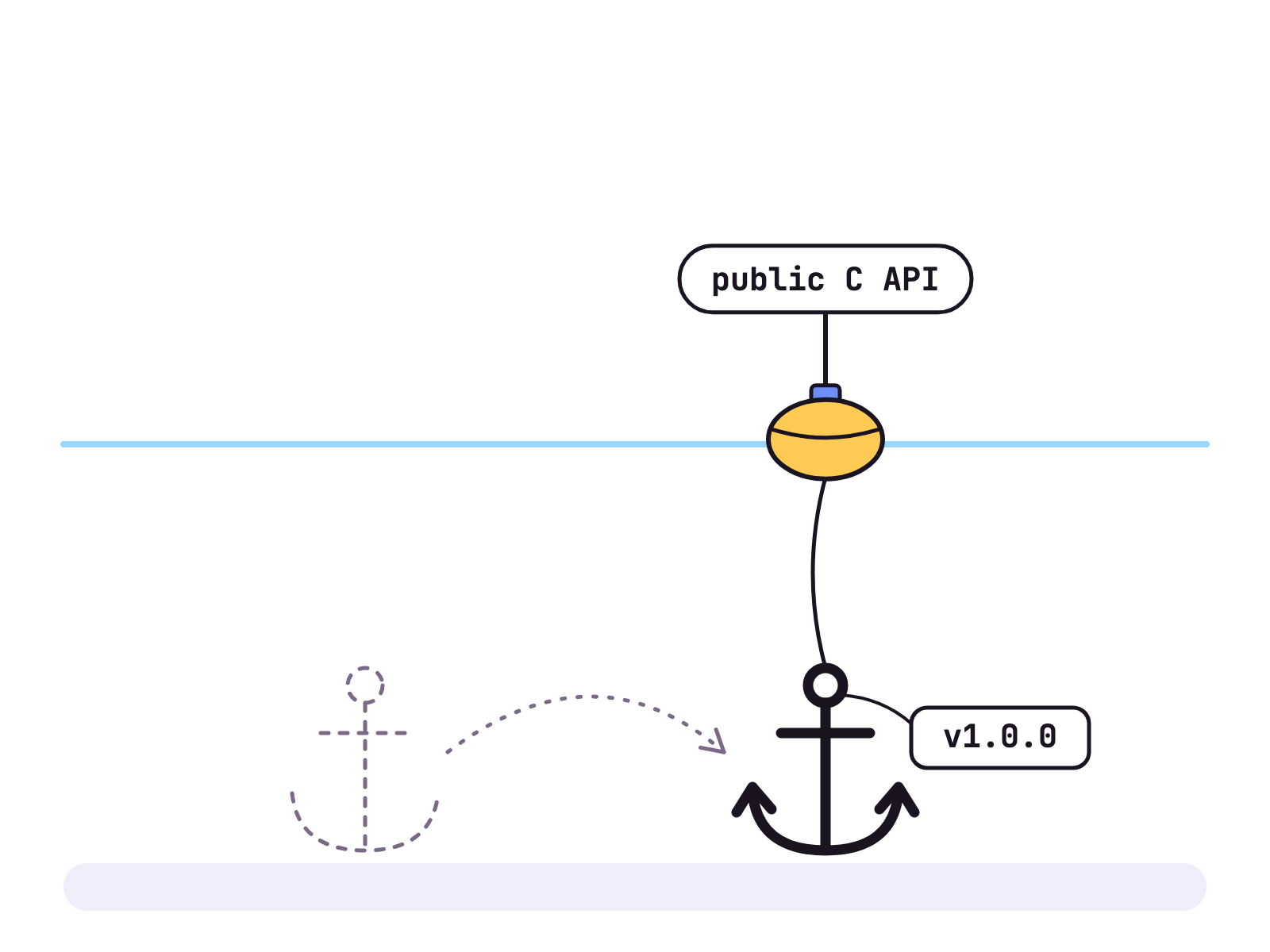
It is a versioning promise. The ggml-org blog post says: “Moving forward, both llama.cpp and ggml will reflect API and ABI incompatibilities with major-version bumps.”
The post sets rules for all ggml-org projects using semantic versioning. MAJOR is a “Breaking change to the public C API in ./include”, MINOR a “Backward-compatible feature, backend updates, model support, or API addition”, and PATCH a “Bug fix with no API change”. It also gives the reason: “many downstream applications already depend on our work.”
Should you upgrade now?
Neither the release notes nor the blog post gives upgrade advice; the list above names what the notes remove or change. We think the version rules matter more than any single feature: apps that embed llama.cpp now get a clear signal for breaking changes.
Prefer Ollama? Read is Ollama good for coding and how to connect Ollama to Claude Code. If you want a team of agents on local models, Munder Difflin is free and open source: a desktop app that runs a team of AI agents for all kinds of knowledge work, coding included, on your own computer. Its README, read 13 Nov 2026, says: “Plus bring your own keys and local models through Ollama, LM Studio or vLLM.” The open models guide shows the wiring for each engine.
FAQ
What is llama.cpp 1.0?
It is the first major version of llama.cpp, the C/C++ library and tools for running LLMs, published on GitHub on 13 Nov 2026 at 10:20 UTC. The release notes say it removes the deprecated public API, promotes the NextN and speculative API to llama.h, adds FP8 KV caches and an MoE expert cache, and hardens llama-server. It also updates ggml to v1.0.0.
Will my code that calls llama.h break on llama.cpp 1.0?
It can. The release notes say 1.0 removes llama_set_warmup, 35 deprecated functions and defrag_thold, and renames llama_set_embd_state_src to llama_set_ctx_state_src. Code that still uses any of those needs updating.
What does the 1.0 version number mean for llama.cpp?
It is a versioning promise. The ggml-org blog post says: "Moving forward, both llama.cpp and ggml will reflect API and ABI incompatibilities with major-version bumps." Its rules table defines a MAJOR bump as a "Breaking change to the public C API in ./include".
Is --defrag-thold still supported in llama.cpp 1.0?
No. The v1.0.0 release notes list defrag_thold and --defrag-thold among the removed items, next to llama_set_warmup and 35 deprecated functions.
Does llama-server in 1.0 handle MCP tools?
Yes. The release notes say llama-server now cancels MCP tool calls on client disconnect or timeout and notifies the MCP server. They also add --allow-unauthenticated-tools as an opt in, and the web UI moves Models, MCP and Settings into a sidebar footer.