Overnight AI Coding: What's Realistic (and What's Not)
An honest look at letting AI coding agents run overnight — what works today, where guardrails matter, and what still needs a human in the morning.
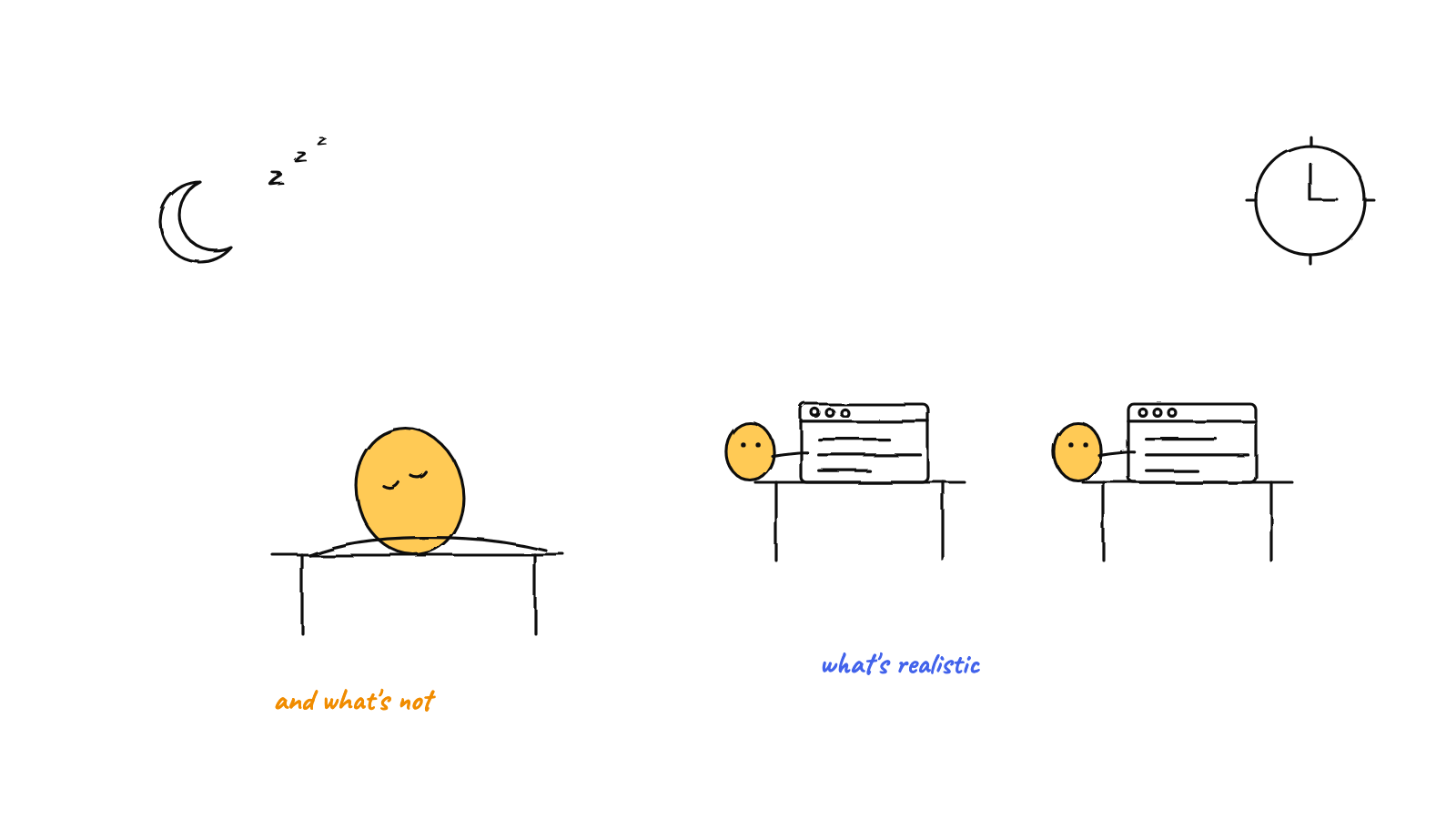
Overnight AI coding is real, but the honest version isn't "wake up to shipped features." It's: agents make genuine progress on well-scoped, verifiable work while you sleep, behind guardrails — branch-only changes, human approval for the dangerous stuff, and an audit log you read with coffee. Set the scope and the guardrails right and it's a force multiplier. Skip them and you wake up to a mess. Here's what actually works, what doesn't, and how to set it up so morning-you is happy.
The pitch writes itself: close the laptop, let a hive of agents code through the night, wake up to finished work. It’s a good pitch — and like most good pitches, the truth is more interesting than the slogan. Agents can do real work overnight. They also fail in specific, predictable ways. This is the realistic version, so you can get the upside without the 3 a.m. surprises. If you want the optimistic companion, read letting agents build while you sleep — this post is the counterweight that keeps it honest.
What overnight agents actually do well
The work that survives unattended has one thing in common: the agent can tell whether it succeeded. When success is checkable, an agent can iterate toward it without you. That covers a lot:
- Test-guarded changes. Writing tests, fixing failing ones, raising coverage — the test suite is the oracle, so the agent knows when it’s done.
- Mechanical migrations. Renames, dependency bumps, codemods, framework upgrades across many files — repetitive, verifiable, and exactly the kind of tedium you’d rather not do by hand.
- Refactors with a safety net. Extracting modules, deleting dead code, tightening types — anything where “still compiles, tests still pass” is a real signal.
- Documentation and cleanup. Doc sweeps, changelog drafting, comment passes, fixing lint — low-risk, high-toil, easy to review in the morning.
Give a team of agents a stack of these with clear acceptance criteria and they’ll genuinely chip through it overnight. That’s the realistic win, and it’s a good one.
Where it breaks
The failure modes are just as predictable. Overnight agents struggle when:
- The goal is ambiguous. “Improve the dashboard” has no finish line, so the agent wanders or gilds. “Make the dashboard’s first paint under 1s, verified by the perf test” has one.
- The work needs taste. Product judgment, API design, naming that future humans will live with — these need a person. An agent will pick something, but unattended is the wrong time to discover you disagree.
- Verification is impossible. If the agent can’t check its own output — no tests, no types, no reproducible run — it’s flying blind, and you’re reviewing blind in the morning.
- It hits a real decision. Spending money, deleting data, a destructive migration, a scope change nobody anticipated. The right move here isn’t “guess confidently” — it’s “stop and ask.”
Notice the pattern: the failures aren’t about raw capability. They’re about scope and judgment. The fix isn’t a smarter model; it’s a better setup.
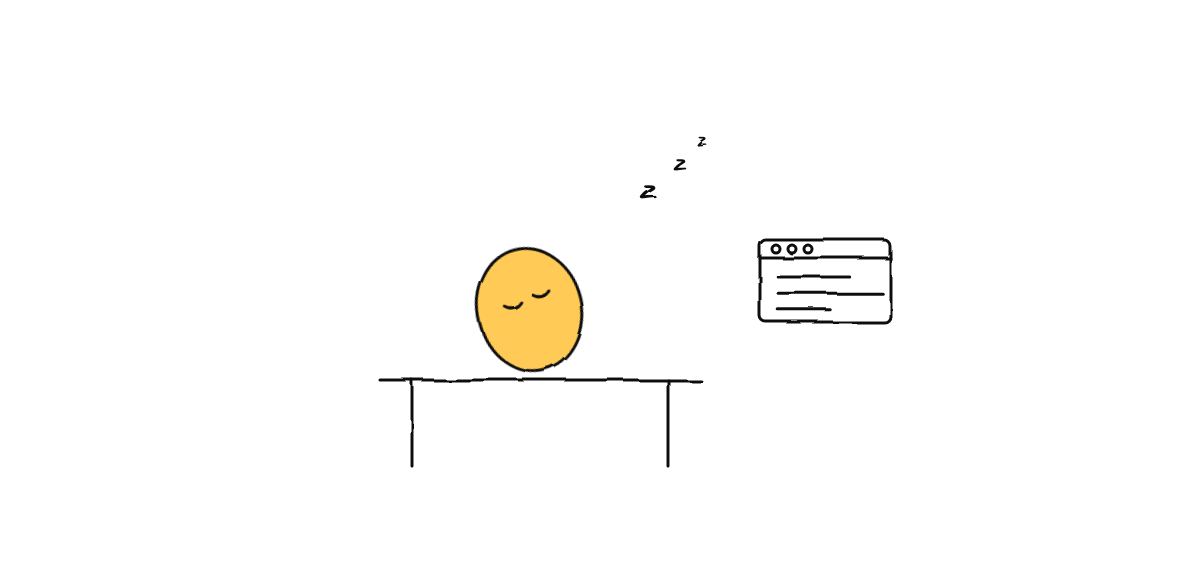
The guardrails that make overnight work safe
Unattended doesn’t have to mean ungoverned. The difference between “wake up to progress” and “wake up to a mess” is a handful of guardrails — and they’re the same ones a good multi-agent harness builds in:
- Branch-only, never straight to main. Overnight agents commit to their own branches/worktrees. The
worst case is a branch you delete, not a broken
main. Merging stays a deliberate, human-gated step. - Human-in-the-loop for the dangerous stuff. The system runs autonomously on routine work but pauses for approval on the things that matter — spend, destructive operations, scope changes. Done right, this doesn’t slow you down; it just stops the few actions you’d regret. (More on designing that: human-in-the-loop AI agents.)
- An orchestrator that escalates instead of guessing. When an agent gets blocked or two agents conflict, a coordinator should resolve the routine cases and escalate the genuine decisions to a queue you read in the morning — not paper over them with a confident wrong answer.
- An audit log you can actually read. The single most valuable overnight artifact isn’t the diff — it’s a chronological record of what each agent did and why, so morning review takes minutes, not hours.
- Durable memory for continuity. Agents that record what they learned (and recall it) don’t loop on the same dead end all night or re-litigate a decision they already made.
None of these are exotic. They’re the boring infrastructure that turns “agents running unsupervised” into “agents running supervised by design.”
A realistic overnight setup
If you want to try it tonight, here’s the honest checklist:
- Queue verifiable tasks, not vibes. Each task gets a one-line goal and a way to check it (“tests green,” “build passes,” “endpoint returns 200”). If you can’t state the check, it’s not an overnight task — it’s a morning conversation.
- Scope small. Several narrow tasks beat one sprawling one. Small tasks fail cheaply and review fast.
- Isolate the blast radius. Branches or worktrees per agent, never the shared main checkout.
- Set the escalation rules. Decide up front what the agents may do autonomously and what must wait for you. Default the ambiguous cases to “ask.”
- Leave breadcrumbs for morning-you. Make sure there’s a log and a short status per task. You’re optimizing your review time, not just the agents’ run time.
What still needs you in the morning
This is the part the slogans skip. Overnight agents change when the work happens, not whether you’re accountable for it. You still:
- Review the diffs. “Tests pass” is necessary, not sufficient — read the change.
- Make the taste calls the agents correctly deferred.
- Decide what merges. The realistic deliverable is a reviewable branch plus a clear log, not an auto-merged release.
That’s not a limitation to apologize for — it’s the right division of labor. Agents are spectacular at toil and iteration; you’re irreplaceable at judgment and accountability. Overnight coding works best when the setup respects that line instead of pretending it doesn’t exist.
The honest bottom line
Can AI code overnight? Yes — for well-scoped, verifiable work, behind guardrails, with you reviewing in the morning. Treat it as a tireless junior team that needs clear tickets and a review gate, and you’ll get a real multiplier. Treat it as a magic “ship while I sleep” button and you’ll get a cleanup job. The technology is ready for the first framing today; the second is still a slogan.
If watching that team work (and reading its log) sounds useful, that’s exactly what running an office of AI agents is about.
Munder Difflin is a local, open-source multi-agent harness built for exactly this: agents that work on isolated branches, escalate the decisions that matter, and leave a readable trail. Download Munder Difflin to run your own overnight team — free and MIT-licensed.
FAQ
Can AI coding agents really work overnight?
Yes, for well-scoped, verifiable work — tests, migrations, refactors, doc sweeps — agents can make real progress unattended. They struggle with ambiguous goals, decisions that need taste, and anything they can't check themselves.
Is it safe to let coding agents run while you sleep?
It's safe when you set guardrails: branch-only changes (never straight to main), human approval for spend and destructive actions, and an audit log you can read in the morning. Without those, unattended agents can do unattended damage.
What's the biggest mistake with overnight AI coding?
Giving a vague goal with no way for the agent to verify success. Agents that can run tests and check their own output make progress; agents told to 'improve the app' wander.
Will I wake up to finished features?
Sometimes — but expect to wake up to progress that needs review, not merged production code. The realistic win is a reviewable branch and a clear log, not a hands-off release.