Pi Agent Alternatives: 7 Coding Agents to Try (Oct 2026)
Seven Pi agent alternatives checked 26 Oct 2026: OpenCode, Munder Difflin, Claude Code, Codex CLI, Hermes Agent, Goose and Crush, with licences and prices.
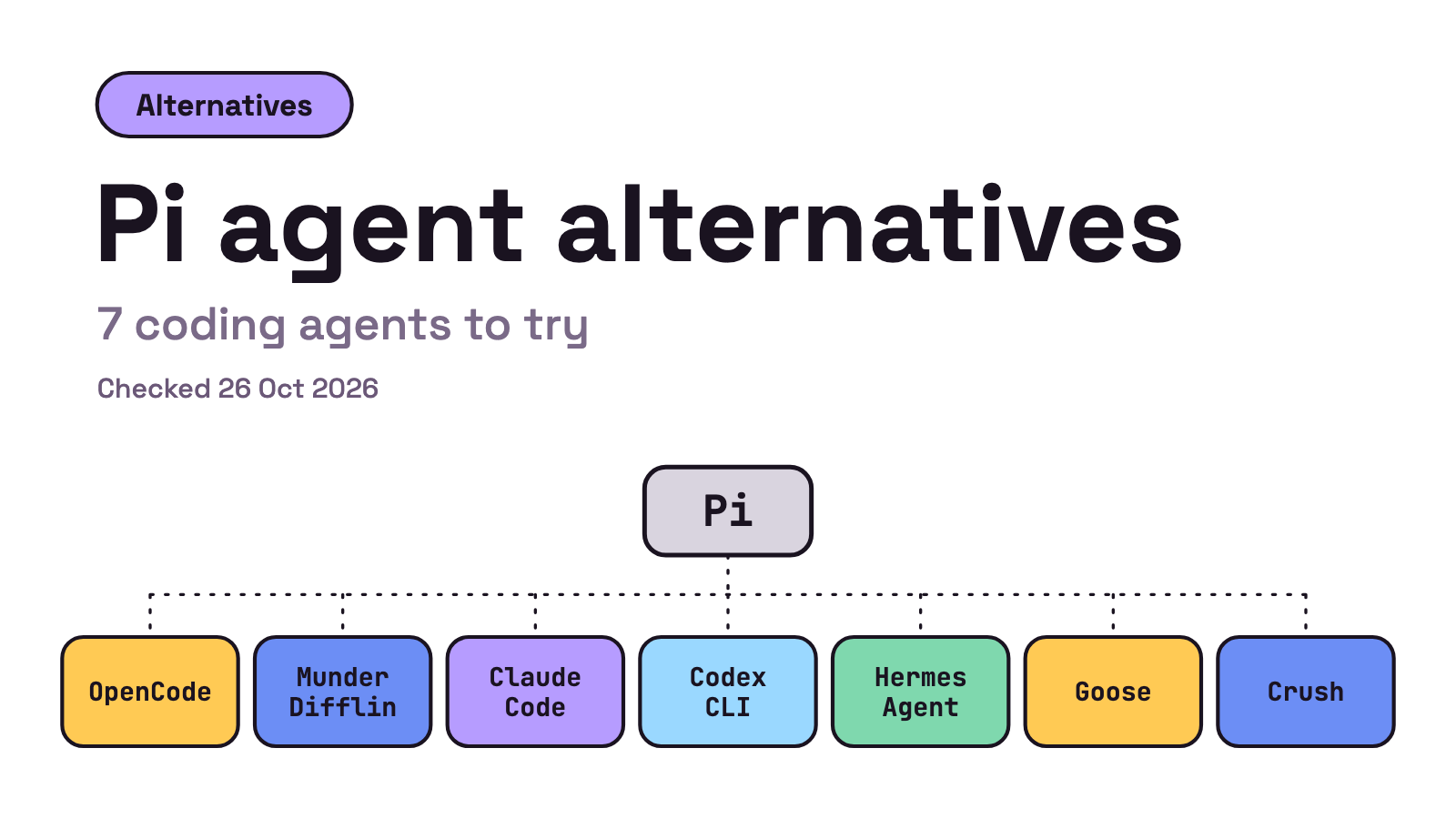
The best Pi agent alternatives, checked 26 Oct 2026: OpenCode for another open source agent on any model, then Munder Difflin, free and open source: a desktop app that runs a team of AI agents for all kinds of knowledge work, coding included, on your own computer. Also: Claude Code, Codex CLI, Hermes Agent, Goose and Crush.
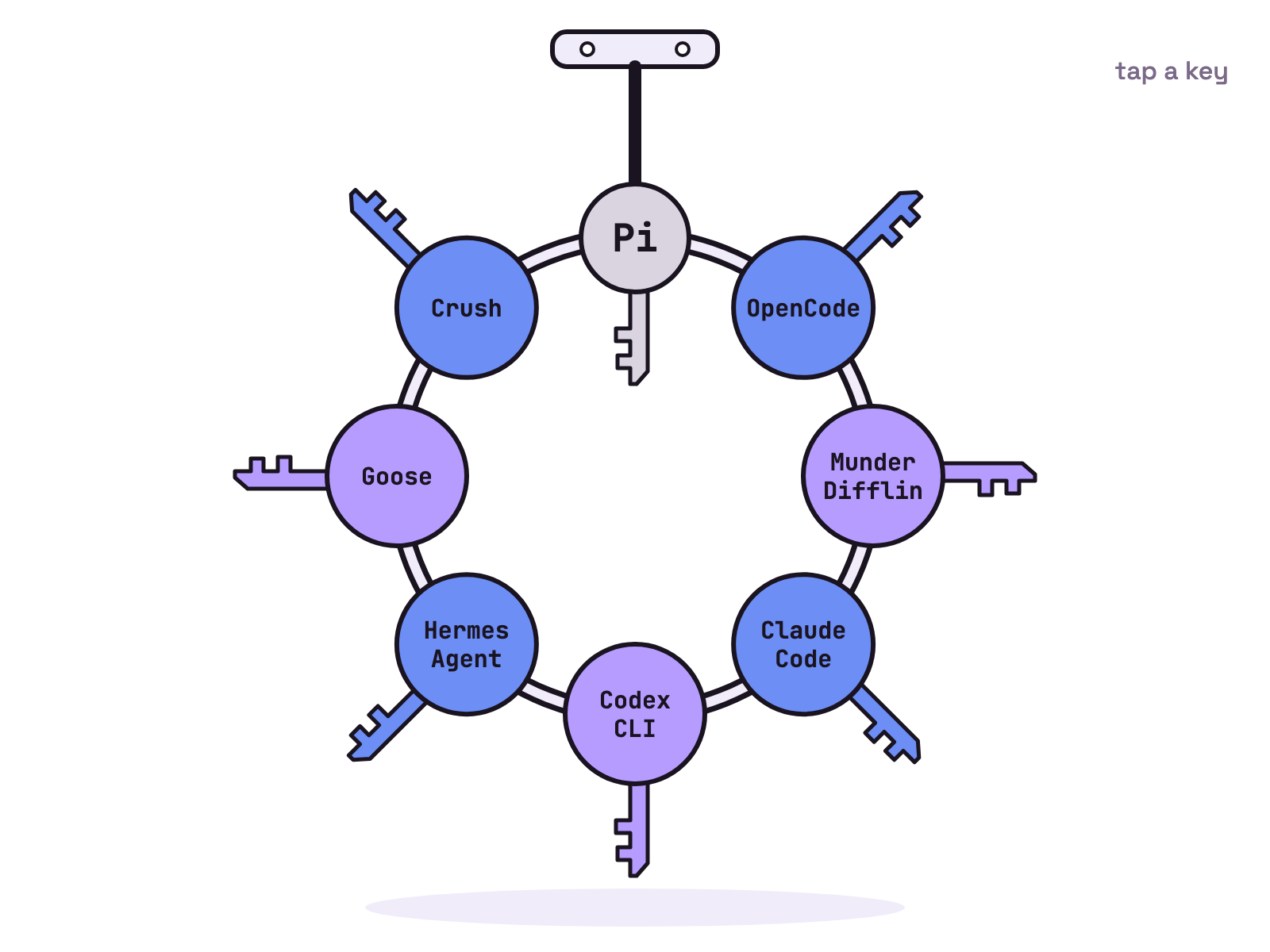
New to Pi itself? Start with what is Pi agent. This list sits in our Comparisons hub.
Why look for a Pi agent alternative?
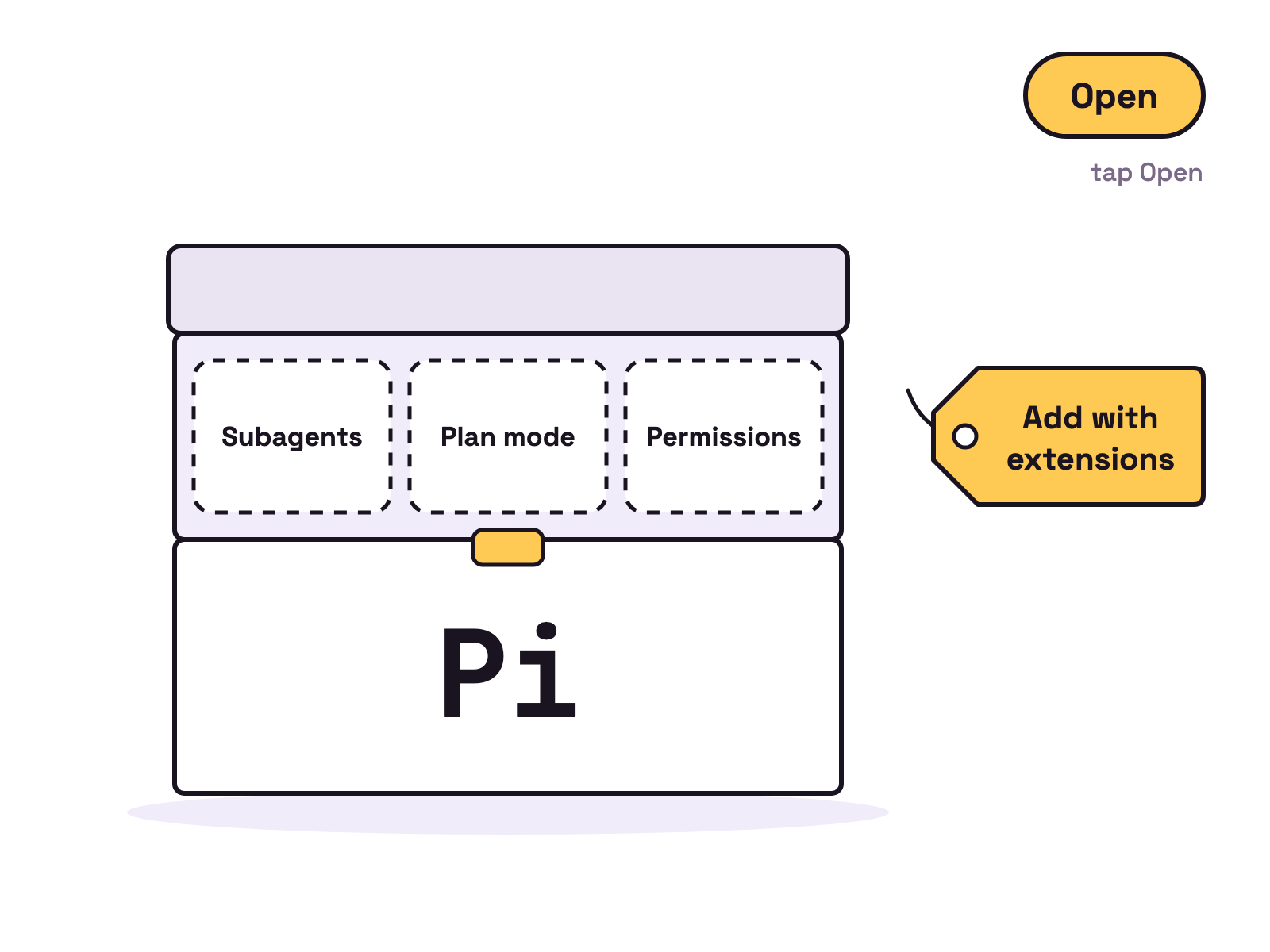
Our view: people look past Pi when they want features in the box rather than features they build. Pi’s README, read on 26 Oct 2026, is clear about the trade:
- Small on purpose. It calls Pi “a minimal, extensible agent harness that you can make your own”, and says it “skips features like sub-agents and plan mode”. You add them with extensions or packages.
- No permission system. In its words: “Pi does not include a built-in permission system for restricting filesystem, process, network, or credential access.” It runs with your user’s permissions and points to containers or a sandbox for limits.
- Terminal and code. Pi works in the terminal, in print or JSON mode, over RPC and through a TypeScript SDK. Chat apps, schedules and work beyond code need something else.
None of this is a flaw for people who like to build their own agent. Pi is MIT licensed, and release v1.4.0 shipped on 21 Oct 2026.
Which Pi agent alternatives are worth a look?
Seven tools pass, each live with a release in October 2026.
1. OpenCode. OpenCode is “The open source AI coding agent”, MIT licensed, in the terminal and as a desktop app in beta, with release v1.19.4 on 22 Oct 2026. Its site lists “75+ LLM providers”, local models included, and says “OpenCode is 100% free to use” (26 Oct 2026). Best for: a fuller open source agent on any model. See OpenCode alternatives.
2. Munder Difflin. Keep Pi and add more agents. Munder Difflin is MIT licensed and runs Pi as one of its CLIs, next to Claude Code, Codex, OpenCode, Gemini CLI and Copilot. Each agent gets its own terminal, and they share a task board; the install guide covers setup. Best for: a team of agents for research, writing, ops and code.
3. Claude Code. Anthropic’s agent “reads your codebase, edits files, runs commands, and integrates with your development tools”, per its docs. It runs Claude models and has permission modes built in. Anthropic’s pricing page includes it in Pro, $20 if billed monthly, as of 26 Oct 2026. Best for: Claude with permissions built in.
4. Codex CLI. Codex CLI is “a coding agent from OpenAI that runs locally on your computer”, Apache 2.0. On ChatGPT plans the CLI starts at Plus, $20 a month, per OpenAI’s Codex pricing page on 26 Oct 2026. Best for: people who already pay for ChatGPT. See Codex alternatives.
5. Hermes Agent. Hermes Agent is “The self-improving AI agent built by Nous Research”, MIT licensed, release v0.22.5 on 23 Oct 2026. Its README says “Use any model you want”, lists a built in cron scheduler and subagents, and runs in Telegram, Discord, Slack, WhatsApp, Signal and the CLI. Best for: an agent that lives in your chat apps. See what is Hermes Agent.
6. Goose. Goose is “a general-purpose AI agent that runs on your machine”, as a desktop app and a CLI, and “works with 15+ providers”, Ollama included. Apache 2.0, release v1.56.0 on 23 Oct 2026. Best for: one agent for code and other work.
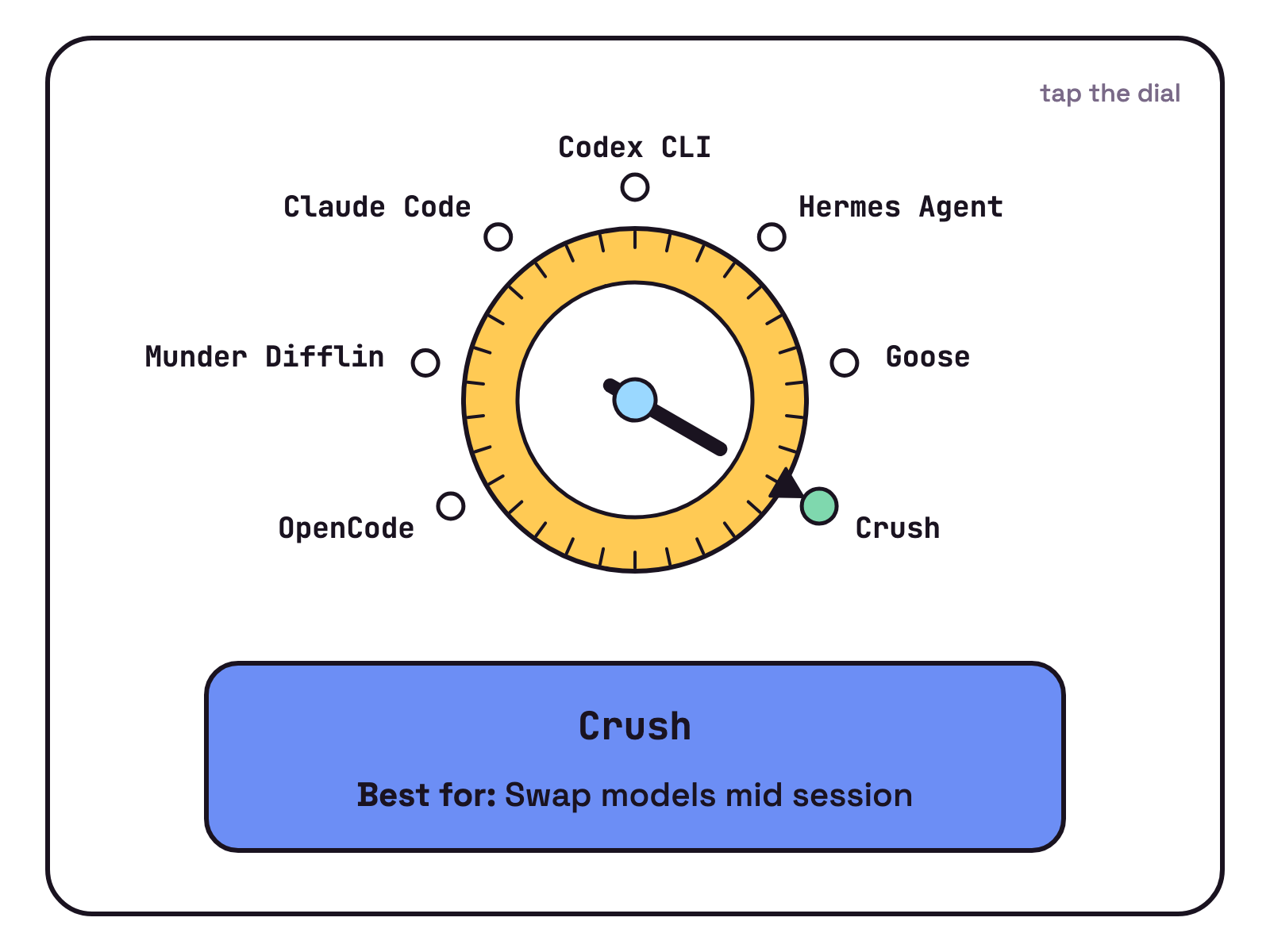
7. Crush. Crush from Charm is a terminal agent that lets you “switch LLMs mid-session while preserving context” and add tools through MCP. It uses the Functional Source License 1.1 with an MIT future licence, release v0.98.2 on 23 Oct 2026. Best for: a polished terminal agent with LSP context.
Pi agent alternatives compared, checked 26 Oct 2026
| Tool | Licence | Models | Price as of 26 Oct 2026 |
|---|---|---|---|
| Pi | MIT | 15+ providers, Ollama included | Free; you pay your model provider. |
| OpenCode | MIT | 75+ LLM providers, local included | Free to use. |
| Munder Difflin | MIT | The CLIs you run, Pi included | Free and open source. |
| Claude Code | None listed on GitHub | Claude | In Pro, $20 if billed monthly (26 Oct 2026). |
| Codex CLI | Apache 2.0 | OpenAI | CLI from Plus, $20 a month (26 Oct 2026), or an API key. |
| Hermes Agent | MIT | Any model, Nous Portal and OpenRouter among them | Free; you pay your model provider. |
| Goose | Apache 2.0 | 15+ providers, Ollama included | Free and open source. |
| Crush | FSL 1.1, MIT future licence | OpenAI or Anthropic compatible APIs | Free; you pay your model provider. |
The rows are our selection. Licences come from GitHub and prices from each vendor’s page, all read on 26 Oct 2026. Pi’s provider count is from our Pi explainer, checked 2 Oct 2026.
Which Pi agent alternative should you pick?
Pick by what you missed in Pi.
- OpenCode if you want Pi’s openness with more in the box.
- Munder Difflin if you want to keep Pi and run other agents beside it for any knowledge work, coding included.
- Claude Code if you want permission modes and Anthropic’s models.
- Codex CLI if you already pay for ChatGPT.
- Hermes Agent for an agent you reach from chat apps, on a schedule.
- Goose for one agent across code and workflows, with a desktop app.
- Crush for a terminal agent that swaps models mid session.
FAQ
What is the best Pi agent alternative?
OpenCode, if you want another open source terminal agent on any model. Its site lists 75+ LLM providers, local models included, and says OpenCode is 100% free to use, as of 26 Oct 2026.
Is there a Pi alternative with permissions built in?
Yes. Claude Code has permission modes, from Manual, which asks before edits and commands, to auto, which runs actions with background safety checks. Codex CLI runs in a sandbox and asks before it leaves the workspace or uses the network. Pi's README says it does not include a built in permission system and points to containers or a sandbox instead, as of 26 Oct 2026.
Can I keep Pi and use other agents too?
Yes. Munder Difflin is free and open source: a desktop app that runs a team of AI agents for all kinds of knowledge work, coding included, on your own computer. Pi is one of the CLIs it runs, next to Claude Code, Codex and OpenCode.
Which Pi alternative works outside the terminal?
Hermes Agent, Munder Difflin and Goose. Munder Difflin is a desktop app. Hermes Agent's README says it runs in Telegram, Discord, Slack, WhatsApp, Signal and the CLI from one gateway. Goose ships a desktop app and a CLI. Both checked 26 Oct 2026.