A Crystal Alternative: Multi-Agent Claude Code with Memory
Crystal runs parallel Claude Code worktrees well. Where a memory-backed, orchestrated hive changes the workflow — and when to stick with Crystal.
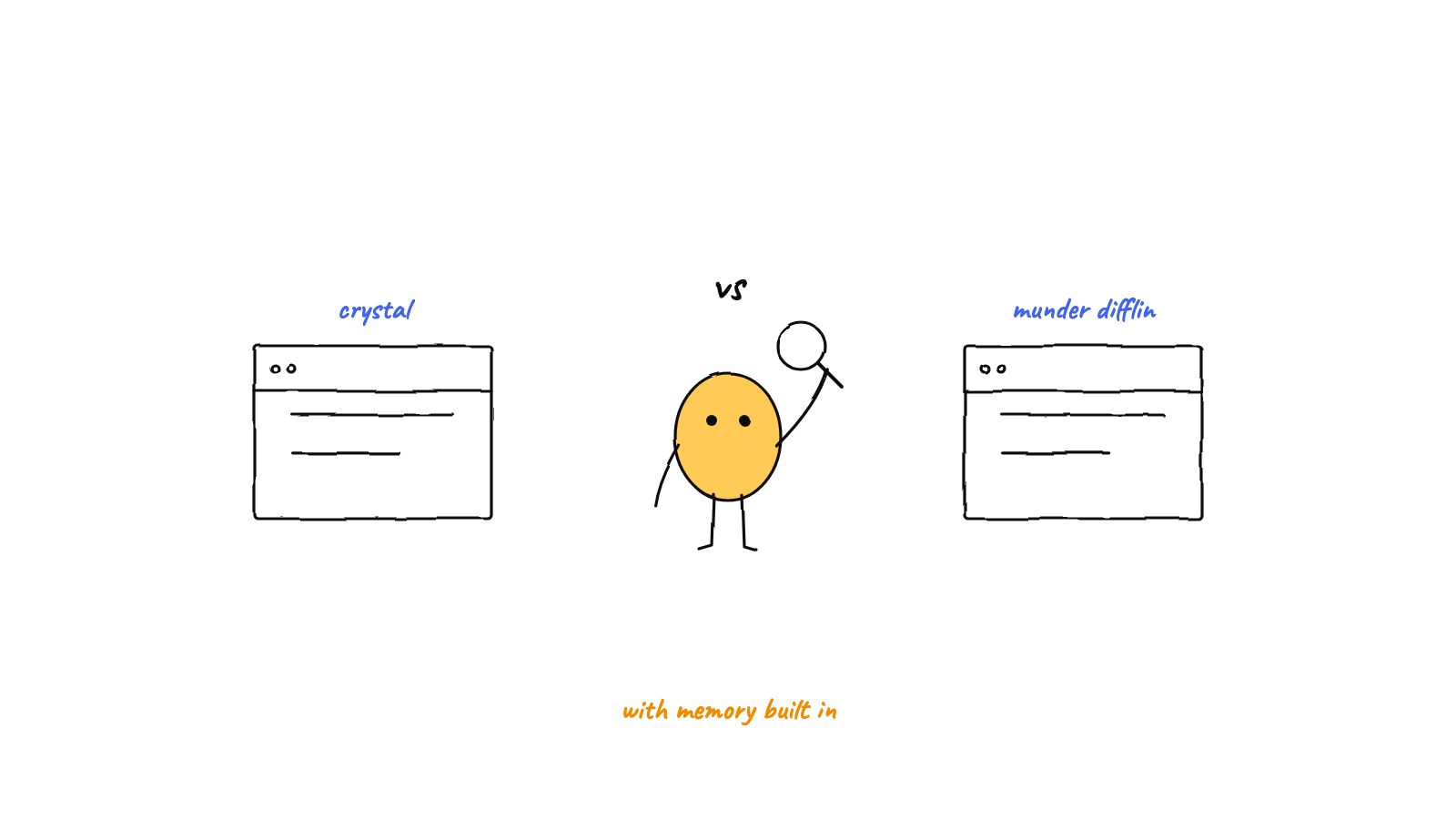
Crystal is a tidy, open-source desktop app for running multiple Claude Code sessions in parallel, each in its own git worktree, with diff and test review. A Crystal alternative makes sense when you want the agents to do more than run side by side — to share long-term memory, message each other, and be routed by an orchestrator. That's the difference between parallel sessions and a coordinated team.
Crystal is a likeable tool: open source, a real GUI, and a clean model for running parallel Claude Code experiments. If you’re weighing an alternative, start by being clear about what Crystal already nails.
What Crystal does well
Crystal is an open-source desktop app that spins up multiple Claude Code sessions from prompts, runs them concurrently in isolated git worktrees, and lets you review diffs and test results across them in one window.
- It’s open source. You can read it, file issues, and contribute.
- Parallel experimentation is the sweet spot. Try several approaches to the same problem at once, then compare outcomes.
- Worktree isolation + diff review keep parallel work safe and reviewable without terminal juggling.
For “run a few variations in parallel and pick the best diff,” Crystal is a good answer. The reason to look further is usually one word: memory.
Where parallel sessions hit a ceiling
Crystal, like other parallel-worktree apps, runs agents beside each other. What it doesn’t add is a coordination layer:
Sessions don’t share knowledge
Each session is its own island of context. When one agent figures out a convention or a gotcha, the others don’t inherit it. Without shared long-term memory, the team re-learns the same things and you re-explain the same context.
Agents don’t message each other
There’s no mailbox for one agent to hand a result to another. Coordination routes through you.
There’s no orchestrator
You launch and assign each session. Nothing decomposes a goal and routes the pieces across the team for you.
What memory changes, day to day
Adding a shared brain to a team of agents is a bigger shift than it sounds:
- Context stops resetting. Decisions, conventions, and gotchas live in a semantic memory layer (MemPalace) every agent reads on startup and writes to as it learns.
- Briefs get shorter. You stop re-explaining the project because the team already remembers it.
- Work compounds. Agent B builds on what agent A learned an hour — or a week — ago.
Layer messaging and an orchestrator on top of that memory and you’ve crossed from “parallel sessions” to a multi-agent harness: agents with roles and mailboxes, a GOD orchestrator that routes work, and a visual office floor. That’s Munder Difflin — open source (MIT), local-first, on macOS, Windows, and Linux.
Crystal vs a memory-backed hive
- Stay with Crystal if your loop is parallel experiments + diff review and you don’t need agents to coordinate or remember across sessions.
- Move to a hive if you want shared memory, inter-agent messaging, and an orchestrator — agents that act as one team instead of parallel strangers.
See also: a head-to-head Claude Squad vs Munder Difflin and the full roundup of multi-agent Claude Code tools.
The tooling landscape moves fast — check Crystal’s repo for current features. We’ve described it on its own terms; Munder Difflin is our own project.
If shared memory is the missing piece, download Munder Difflin and let your agents actually remember — free and open source.