Voice Is a Control Plane, Not a Gimmick
Voice is a terrible way to write code and a great way to run a fleet. Why low-bandwidth commands over high-bandwidth work is the right split — with Munder Difflin's Talk mode (echo-back confirmation, spend caps, michael-voice attribution) as the case study.
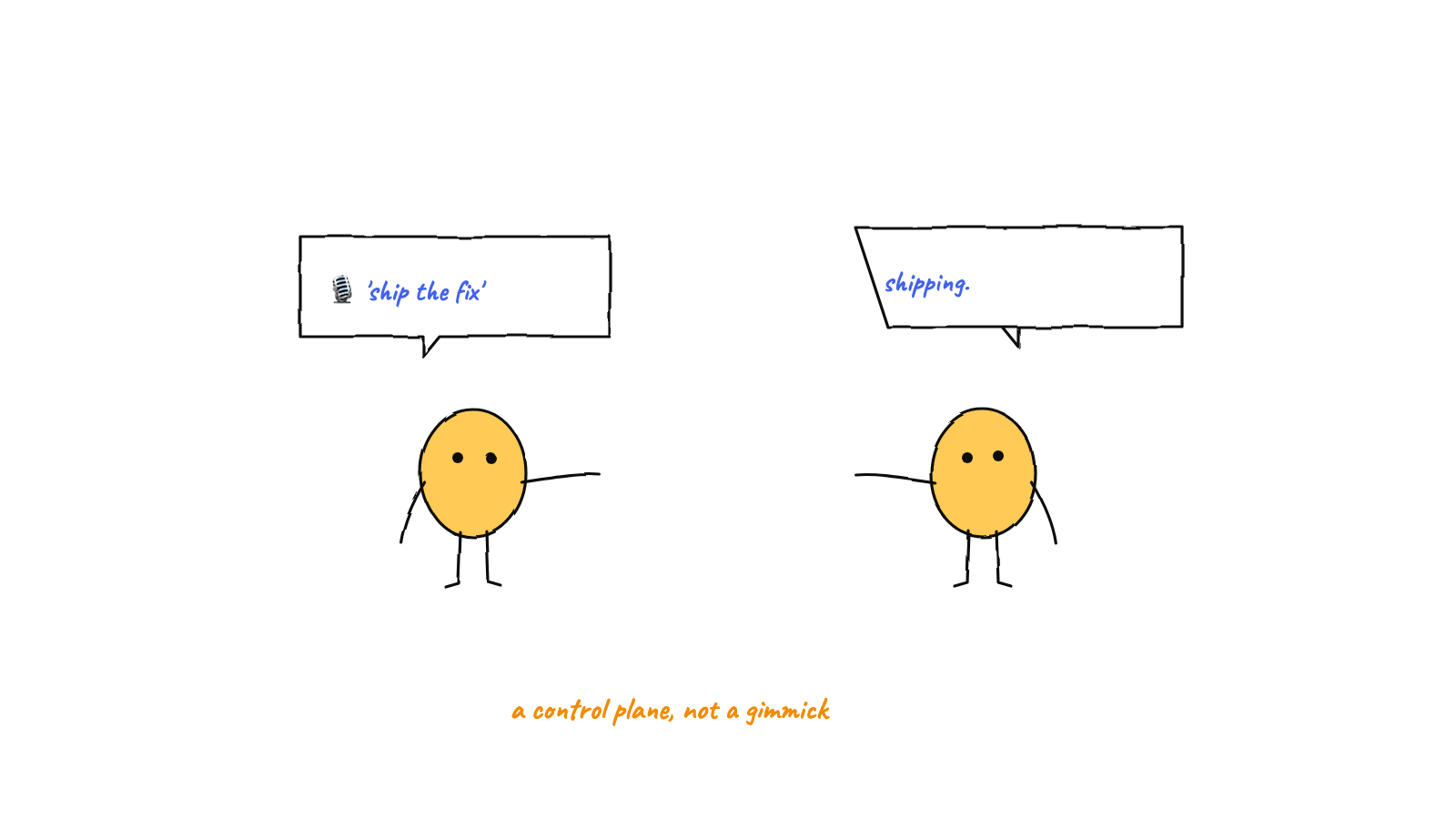
Voice is a terrible interface for writing code and a genuinely good interface for running a fleet. The trick is bandwidth: code is high-bandwidth and precise, but orchestration — delegation, status, approvals — is a stream of short, intent-shaped commands that fan out into minutes of agent work. Munder Difflin's Talk mode (v0.3.2) is the case study: a realtime voice channel to the GOD orchestrator with spoken echo-back confirmation for destructive verbs, a distinct michael-voice audit identity, a hard spend cap, idle auto-disconnect, and completions spoken back the moment they land. Voice done as a control plane, not a party trick.
Every few months someone demos “coding by voice” and the reaction is always the same: neat, and nobody wants it. Dictating a diff is strictly worse than typing one. So the whole category gets filed under gimmick, and that’s a mistake — because the demo was testing voice against the wrong workload.
The bandwidth argument
Think of any interface as a channel, and ask whether the channel’s bandwidth matches the payload.
Code is a high-bandwidth, high-precision payload. It’s dense with symbols, whitespace-sensitive, positional. Speaking it means serializing structure through a lossy audio channel and hoping transcription preserves !== versus !=. Typing wins. It’s not close.
But orchestration is a different payload entirely. When you’re running a fleet of agents, the things you actually emit are tiny:
- Delegation — “have someone fix the flaky auth test.”
- Status — “what’s Dwight working on? what’s on the board?”
- Approvals — “yes, kill it” / “no, hold that.”
Each of these is a sentence. Each fans out into minutes or hours of high-bandwidth work that the agents perform — reading files, running builds, writing diffs. That’s the asymmetry that makes voice fit: low-bandwidth commands over high-bandwidth work. You supply intent; the fleet supplies density. It’s the same division of labor a GOD orchestrator already imposes on typed input — voice just removes the keyboard from the loop when the keyboard was barely being used anyway.
The other half of the fit: orchestration is naturally ambient. You’re across the room while an overnight mission grinds. A status question shouldn’t cost you a walk to the desk, and a completion shouldn’t wait until you happen to glance at a terminal.
Case study: Talk mode
Munder Difflin shipped this thesis as a feature in v0.3.2 (the launch post has the full tour). Press Talk and you get a low-latency voice channel — OpenAI Realtime API over WebRTC, bring-your-own key — to Michael, the GOD orchestrator, running alongside the async terminal floor, not replacing it.
Michael listens, answers, and acts. The read side covers the hive: tasks, board, memory, agents, activity, cost. The action side is the full orchestration verb set: create and assign tasks, dispatch agents, pause / steer / halt, spawn and hire workers, kill them, edit schedules. Notice what’s not in that list: writing code. The voice channel never touches an editor. It only moves work around — exactly the payload the channel can carry.
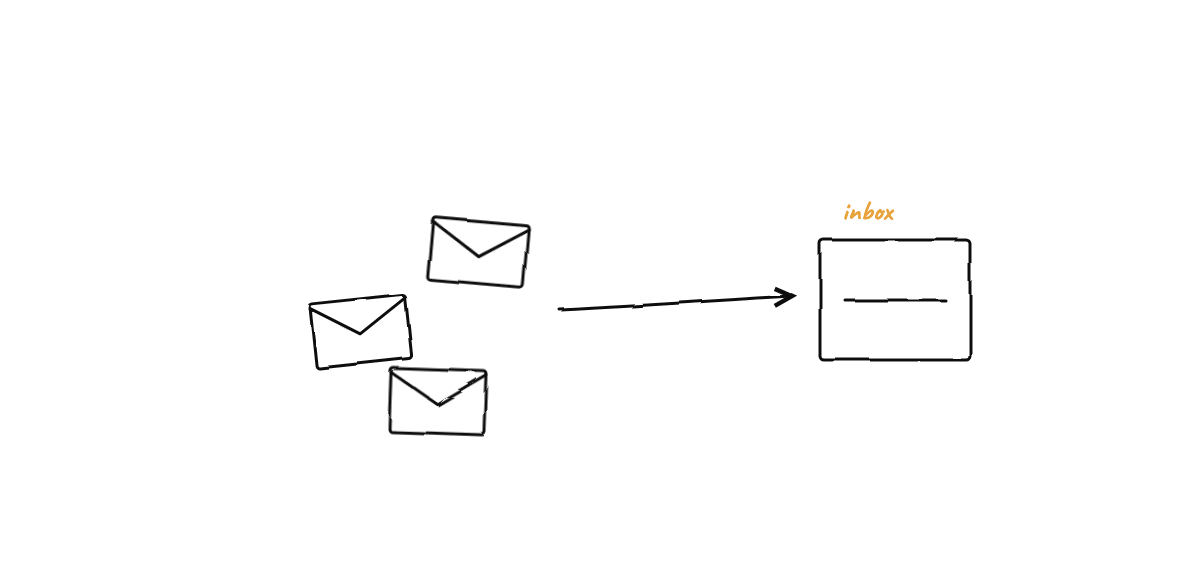
And the loop closes in both directions. Voice-dispatched work reports back on its own: a completion watcher detects when a task lands and pushes the event into the live session so Michael speaks it unprompted — “respond when done” as a first-class behavior, with an on-screen toast, and a queue-to-notification path if the session is already closed. That’s the ambient half delivered: you delegated by sentence, and the result comes back as a sentence.
A control plane needs guardrails, not vibes
Here’s where “control plane” stops being a metaphor and starts being an engineering standard. A microphone is a noisy, spoofable, mishearable input device wired to verbs like kill. If you treat that casually, you’ve built a gimmick with a blast radius. Talk mode’s guardrails are the interesting part:
Echo-back confirmation for destructive verbs. Every destructive action is gated behind a spoken echo-back: Michael repeats exactly what he’s about to do and requires a distinct confirm token — never a bare “yes,” which a stray utterance could trip. On top of that sit hard refusals: he will not kill the GOD agent, and he will not target all agents at once, period. Even task matching is defensive — spoken phrases are normalized and scored against stored titles, and a close call triggers a spoken “which one?” instead of silently mutating the wrong card. This is the same discipline as any human-in-the-loop approval gate, adapted to a channel where the human’s “click” is a phrase.
michael-voice as a distinct actor. Everything done by voice is attributed to a separate michael-voice identity in messages, the board, and the activity log, and it pings the GOD terminal. A voice dispatch is auditable and never impersonates a worker — which matters enormously when you’re later reconstructing why the floor did something (the case for that paper trail is the whole observability argument).
Spend cap and idle disconnect. Realtime voice is metered, so the session runs under a live cost HUD with a hard spend cap that auto-disconnects when hit, plus a configurable idle auto-disconnect (default 3 minutes) so a forgotten-open mic can’t quietly run a bill. A control plane you’re afraid to leave enabled isn’t a control plane.
Key hygiene. It’s BYOK, and the OpenAI key is decrypted main-process-only, minted into short-lived ephemeral session tokens — the real key never reaches the renderer. No key? The Talk button is visibly disabled with a “needs OpenAI key” cue instead of a dead click.
None of these guardrails would matter for a demo. All of them matter for a control plane you use daily — and the whole path (connect, ask, confirm, spawn, kill, dispatch, completion spoken back) was human-verified end-to-end on a real key before it shipped.
The takeaway
Judge voice by the payload you put on it. As an authoring channel for code, it loses to a keyboard every time. As a control plane for a fleet — delegation, status, approvals, completions — it’s the natural interface, provided it’s built like infrastructure: confirmations for anything destructive, a distinct audit identity, caps on spend, and a timeout on silence. That’s the difference between a gimmick and a plane you’d actually fly.
If you want to try the case study, download Munder Difflin — free, MIT-licensed, local-first — and if the idea resonates, a star on GitHub helps more people find it.
FAQ
Why is voice bad for writing code but good for orchestrating agents?
Because the bandwidth is mismatched in one direction and matched in the other. Code is dense, precise, and positional — dictating a diff by voice is slower and more error-prone than typing it. Orchestration commands are the opposite: short, intent-shaped utterances like assign this, what's the status, kill that worker. A sentence of intent fans out into minutes of agent work, so voice carries the command and the agents carry the density.
What can you actually do by voice in Munder Difflin's Talk mode?
Press Talk and you get a low-latency voice channel to the GOD orchestrator over the OpenAI Realtime API. Michael reads the hive — tasks, board, memory, agents, activity, cost — and can create and assign tasks, dispatch agents, pause, steer, halt, spawn or hire workers, kill them, and edit schedules. Destructive verbs are gated behind spoken echo-back confirmation, and completions are spoken back the moment they land.
How does Talk mode prevent a misheard command from killing the wrong agent?
Every destructive verb is held behind a spoken echo-back confirmation: Michael repeats the exact action back and requires a distinct confirm token, never a bare yes. There are also hard refusals — he will not kill the GOD agent or target all agents at once, no matter what he heard. Task matching by voice is normalized and scored, and close matches trigger a spoken which-one disambiguation instead of silently mutating the wrong card.
Can a forgotten-open voice session run up a bill?
No — that failure mode is engineered out. Voice sessions run under a live cost meter with a hard spend cap that auto-disconnects when hit, plus a configurable idle auto-disconnect (default 3 minutes) so an open mic in an empty room shuts itself off. Realtime voice is metered, so both guards exist precisely because the channel costs money while it is open.
Are voice-issued actions auditable?
Yes. Every action taken by voice is attributed to a distinct michael-voice actor in messages, the board, and the activity log, and it notifies the GOD terminal. A voice-driven dispatch never silently impersonates a worker or blends into typed commands — you can always tell, after the fact, which changes to the floor came in through the microphone.
What do I need to use Talk mode?
Your own OpenAI key with Realtime API access — it's bring-your-own-key, set in Settings → AI Engines. The key is decrypted only in the Electron main process and minted into short-lived ephemeral session tokens; it never reaches the renderer. Without a key the Talk button stays visibly disabled with a needs-OpenAI-key cue rather than failing silently.