Inside the GOD Orchestrator: Routing, Adjudication, Escalation
A deep dive into the Claude Code orchestrator: how a GOD agent reads requests, routes work, adjudicates routine traffic, and escalates the critical few.
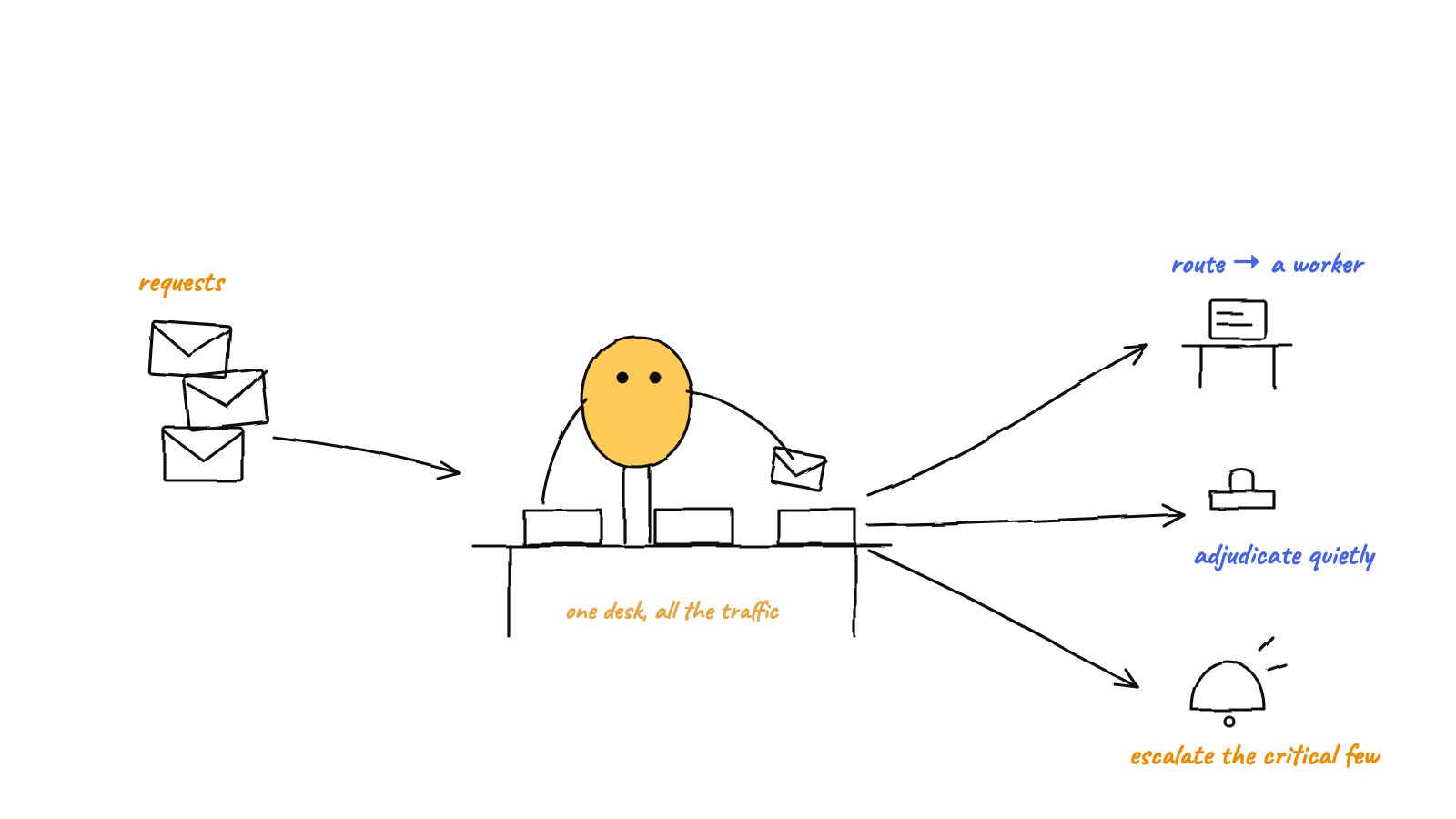
The GOD orchestrator is the supervisor agent that runs a hive of Claude Code agents. It's a normal Claude process — the intelligence — wrapped by a harness that provides the mechanism (a message router, single-committer git, and a human-approval queue). Its four jobs: keep the roster, route work, adjudicate routine inter-agent traffic, and escalate only the critical few to you.
Every multi-agent system eventually needs one agent in charge — not to do the work, but to decide who does. In Munder Difflin that’s the GOD orchestrator. This is a deep dive into how it actually works: the split between intelligence and mechanism, the four jobs it owns, and the rules that keep it from looping or going rogue.
Intelligence vs. mechanism
The single most important design decision is what the orchestrator is. It would be tempting to write the routing logic as code — a big dispatcher that inspects each request and assigns it. That’s brittle: every new kind of task needs new code.
Instead, the orchestrator is split in two:
- The mechanism lives in the harness’s main process. It runs git (single committer), the message router that moves messages between agents, the append-only event log, and the approvals queue that holds items waiting on a human. The mechanism has no judgment. It’s reliable plumbing.
- The intelligence is the GOD agent itself — an ordinary
claudeprocess, flagged as the orchestrator, that reads requests and decides what to do with them. Its routing and escalation policy live in its system prompt.
The payoff: you change how the orchestrator behaves by editing a prompt, not by shipping code. Want it to escalate more aggressively, or to favor a particular specialist? Tune the instructions. The mechanism underneath stays the same and stays safe. (For the broader principle, see orchestrating Claude Code agents.)
Job 1 — Keep the roster
The orchestrator can only route well if it knows who’s on the floor. The harness maintains a registry — every agent’s id, name, role, capabilities, and current status (idle, working, blocked, gone). When an agent is spawned, it’s registered; the orchestrator reads the registry to know its options.
This is the routing table. A request to “write tests for the new endpoint” goes to the agent whose role and capabilities say tests, not to whoever happens to be free. Roles aren’t cosmetic — they’re how the orchestrator makes a sensible assignment instead of a random one.
Job 2 — Route work
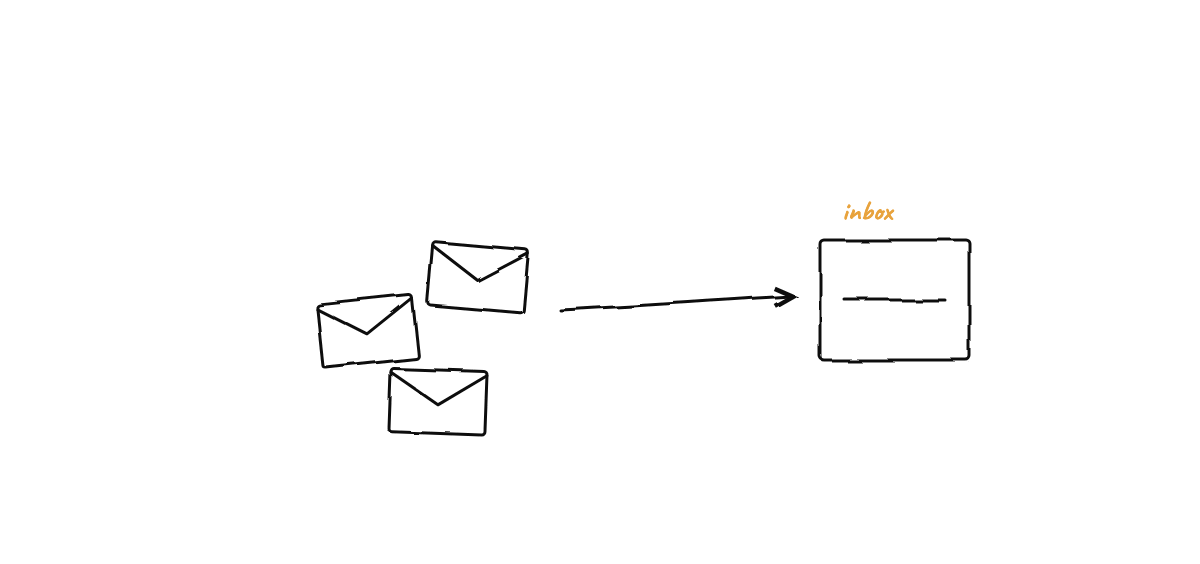
When you describe a goal, the orchestrator decomposes it and routes each piece. The key detail is how it routes: it doesn’t reach into a worker’s files and tell it what to do. It sends a message — a self-contained task spec — into the worker’s inbox, via the same router every agent uses.
That message is a structured object. Borrowing the one useful idea from agent-communication research — the speech act — each message declares its intent:
{
  "to": "agent.coder",
  "act": "request",          // request | inform | propose | query | agree | refuse | done
  "subject": "Add validation to signup",
  "body": "…self-contained task spec…",
  "conversation": "conv-7f3" // groups a thread
}
The harness fills in the id, sender, hop count, and timestamps. A good task spec means the worker can start without a follow-up question — which is the difference between routing that accelerates the team and routing that just adds a hop.
Job 3 — Adjudicate the routine traffic
This is the job that makes autonomy real. As agents work, they raise questions for each other: which schema to validate against, whether a staging URL is current, a small change to the plan. If every one of those bounced back to you, the “team” would just be a slower version of you doing everything.
So the orchestrator adjudicates. It drains its own inbox continually, answers the routine asks itself, and routes work to the right specialist with a clear spec. Most inter-agent traffic never reaches you because it shouldn’t have to.
Two rules keep adjudication from turning into chaos:
- Not every message obligates a reply. Only
request,query, andproposeexpect an answer.informanddoneare terminal — replying to them is how two agents loop forever, so the protocol forbids it. - Hops are capped. Every reply increments a hop counter. Past the cap, the item is escalated to a human instead of being allowed to ping-pong. It’s a livelock fuse.
The shared plan is adjudicated too: the orchestrator is the single scribe of the board. Other agents propose changes; only the orchestrator writes them. That keeps the one genuinely co-owned document from conflicting. The messaging fabric beneath all of this is covered in atomic file mailboxes for agents.
Job 4 — Escalate the critical few
The orchestrator’s most important boundary is knowing what not to decide. Its escalation policy is a short, explicit list of what counts as critical:
- Destructive operations — anything that deletes or overwrites in a way that’s hard to undo.
- Spending real money — actions with a dollar cost.
- Scope changes — work that drifts from what you actually asked for.
- Unresolvable conflicts — two agents at an impasse the orchestrator can’t break.
When an item matches, the orchestrator escalates instead of acting. Mechanically, it sends a message addressed to the human (or flags it as needing human attention), and the harness diverts it into an approvals queue surfaced in the UI. You approve or reject — optionally with a note, like “yes, but cap it at $5” — and that note is relayed back to the agent that asked, as a message from the human. The agent picks up where it left off with your guidance in hand.
Everything not on the critical list stays autonomous. This selective escalation — human-in-the-loop done right — is the entire reason a hive can run for a long stretch without babysitting: it interrupts you precisely when it should, and never otherwise. It’s also the model’s primary safety rail — the policy is the control surface, so you tighten or loosen it by editing the prompt.
How a single request travels
Putting the four jobs together, here’s the life of one instruction:
- You tell the orchestrator a goal in plain language.
- It reads the roster, decomposes the goal, and routes task specs to the right agents’ inboxes.
- Agents work in isolated sessions. When one needs something, it messages another through its outbox; the router delivers it.
- The orchestrator adjudicates the routine questions, answering or re-routing, keeping the floor moving.
- If something critical comes up, it escalates to the approvals queue and waits for your call.
- Every step is committed to the hive’s git repo and written to an append-only log, so the whole episode is auditable and replayable.
What makes it robust
A few properties keep the orchestrator from being a single point of failure:
- The mechanism is dumb and reliable. Routing, commits, and the queue work even if the orchestrator makes a poor call — a bad route is recoverable because it still flows through single-writer files and serialized commits.
- Idempotent message handling. Each agent tracks a cursor of what it has already processed, so a message is acted on exactly once. Re-seeing a handled message is a no-op.
- Escalation is fail-safe. When in doubt — a hop cap hit, an addressing edge case — the system routes to the human rather than guessing. The default is “ask,” not “act.”
If you want the design rationale behind these choices, the best way to coordinate AI coding agents lays out the single-writer and single-committer principles the orchestrator depends on.
The orchestrator’s interface
In v0.1.6, Michael’s interface expands significantly. His sidebar becomes a full Command Center: a Tasks tab gives him a kanban board to track work across agents with dependency links; a Triggers tab collects everything that wakes the hive without you — schedules first among them — so you can pre-program recurring directives and the floor stays active between your check-ins; an Activity tab shows real token and dollar cost per agent drawn from transcript files; and a GitHub Issues section in the Floor tab lets him receive and route repo issues directly. The orchestrator is the same agent — the harness simply gives him better tools.
FAQ
Can I run without an orchestrator? You can run agents without one, but then you’re the orchestrator — assigning work and relaying messages by hand. The GOD agent exists to take that role off your plate.
Where does the orchestrator “live”? It’s a fixed, always-on agent in the corner office (Michael’s
room, naturally), with a reserved desk. It boots with the hive and runs alongside the workers as just
another claude process — a special one.
Munder Difflin’s GOD orchestrator routes, adjudicates, and escalates for a whole hive of Claude Code agents — on your own machine, with a full audit trail. Download Munder Difflin to put one in charge of your floor; it’s free and open source.
FAQ
Is the GOD orchestrator a special kind of model?
No. It's an ordinary Claude Code process with a flag marking it as the orchestrator and a system prompt that defines its job. The intelligence is a normal agent; the harness around it provides the mechanism — routing, git, and the human-approval queue.
What does the orchestrator escalate to a human?
Only genuinely critical items: destructive operations, spending real money, scope changes, and conflicts it can't resolve. Everything else — clarifications, data asks, small plan tweaks — it resolves itself so the team stays autonomous.
How does the orchestrator avoid infinite loops between agents?
Messages carry a hop count that increments on each reply; past a cap the item is escalated instead of bouncing forever. Only requests, queries, and proposals obligate a reply — pure informational messages are terminal.