Atomic File Mailboxes: How Agents Message Each Other
Can Claude Code agents talk to each other? Yes — the outbox-router-inbox design that lets agents message safely using plain files and atomic renames.
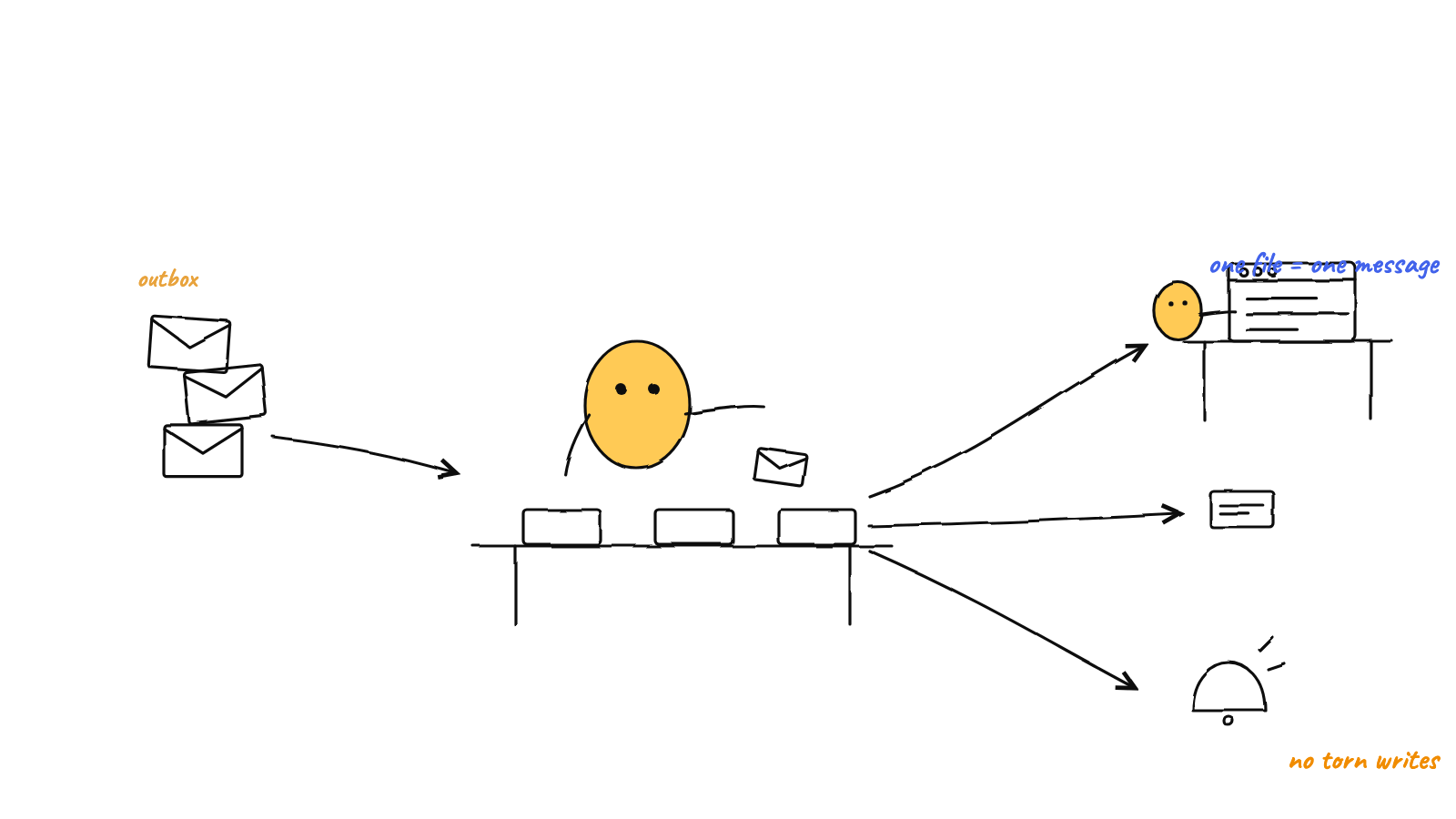
Yes,
Claude Code agents can talk to each other — and the safest way is plain files. Each
agent writes to its own outbox/; a router drains it and delivers each
message into the recipient's inbox/ by atomic rename. One JSON file per
message, never a shared log. The result is durable, auditable, crash-safe messaging with no broker and
no write conflicts.
“Can Claude Code agents talk to each other?” is one of the first questions people ask when they move past a single session. The answer is yes — but how they talk is where most designs go wrong. Let a shared chat file be appended by every agent and you’ve built a multi-writer conflict. The robust approach is a mailbox: outbox, router, inbox, with atomic file operations underneath. Here’s the whole design.
The shape: outbox → router → inbox
Every agent gets a private workspace, and two of the folders in it are for messaging:
agents/<agent-id>/
  inbox/         # messages delivered TO me — one JSON file each
  inbox/.done/   # messages I've handled (kept for audit, not deleted)
  outbox/        # messages I want to SEND — the router drains these
  outbox/.sent/  # archived after delivery, so they're never reprocessed
The flow is one direction at a time:
- To send, an agent writes a single JSON file into its own
outbox/. - A router — one coordinating process — scans every outbox, reads each message, and delivers it
into the recipient’s
inbox/. - After delivery, the router moves the original from
outbox/intooutbox/.sent/so it’s never sent twice. - The recipient reads its
inbox/at the start of its next turn, acts on each message, and moves the handled ones toinbox/.done/.
The critical rule sits underneath all of it: an agent only ever writes into its own directory. It never reaches into another agent’s inbox. Delivery is the router’s job. That single-writer discipline is what makes the whole thing safe under concurrency — no two processes touch the same file. (It’s the same principle behind the single-committer git pattern.)
Why atomic renames matter
Here’s the subtle part. If the router wrote a message into an inbox with a normal “open, write bytes, close,” a reader scanning the inbox at the wrong moment could pick up a half-written file and choke on invalid JSON.
The fix is an atomic rename: write the message to a temporary filename first, then rename it
into its final place. On every mainstream filesystem, rename within a directory is atomic — the file
either isn’t there or is there complete. A reader never sees a partial message. There’s no lock, no
coordination, no window of inconsistency.
write  inbox/<id>.json.tmp-9f3a   ← may be partial mid-write
rename inbox/<id>.json.tmp-9f3a → inbox/<id>.json   ← appears atomically, whole
This one trick is why files beat a naive shared log. A log every agent appends to is a multi-writer race; a directory of atomically-renamed files is conflict-free by construction.
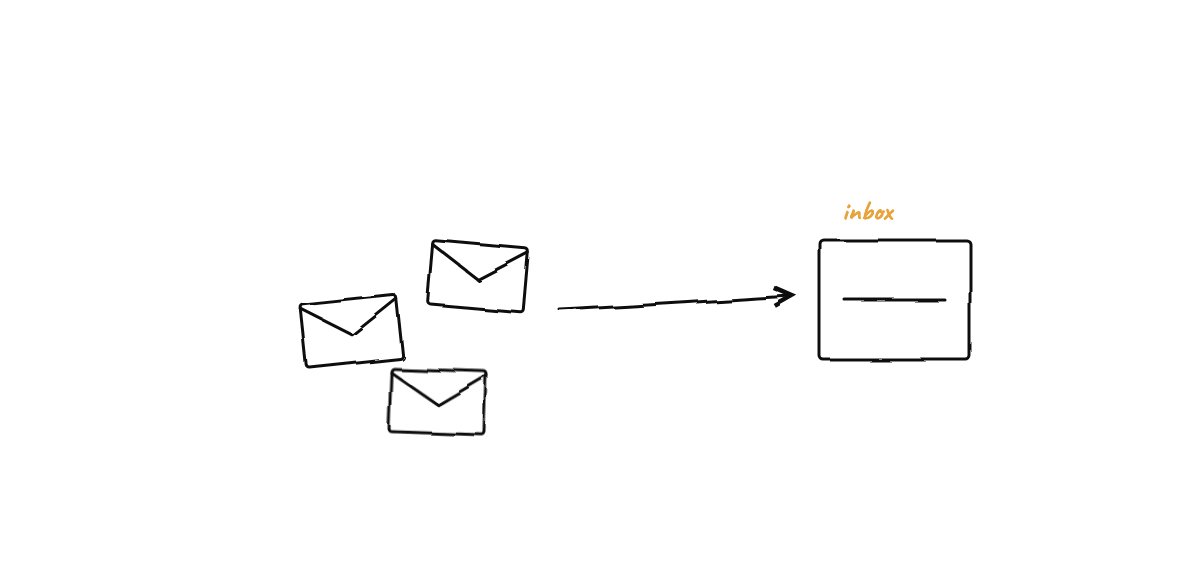
The message itself: speech acts, not free text
A message isn’t just a blob of text — it carries intent. The design borrows the one genuinely useful idea from decades of agent-communication research, the speech act, and drops the rest:
{
  "id":            "2026-05-30T14-03-11-123Z-a1b2",  // unique, time-sortable
  "conversation":  "conv-7f3",                        // groups a thread
  "in_reply_to":   " | null",
  "from":          "agent.researcher",
  "to":            "agent.coder | god | broadcast",
  "act":           "request | inform | propose | query | agree | refuse | done",
  "subject":       "short human-readable summary",
  "body":          "the details",
  "hops":          3,             // increments per reply; capped to kill loops
  "requires_reply": true,
  "needs_human":   false,
  "created_at":    "ISO-8601"
}
An agent writing a message only has to supply the meaningful fields — to, act, subject, body,
and optionally a conversation to thread it. The harness fills in the id, the authoritative from
(taken from the owning outbox directory, so an agent can’t spoof another’s identity), the hops, and
the timestamps.
The act field is what makes coordination tractable. It tells the recipient — and the router —
whether a reply is even expected.
Anti-livelock: how the conversation ends
Two agents told to “coordinate” will, without guardrails, message each other forever. Three rules stop that:
- Only some acts obligate a reply.
request,query, andproposeexpect an answer.informanddoneare terminal — replying to them is exactly how a loop starts, so the protocol forbids it. - Hops are capped. Every reply increments the
hopscounter. Past a fixed cap, the message is flagged for a human instead of being delivered again — a livelock fuse. - Delivery is idempotent. Each agent keeps a cursor of the last message id it processed, so
re-seeing a message is a no-op. Combined with moving handled messages to
inbox/.done/, an agent can’t accidentally act on the same request twice.
These are small rules with a big payoff: the messaging layer can be busy and still provably converge.
Broadcast and escalation
Two special addresses round out the system:
broadcastdelivers a copy to every agent except the sender — useful for “I’m taking ownership of the auth module, don’t touch it.”human(or any message flaggedneeds_human) doesn’t go to an inbox at all. The router diverts it to an approvals queue for a person to answer. This is how an agent reaches you for the genuinely critical calls, and it’s the same mechanism the orchestrator uses to escalate — covered in the best way to coordinate AI coding agents.
Why this design holds up
Step back and the properties fall out for free:
- Durable. Messages are files. A crash mid-run loses nothing already written; the router picks up where it left off.
- Auditable. Every message and every delivery is a file, and the coordinating process commits the changes to git — so you can read back exactly who said what, in order.
- Brokerless. There’s no Redis, no RabbitMQ, no daemon to keep alive. The “infrastructure” is a
directory and the
renamesyscall. - Conflict-free. Single-writer-per-file plus atomic renames means concurrency is safe without locks.
It’s almost boring, which is the point. The most reliable inter-agent messaging is the kind with the fewest moving parts.
FAQ
Does the router poll or watch the filesystem? A simple poll on a short interval is both cheaper and more robust than filesystem-watch APIs, which have well-known quirks across platforms. The router scans every outbox on a tick, delivers what it finds, and goes back to sleep.
Can an agent message itself? It can, but there’s rarely a reason to. The interesting traffic is agent-to-agent and agent-to-orchestrator.
Munder Difflin runs exactly this mailbox system inside a hive the GOD orchestrator runs — atomic delivery, speech-act messages, hop caps, and a full git audit trail, all local. Download Munder Difflin to watch envelopes fly between agents on the office floor; it’s free and open source.
FAQ
Can Claude Code agents talk to each other?
Yes. Each agent has an outbox it writes to and an inbox it reads from; a router process moves messages between them. The agents never write into each other's folders, so messaging is safe even with many agents running at once.
Why use files for agent messaging instead of a message queue?
Files plus atomic renames give you durability, auditability, and crash-safety for free, with no broker to run. One JSON file per message, delivered by rename, is simpler and more robust than a shared log every agent appends to.
What stops two agents from messaging each other forever?
Only requests, queries, and proposals obligate a reply; informational messages are terminal. Every reply increments a hop count, and past a cap the exchange is escalated to a human instead of looping.