The Single-Committer Pattern: Multi-Agent Git Without Corruption
Parallel agents corrupt a repo with index.lock races. The single-committer pattern — agents write, one process commits — fixes concurrent git writes.
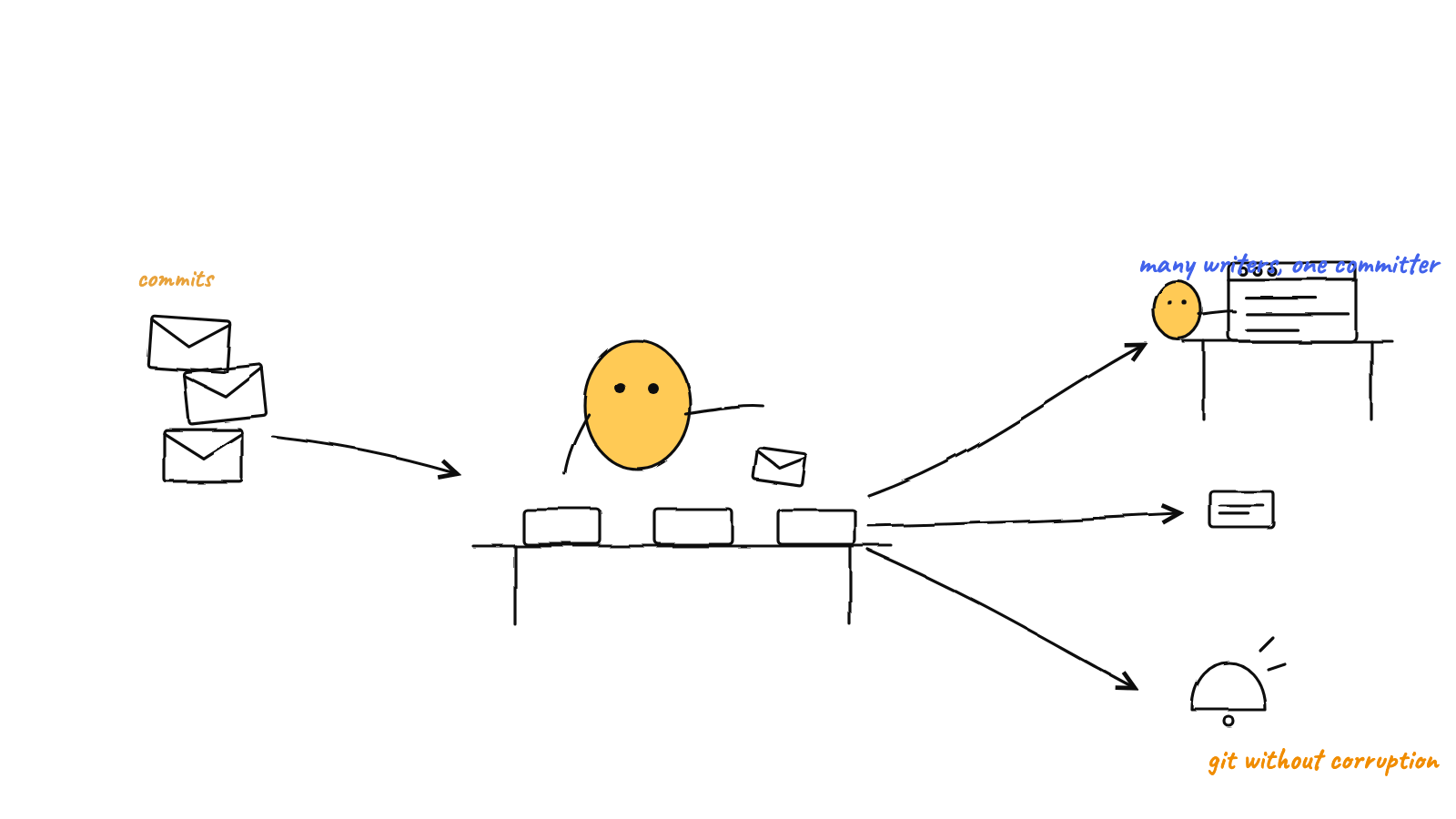
Run several agents against one git repo and
they'll race on .git/index.lock, producing failed and half-staged commits. The
single-committer pattern fixes it: agents only write plain files; one process
owns every commit, serialized, with retry-and-backoff and stale-lock recovery. Concurrency on
the repo drops to exactly one writer, so corruption becomes impossible — and git turns into a tidy
audit log of everything the team did.
If you’ve ever pointed two automated agents at the same repository, you’ve probably met this error:
fatal: Unable to create '/path/.git/index.lock': File exists.
It looks transient. It isn’t a fluke — it’s git telling you that two processes tried to write its index at once. As you add agents, it goes from occasional to constant, and a crashed agent can leave a stale lock that blocks every future commit. This post explains why it happens and the pattern that ends it.
Why concurrent git writes corrupt
Git is not designed for concurrent writers. When you stage or commit, git takes an exclusive lock
by creating .git/index.lock; it does its work against that file, then atomically renames it over
.git/index and releases the lock. The lock guarantees that only one operation mutates the index at a
time.
That’s fine for a human typing one command. It falls apart with parallel agents:
- Contention. Two agents commit at the same instant. One gets the lock; the other finds
index.lockalready present and fails outright. - Half-applied state. Interleaved
git add/git commitfrom different processes can stage a partial set of changes — a commit that doesn’t reflect any single agent’s intent. - Stale locks. An agent crashes (or is killed) mid-commit and never removes its
index.lock. Now the lock file is orphaned, and every subsequent commit — by anyone — fails until someone deletes it by hand.
You can’t “be careful” your way out of this. Two well-behaved agents that simply finish at the same second will collide. The guarantee has to come from the design, not the agents’ manners.
The pattern: one writer for git
The single-committer pattern is exactly what it sounds like: only one process is ever allowed to run git. Everything else is downstream of that rule.
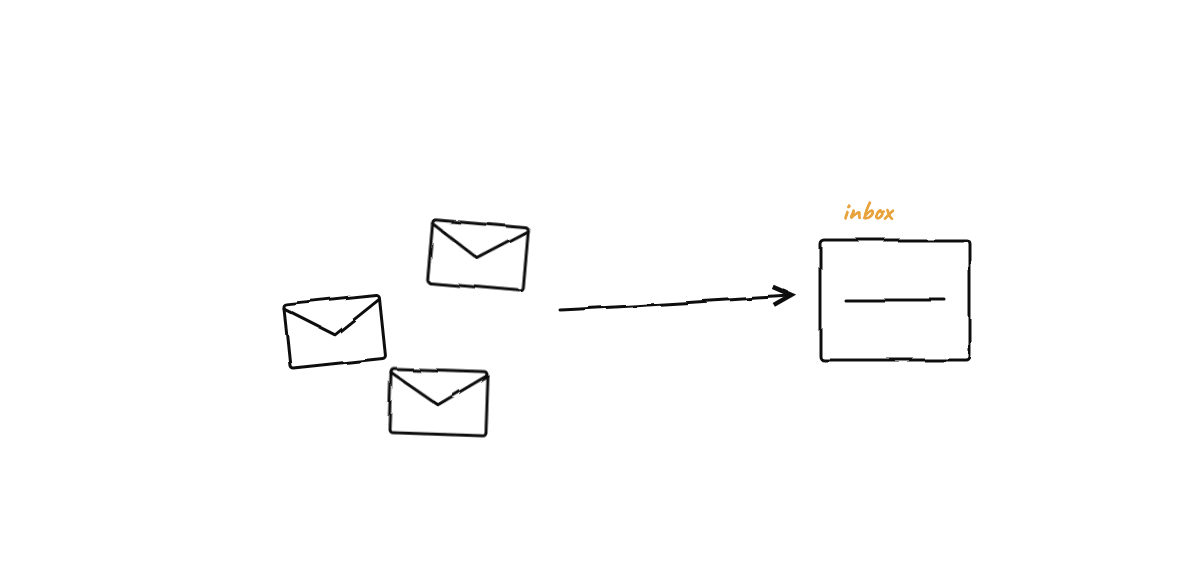
- Agents write plain files. They create, edit, and delete files in their workspaces freely. They
do not run
git add,git commit, or anything else that touches the index. As far as the agents are concerned, git doesn’t exist. - One coordinating process commits. A single committer watches the shared state, stages changes,
and commits them — one at a time, in order. Because it’s the only thing calling git,
index.lockis never contended. There is no second writer to race with.
This collapses a hard concurrency problem into a trivial one. The repo has many readers and exactly one writer, which is the configuration git is perfectly happy with.
Making the single committer bulletproof
“One committer” removes contention between agents, but the committer still has to handle the messy real world: a previous run that died, an occasional transient failure. A production-grade committer does three things.
1. Retry with backoff
Even a lone committer can hit a lock left by something else (a stray git you ran in another terminal,
a hook). So each commit attempt is wrapped in a small retry loop: try to commit; if it fails on a lock,
wait a short, growing interval and try again. A handful of attempts with increasing backoff absorbs any
brief contention without surfacing an error to the user.
for attempt in 0..5:
    clear stale lock if present
    git add -A
    git commit -m
    → success?            return
    → "nothing to commit"? return        # not an error
    → lock error?         sleep 50ms * (attempt + 1); retry
    → other failure?      give up quietly; the next change retries
2. Stale-lock recovery
A lock file that’s been sitting untouched for a while almost certainly belongs to a dead process. The committer checks the lock’s age before each attempt and, if it’s older than a threshold (say, ten seconds with no modification), removes it. That single check is what turns “a crashed agent bricked our commits” into a non-event — the next commit cleans up and proceeds.
3. A deterministic git identity
Because the committer commits on behalf of the whole team, it uses a fixed identity and disables
signing, so commits never block on a GPG prompt or a missing user.name:
git -c commit.gpgsign=false -c user.name=Hive -c user.email=hive@local commit -m "…"Now every coordination step is a clean, attributable commit, and nothing can hang waiting for interactive input.
The bonus: git becomes an audit log
Here’s the part that turns a workaround into an asset. Once one process owns every commit, the repo stops being a liability and becomes a serialized history of everything the team did. Each routed message, each task assignment, each memory update lands as its own commit, in order — a natural companion to the append-only event log the hive also keeps. When a multi-agent run goes sideways, you don’t guess — you read the history.
That pairs naturally with the messaging layer: agents coordinate through files (see atomic file mailboxes), and the single committer commits those file changes as they happen. The same single-writer discipline runs through both — it’s the backbone of coordinating AI coding agents without collisions.
What about the user’s own repo?
A fair question: if agents are editing your actual code repository, who commits that? The single-committer pattern is about the coordination repo — the shared state the agents use to talk, remember, and track tasks. Your source repo is separate, and you stay in control of its commits the way you always have (or you delegate them deliberately to one agent with that role). The point is that the machinery the agents rely on to cooperate never corrupts itself, no matter how many of them are running.
When you need this
You need the single-committer pattern the moment more than one automated process shares a git repo:
- multiple coding agents in the same project,
- an agent plus a background job that both commit,
- any “swarm” or “hive” where coordination state lives in git.
If it’s just you and one agent taking turns, you’ll rarely see a lock. Add a second concurrent writer and the races begin — which is precisely when this pattern stops being optional.
FAQ
Why not use git worktrees to isolate each agent? Worktrees give each agent its own working directory, which helps with file isolation — but each worktree still has its own index, and shared refs can still contend. Worktrees and single-committer solve different halves of the problem; see git worktrees vs a hive for when each applies.
Isn’t a lock just a retry-until-it-works situation? Retrying helps with transient contention, but it does nothing for a stale lock from a dead process — that one never clears on its own. You need the age-based cleanup, not just retries.
Munder Difflin uses the single-committer pattern across the multi-agent harness: agents write files, one process commits with retry and stale-lock recovery, and the repo stays a clean audit log. Download Munder Difflin to run a hive of Claude Code agents that never corrupt their own state; it’s free and open source.
FAQ
What causes git index.lock errors with multiple agents?
Git takes an exclusive lock on .git/index while staging or committing. If two processes run git at the same time, the second finds the lock held and fails — or worse, a crashed process leaves a stale lock behind that blocks every future commit.
How do you let many agents share one git repo safely?
Don't let the agents call git at all. Agents write plain files; a single coordinating process owns every commit, serializing them. Concurrency on the repo drops to one writer, so the lock is never contended.
Do agents lose anything by not running git themselves?
No. They still create, edit, and delete files freely. They just don't stage or commit — that's delegated to one committer, which turns git into a clean, serialized audit log of the team's work.