Run a Release Train with Agents
Version bumps, changelog entries, release notes in plain language, site updates, and link checks — the release chores that always slip are exactly the work a hive does well. The workflow behind our seven-releases-in-eight-days week.
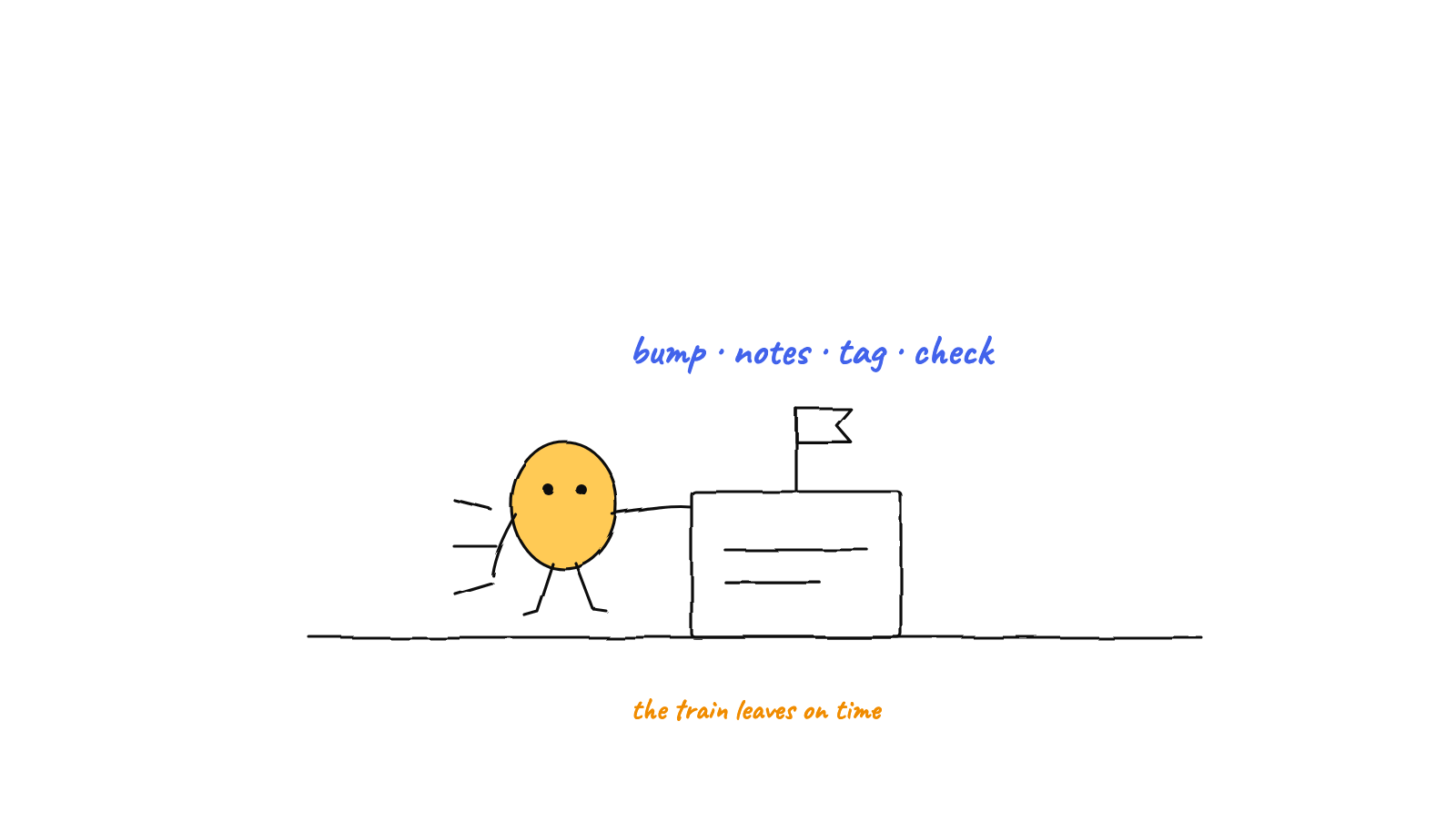
A release is one decision and forty chores. During our seven-releases-in-eight-days week, the chores — version bumps, changelog prose, release notes, site updates, link checks — ran as a repeatable agent workflow. The decision stayed human. That's the whole trick, and here's the train schedule.
Everyone’s release process degrades the same way. Release one: meticulous. Release five: the changelog says “misc fixes.” Release nine: the README badge is two versions behind and the website’s FAQ names a plan that doesn’t exist. Not because anyone stopped caring — because synchronization chores scale linearly with surfaces, and humans under deadline cut exactly those corners.
We shipped seven releases in eight days without (we think) shipping that decay, and the reason is that the chores are a train the hive runs on rails.
The train, car by car
Car 1: the changelog entry, from evidence. An agent reads the actual merged commits and PRs since the last tag — not a memory of them — and drafts the changelog entry with a hard rule we stole from our own postmortems: every entry says what was broken from the user’s point of view, not which function changed. “Agents booted, looked healthy, and had no idea they could message anyone” survives to the published changelog because the draft started from the diff and the issue thread, where that sentence was earned.
Car 2: version references, everywhere. The version string lives in more places than you
think: package manifest, changelog header, README badge, the website, the release page,
llms.txt. One agent’s checklist is simply: find every reference, update every reference,
then list where it looked so omissions are visible. This car exists because an audit found
our llms.txt advertising a version two releases stale — nobody had ever put it on a mental
checklist.
Car 3: release notes for humans. The changelog is the record; the release notes are the story. A second pass rewrites the entry in plain language — what you’ll notice, what you need to do (usually nothing, the app updates itself) — and since 0.4.4 can even ship as a designed page rendered inside the app. This is also where contributors get credited by name, every release, without fail — @gts-47’s eight PRs and @baziyer’s rendering fix headline the 0.4.4 thanks because an agent’s checklist said find every community PR in this release and name its author, and checklists don’t get shy.
Car 4: the guard rail. The best part of agent-run chores: when an agent finds a drift class once, you make it impossible instead of remembered. A small link-and-version checker now runs in CI and fails the build if any known surface disagrees about the current version. The train doesn’t rely on the conductor’s attention anymore.
Why agents fit this shape of work
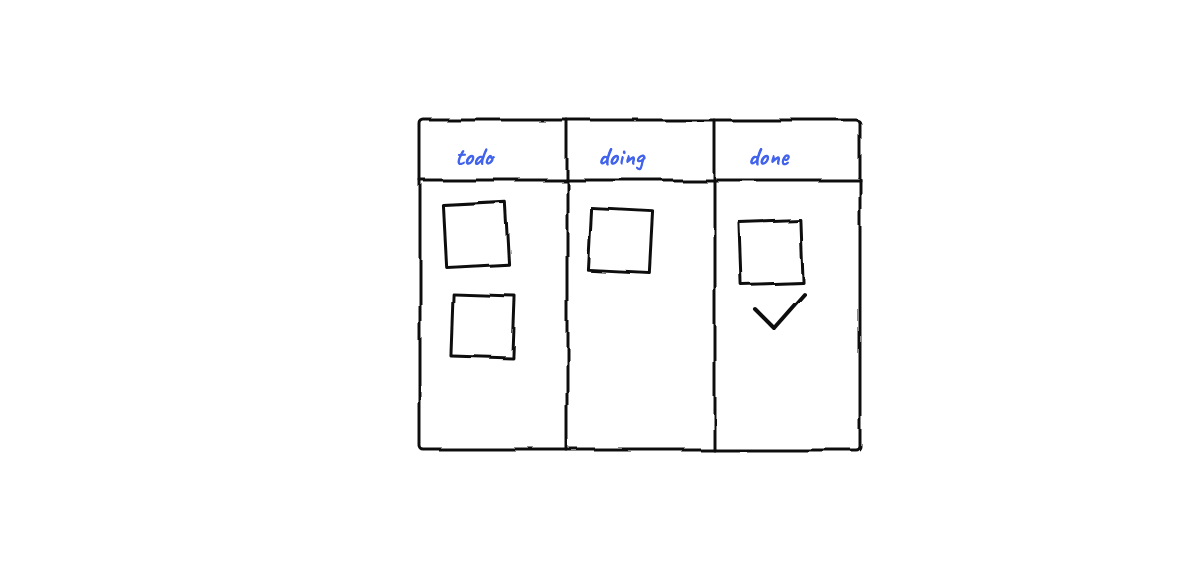
Release chores are the ideal agent workload for three reasons. They’re evidence-based — the truth is in the diff, the tag, and the file, so verification is mechanical. They’re checklist-shaped — the same surfaces every time, which agents execute with the enthusiasm humans reserve for release one. And they’re interruptible — each car produces reviewable artifacts (a draft entry, a list of touched files), so the human can inspect the train at any station.
Note what’s not on the train: deciding what ships, judging whether a fix is real, choosing what the headline is. During our eight-day week those calls happened in minutes precisely because the chores weren’t competing for the same attention.
Set up your own
The portable version, whatever your stack:
- Write the checklist down once — every file that mentions a version, every step between tag and announcement. This document is the agent brief.
- Point agents at evidence — diffs, merged PRs, closed issues. Ban writing from memory.
- Route it through one dispatcher so the cars run in order — that’s what an orchestrator is for.
- Convert discoveries into CI guards. An agent finding drift is good; a test that makes the drift impossible is the actual win.
Our cadence didn’t come from typing faster. It came from making releases cost one decision instead of one afternoon — and from a train that runs on schedule even when the humans are asleep.
FAQ
What release chores can agents take over?
The synchronization work: bumping versions everywhere they appear, writing the changelog entry from the actual merged diffs, drafting human-readable release notes, updating the website's version strings and download links, and checking that every link and version reference agrees. Humans stay on the judgment calls — what ships, and whether the notes tell the truth.
How do you stop version references drifting apart?
Two layers: an agent whose checklist includes every known surface (changelog, README badge, site, llms.txt, release page), and a guard script in CI that fails the build when a reference drifts. The script exists because an agent-run audit found our llms.txt advertising a version two releases stale — automation found it, a test now prevents it.
Does this replace release engineering?
No — it replaces release chores. The decisions (what's in, what's blocked, when to cut) stay human. What the agents remove is the hour of mechanical synchronization per release that otherwise gets skipped, which is exactly how version drift and stale notes happen.