Nº 5 Product of the Day: How Our First Product Hunt Launch Went
Munder Difflin finished #5 Product of the Day on Product Hunt — ahead of DeepSeek's harness launch that day. The honest retro: who showed up, what they asked, and the two pieces of feedback we're already shipping fixes for.
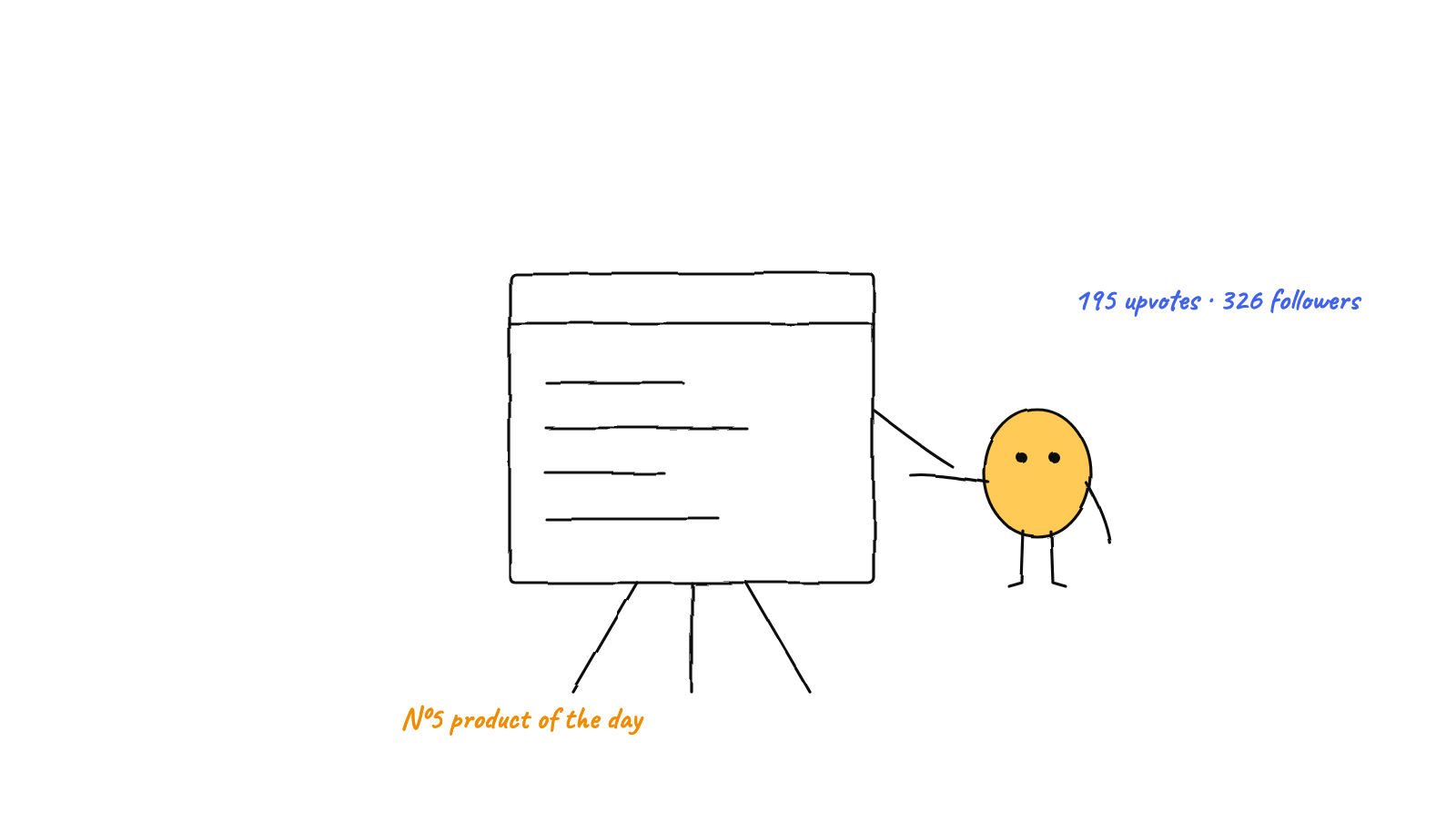
On August 14 we launched Munder Difflin on Product Hunt for the first time. It finished #5 Product of the Day — ahead of DeepSeek's harness, which launched the same day. The honest retro: Product Hunt bought us credibility, not traffic, and the handful of people who actually commented gave us better product feedback than a stadium's worth of applause would have.
We had never launched on Product Hunt before. No hunter with a following, no launch agency, no upvote pod — I hunted it myself, scheduled it for August 14, and went to bed nervous.
How the day went
It finished #5 Product of the Day. And the part that still feels surreal to type: it was the same day DeepSeek launched their harness with tech-press coverage behind it — and the day’s leaderboard has them one spot behind us, at #6. A solo, self-hunted first launch, one rank above a frontier lab’s product debut. I have screenshotted that leaderboard more times than I will admit.
The comment thread stayed small but ran unusually deep — I answered everything, and most of what came in was worth answering. The one full review the launch produced came from Gal Dayan, co-founder and CEO of Dial, who didn’t skim the landing page — he ran Munder Difflin against his own Claude subscription on a multi-day task before writing a five-dimension review. His build-vs-buy verdict was the sentence I’d been trying to write for months, in someone else’s words:
“I looked at rolling my own orchestration on tmux plus Claude Code directly. Wasn’t worth reinventing the mailbox and lifecycle tracking myself when this already handles worker handoffs, and it’s fully local so none of my code leaves my machine.”
That’s the whole pitch. The mailboxes, the lifecycle tracking, the local-first design — the boring plumbing is the product.
Who actually showed up
Product Hunt gets described as a hype machine, and maybe it is for consumer apps. What showed up on our page was a small crowd with an unusually high ratio of substance: a CEO who ran a multi-day evaluation, an engineer who instruments his own agent spend down to the dollar, a builder who runs his own orchestration system and benchmarked ours against it, a product manager who uses it at work, and someone asking whether a hive could build a company’s tender-management system end to end.
Few people, serious questions. The exact opposite of our Reddit launch, which was a stadium.
The two pieces of feedback that mattered
1. First-run engine selection could strand you. One commenter picked Claude Code during setup without having Claude Code access, couldn’t change the selection afterwards, and uninstalled twice in frustration. Another hit a Windows + Codex startup failure that killed his three-agent benchmark. Two of the most motivated evaluators on the page, blocked by the same class of problem: the non-Claude-Code path got less love than it deserved. The Windows side of this is exactly what v0.4.4 fixed, and onboarding now validates your setup at step one instead of failing after step four.
2. Nobody can tell a finished agent from a stuck one — or a paused one from a self-directed one. The two most technically serious people on the page independently asked for the same missing primitive. One had measured — on his own setup, with his own instrumentation — that a majority of a day’s agent spend landed in an “abandoned” bucket, and wants to trust unattended runs. The other put it perfectly: the office view already tells you who’s stuck versus who’s actually working at a glance, but it doesn’t tell you whether a clone paused for your input or made a judgment call on its own. A visible “this decision needs your eyes” flag is the ask, and it’s the best feature request we’ve received on any channel. It’s on the roadmap.
What Product Hunt is actually for
Here’s the part nobody puts in their launch thread: the badge is not a traffic channel. The applause was loud; the click-through to the site was a trickle. If you’re launching a developer tool and expecting Product Hunt to fill your funnel, adjust that expectation now.
What it is: a credibility artifact (the badge now lives on munderdiffl.in), and a filter that surfaces a handful of unusually serious evaluators. The questions those evaluators asked — about trust, about unattended runs, about what runs where — were the enterprise questions, and getting them this early is a gift.
Would we launch there again? Yes — but as one channel in a week, not the week itself. The stadium was elsewhere, and that’s the next post.
FAQ
How did Munder Difflin do on Product Hunt?
It finished #5 Product of the Day on 2026-08-14 — ahead of DeepSeek's harness, which launched the same day and placed one spot behind on the day's leaderboard. It was a first launch, self-hunted, with no hunter network behind it.
Did Product Hunt drive a lot of traffic?
Honestly, no. The badge brought credibility, not crowds. What it did bring was a small number of unusually serious evaluators, including a CEO who ran it on a real multi-day task and reviewed it in detail. For a developer tool, that trade is worth knowing about before you launch.
What feedback came out of the launch?
Two things, both already acted on: first-run engine selection could trap you if you picked an engine you didn't have access to (fixed territory in v0.4.4's onboarding work), and people want a visible flag for 'this decision needs your eyes' so they can tell an agent that paused from one that decided on its own. That second one is now on the roadmap.