What Reddit Told Us About Munder Difflin
We launched across ten subreddits and then read every single comment. What landed, what got roasted, and what we shipped because of it.
Our Reddit launch: ten posts, ten subreddits, and a comment section that didn't stop for a week. Nearly half the engagement came from one community — r/ClaudeCode — and two communities ignored us entirely. We read every comment and sorted them into what resonated, what got roasted, and what got fixed. This is that sorting, published.
Launch week, we posted Munder Difflin to ten subreddits over a few days. Not the same post ten times — each one angled for its community — and then the comments started, and did not stop for a week.
Where it landed, and where it didn’t
The distribution was brutal and informative. r/ClaudeCode delivered nearly half of all the engagement on its own. People who already run multiple Claude Code sessions didn’t need the pitch; they recognized the problem from the screenshot alone.
The flops taught us just as much. r/OpenAI and r/selfhosted barely moved. In hindsight both make sense: r/OpenAI’s crowd doesn’t live in Claude Code, and r/selfhosted heard “Electron app that drives commercial AI subscriptions” and reasonably shrugged. A launch angle that works is mostly audience selection, not copywriting.

What resonated
Reading a launch week’s worth of comments in bulk, three themes kept earning upvotes:
Visibility. The single most-upvoted non-post comment in the whole corpus was someone describing exactly the moment we built the office floor for: glancing at the screen and knowing the state of five working sessions without tailing five terminals. When people praised the product, they praised knowing what’s happening — the floor, the envelopes physically traveling between desks, the terminals you can pop open on any agent at any moment.
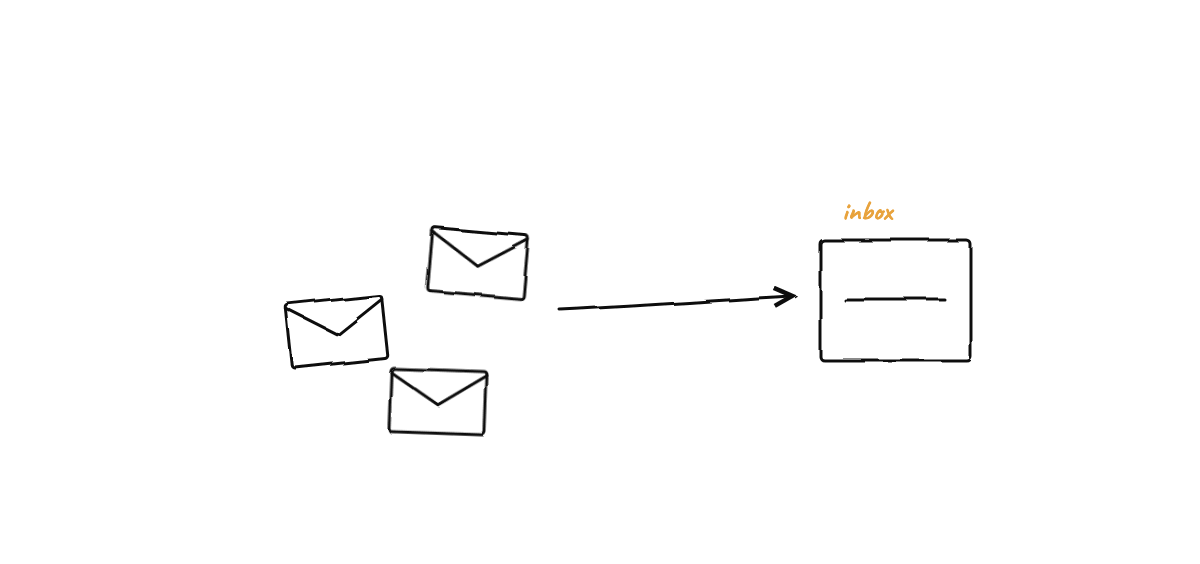
The mechanics being inspectable. The inbox/outbox file
protocol came up again and again, positively. Reddit’s
technical crowd trusts what it can cat. The fact that every message between agents is a JSON
file on your own disk did more persuading than any diagram.
Local, on your own machine. Everything runs where your code already lives, against the Claude plan you already have — no service in the middle. The what’s-the-catch crowd could answer their own question by reading the source, and several did exactly that before saying anything nice.
The best moment of the week wasn’t a compliment, though. Another builder took a feature from his own rival project, forked Munder Difflin, and sent us a pull request the same day. That’s the open-source version of a standing ovation.
What got roasted
Publishing only the praise would be exactly the launch-retro genre we hate, so:
“Is this actually useful, or is it theater?” The most common objection, by a wide margin. Watching pixel-art agents walk envelopes around is charming; charm is not utility. Our answer then and now: the simulation is deterministic and costs zero tokens, and the utility lives underneath it — routing, memory, lifecycle. But the burden of proof is ours, and it’s why our sharpest users’ asks are about control surfaces, not prettier sprites.
Token cost. A steady drumbeat of commenters worried that a floor full of agents burns money. Fair — which is why budgets and caps exist, and why we wrote the multi-agent cost playbook and keep model routing cheap by default: one strong orchestrator, inexpensive workers.
Category fatigue. “Another Claude Code orchestrator” is a real sentiment in 2026, and some power users said plainly they want less theater and more control. We took that phrase seriously enough that it’s become an internal design test.
And the bugs. Windows users showed up, tried it, and hit real walls — which fed directly into v0.4.4, the release where Windows agents can finally talk to each other. Several onboarding dead-ends reported in those threads are fixed in the same release. If you bounced off Munder Difflin in launch week on Windows: it’s worth a second look now.
What we’re taking away
Reddit gave us the stadium; Product Hunt gave us the panel interview. The stadium’s verdict, compressed: charm gets people in the door; visibility and control keep them. The people who stayed cited watching state and steering it. The people who left cited theater and cost. Every roadmap argument we’ve had since launch week ends by re-reading one of those comments.
We didn’t skim them. We pointed agents at the threads and made them account for every single comment — but that’s its own story.
FAQ
How did the Munder Difflin Reddit launch go?
Ten posts across ten subreddits, and the response was lopsided in an instructive way: r/ClaudeCode alone delivered close to half of all the engagement, while r/OpenAI and r/selfhosted barely registered. The audience that already runs Claude Code all day understood the product instantly; everyone else needed more explaining than a screenshot can do.
What did Reddit criticize about Munder Difflin?
Three things, honestly: skepticism that a visual layer adds real utility over raw terminals, worry about token costs when running many agents, and fatigue with the orchestration-tool category in general. All three are fair, and two of them shaped what we shipped next — clearer budget controls and less theater, more control.
What did people like most?
Visibility. The most-upvoted comments were about glancing at the floor and knowing who's stuck versus who's working, watching envelopes move between agents' inboxes and outboxes, and the fact that the whole thing runs locally on files you can read yourself.