Seven Releases in Eight Days: 0.3.8 → 0.4.4
Between August 11 and August 18 we shipped seven releases: memory condensation that finally works, an update checker, a whole new brand, a public telemetry contract, ten engines named honestly, and the Windows fix. The full tour.
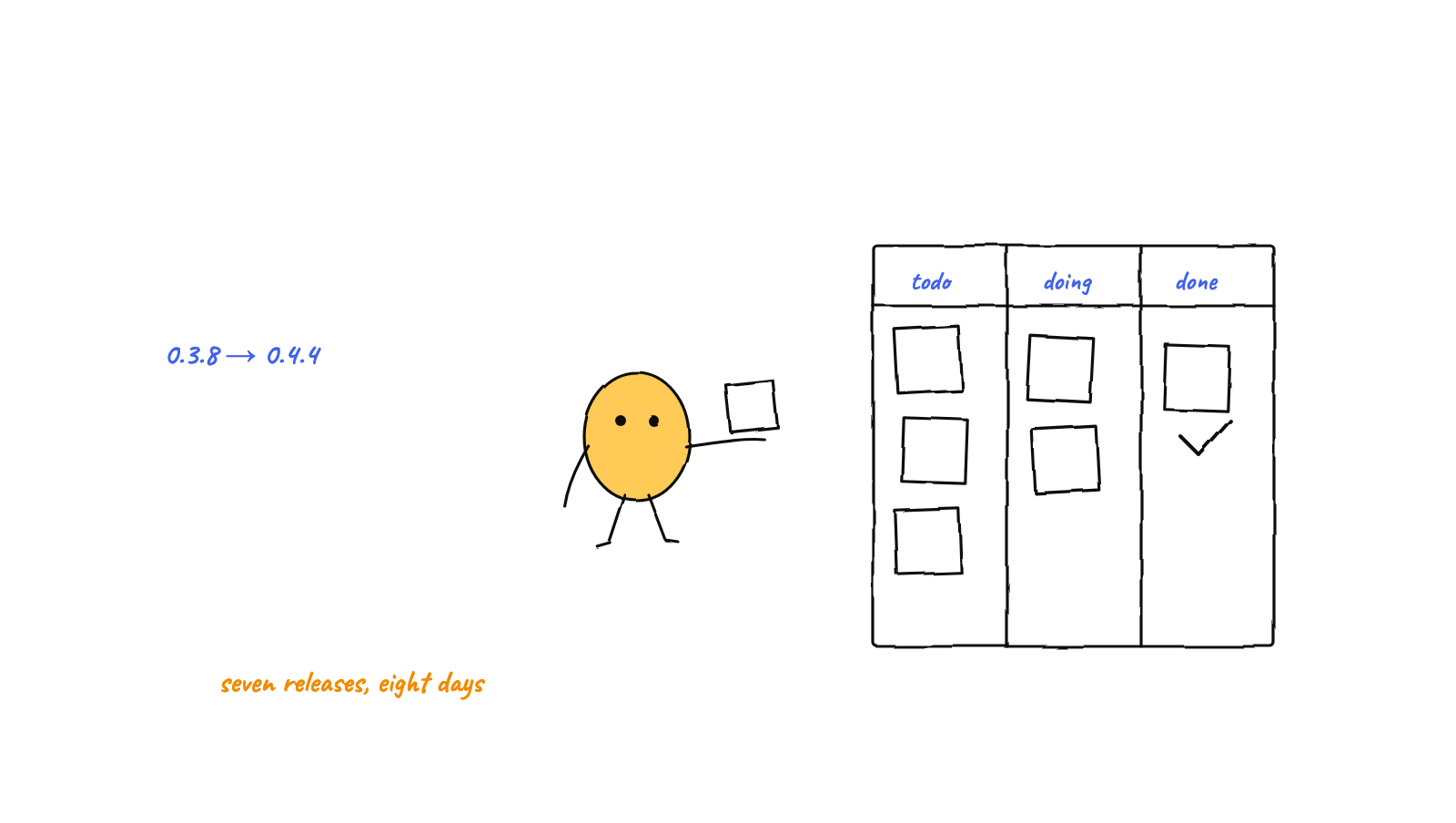
August 11 to August 18: seven releases. A memory system that had been silently reading an empty directory, fixed. An update checker. A new face for the whole product. A public telemetry contract. Honest engine naming. And the big one — Windows agents that can finally hear each other. Here's the whole train, car by car.
Launch week compresses a year of feedback into days. Thousands of people hit first-run at once, on machines and configs we’d never seen, and the bug reports came in faster than any roadmap could dignify. So the roadmap lost. For eight days we just shipped.
0.3.8 — memory condensation works for the first time
The most embarrassing entry, so it goes first. The harness had been reading Claude Code transcripts from a directory that hasn’t existed for months. Nothing errored — an absent directory reads exactly like “no transcripts yet” — so the summarizer sat there proudly summarizing nothing. 0.3.8 pointed it at reality, and stopped compaction firing on two schedules at once while it was in there. If your agents’ memories seemed thinner than advertised before mid-August: they were.
0.3.9 — “am I up to date?” gets an answer
Settings → General now names your version, says whether it’s the latest, and offers one button that does what it says: Check for updates → Download → Restart to update. It shares its state machine with the toolbar chip so the two can never disagree. Shipped fast for one reason: 0.3.8 needed to reach people who’d already installed 0.3.7.
0.4.0 and 0.4.3 — the brand grew up
0.4.0 rebuilt munderdiffl.in around the real app — actual screenshots, a live demo loop in the hero — and unified the icon across every platform. Then 0.4.3 went further: the logo is now Michael’s pixel-art portrait on the brand yellow, authored as a single vector, with every raster — site, app, all three platform icons — generated from that one source by a script. The icons can no longer drift apart, because none of them is hand-made anymore.
0.4.1 — the app says what the site says
Small release, honest release. The site called Michael a clone of you; the app still said “GOD agent.” Now he’s your clone everywhere, his card says BOSS, and the engine card names all ten engines — it had been advertising three since before the other seven shipped. Words-only releases feel trivial until you count how many people meet your product through exactly those words.
0.4.2 — telemetry, with the contract in writing
We had zero insight into whether anyone even launched the app. 0.4.2 adds anonymous usage
events — and we did it the only way a local-first
project credibly can: TELEMETRY.md publicly lists every event and property, the code
enforces that list as a hard allowlist, no prompts or paths or repo names ever leave your
machine, DO_NOT_TRACK is respected unconditionally, and a fork built from source has no key —
the entire module becomes a no-op. The toggle is right in onboarding.
It’s also the difference between guessing and knowing. Before 0.4.2 we couldn’t have told you whether the features we sweat over ever got touched; now the product can answer that without ever seeing a prompt, a path, or a name.
0.4.4 — the one Windows was owed
The finale, and it gets its own post: agent-to-agent messaging on Windows had been silently broken by a cmd.exe newline quirk, first runs never started their own hive services, and dark mode was measurably unreadable. All fixed — plus a 227-skill catalog, a Prerequisites page, and designed release-note pages. It’s also the release where community contributors show up in force: nine PRs from @gts-47 and @baziyer.
What the week taught us
Two things. First: silent failure is the enemy, not bugs. Almost everything in this train — the phantom transcripts, the truncated protocol, the never-started services — failed without a single error message. We now treat “nothing errored” as a claim requiring evidence, and we wrote a whole post on why our auto-update never ran in the same spirit.
Second: release cadence is a form of respect. When someone reports a bug that’s blocking them and the fix exists on a branch, every day it doesn’t ship is a day they’re deciding whether to uninstall. Seven releases in eight days wasn’t heroics. It was queue processing.
FAQ
What shipped in the 0.4.x wave of Munder Difflin?
0.3.8 made memory condensation actually work; 0.3.9 added a check-for-updates panel; 0.4.0 rebuilt the brand and landing page with real screenshots; 0.4.1 renamed the GOD agent to your clone and named all ten engines; 0.4.2 added anonymous, opt-out telemetry with a public contract; 0.4.3 made Michael's portrait the logo; and 0.4.4 fixed agent messaging on Windows and added the skills catalog.
Why release so often?
Launch week. Thousands of new people hit the product at once and found things a small user base never would — Windows messaging, onboarding dead-ends, unreadable dark mode. When feedback arrives that fast, batching fixes into a monthly release just means people churn while the fix sits on a branch.
Is telemetry in Munder Difflin opt-out or opt-in?
Opt-out, anonymous, and governed by a public contract: TELEMETRY.md lists every event and property, the code enforces that list as a hard allowlist, DO_NOT_TRACK is respected unconditionally, and building from source or forking produces a build with no key — the analytics module becomes a no-op.