What Is Roo Code? The Archived VS Code Agent, Explained
Roo Code was an open source AI coding agent for VS Code. Its GitHub repo was archived in May 2026. What the pages say happened, and what to use now.
Roo Code was an open source AI coding agent for VS Code, and its GitHub repository was archived in May 2026. Its README now says “The Roo Code Extension was shut down on May 15th.” Checked 17 Oct 2026.
This explainer covers what Roo Code was, what each official page shows today, and where its users are going. For the wider field, see our Concepts hub and best AI coding agents.
What is Roo Code?
Roo Code is an AI coding agent that runs inside VS Code. Its documentation site calls it “an open-source AI coding agent for VS Code” and “model-agnostic”. The README lists five modes: Code, Architect, Ask, Debug and Custom Modes, with lines such as “Architect Mode: plan systems, specs, and migrations”. The documentation site is frank about cost: “Roo’s approach is to trade tokens for quality.” Its Marketplace id is RooVeterinaryInc.roo-cline. The code is Apache 2.0, copyright Roo Code, Inc.
Is Roo Code dead?
As a maintained project, yes. On 17 Oct 2026 GitHub showed the repository as archived, which makes it read only. It still has more than 24,000 stars. The last push was 15 May 2026, the same day as the final release, v3.54.0.
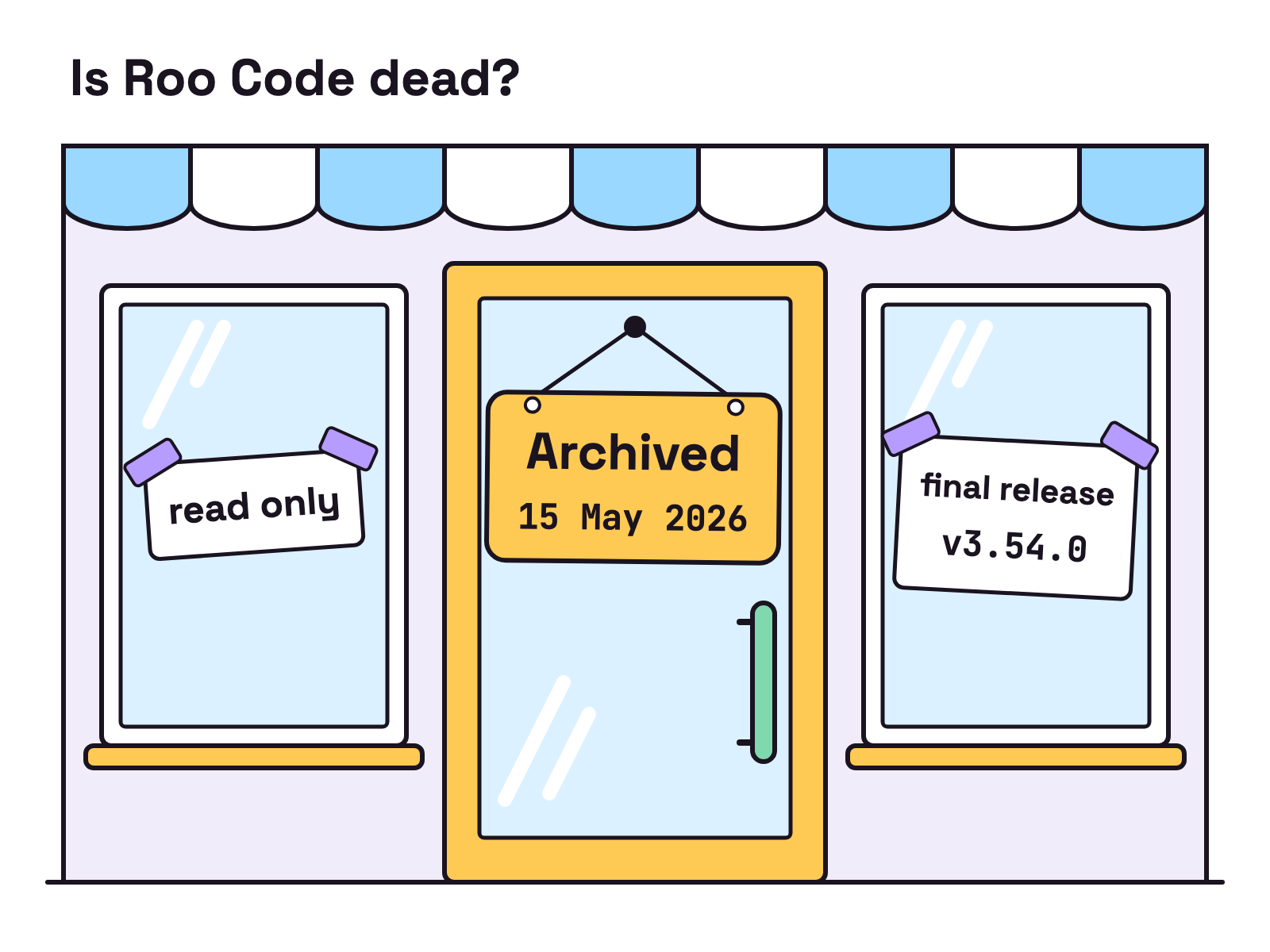
The VS Code Marketplace listing is still up. It shows version 3.54.0, last updated 15 May 2026, more than 2 million installs, and the same shutdown notice as the README.
Why was Roo Code shut down?
Roo Code’s own README does not say why; two other projects do. ZooCode’s README says it “continues development of this project after the Roo team wound down active Roo Code work to focus on Roomote”. Kilo’s Roo migration guide dates the announcement to 21 April 2026 and quotes it: “We’re shutting it down to go all-in on Roomote.” Kilo’s guide sums up the stated reason as a “Pivot to Roomote, Roo’s cloud agent”.
The company’s own pages point the same way. roocode.com now redirects to roomote.dev, a cloud coding agent whose homepage carries a “By the creators of” line with the Roo Code logo. The RooCodeInc GitHub organisation now shows the name Roomote, with Roo-Code marked “Public archive”.
Where did Roo Code come from, and who forked it?
Roo Code came from Cline; two of its forks are ZooCode and Kilo. Roo Code’s README names Cline as the project “from where Roo Code originated”, and points to ZooCode as “a fork started by the Roo Code community”. Kilo’s guide gives the second: “We started Kilo as a Roo fork in 2025.”
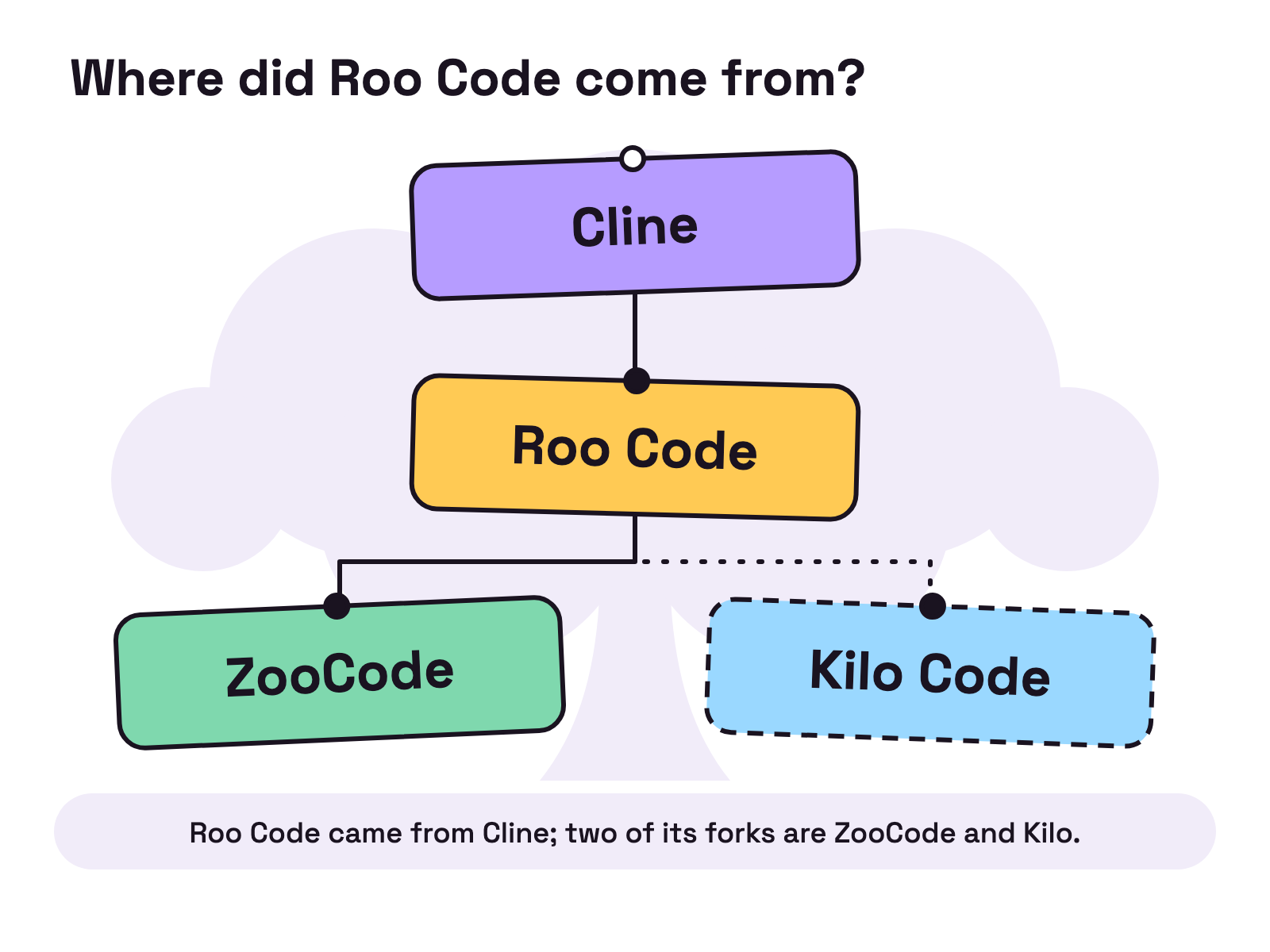
ZooCode says it continues development of the project. Its README says its core team “contributed to Roo previously”, and it has a Roo to Zoo migration guide. On 17 Oct 2026 its latest release was v3.90.0, published that day, under Apache 2.0.
Roo Code status, checked 17 Oct 2026
Each row comes from the page named in its last column, opened on 17 Oct 2026.
| Item | What the page shows | Source |
|---|---|---|
| Repository | Archived, read only; Apache 2.0; more than 24,000 stars | GitHub API |
| Last push and release | 15 May 2026; v3.54.0 | GitHub API |
| README | “The Roo Code Extension was shut down on May 15th.” | GitHub README |
| Docs site | Same notice, under “Extension Shutdown” | roocodeinc.github.io |
| Marketplace | Still listed; 3.54.0, updated 15 May 2026 | VS Code Marketplace |
| roocode.com | Redirects to roomote.dev | roomote.dev |
| GitHub org | RooCodeInc shows the name Roomote | github.com/RooCodeInc |
| Alternatives named in README | ZooCode, a community fork, and Cline | Roo Code README |
Can you still use Roo Code?
You can still install it, but the repository takes no new commits. The Marketplace listing is live, and Roo Code’s README says such tools are provided “AS IS” and that Roo Code, Inc makes no warranties. Kilo’s migration guide says “BYOK continues working after archive.” Our view: treat Roo Code as frozen and plan a move before a model or VS Code change breaks it.
How do you move off Roo Code?
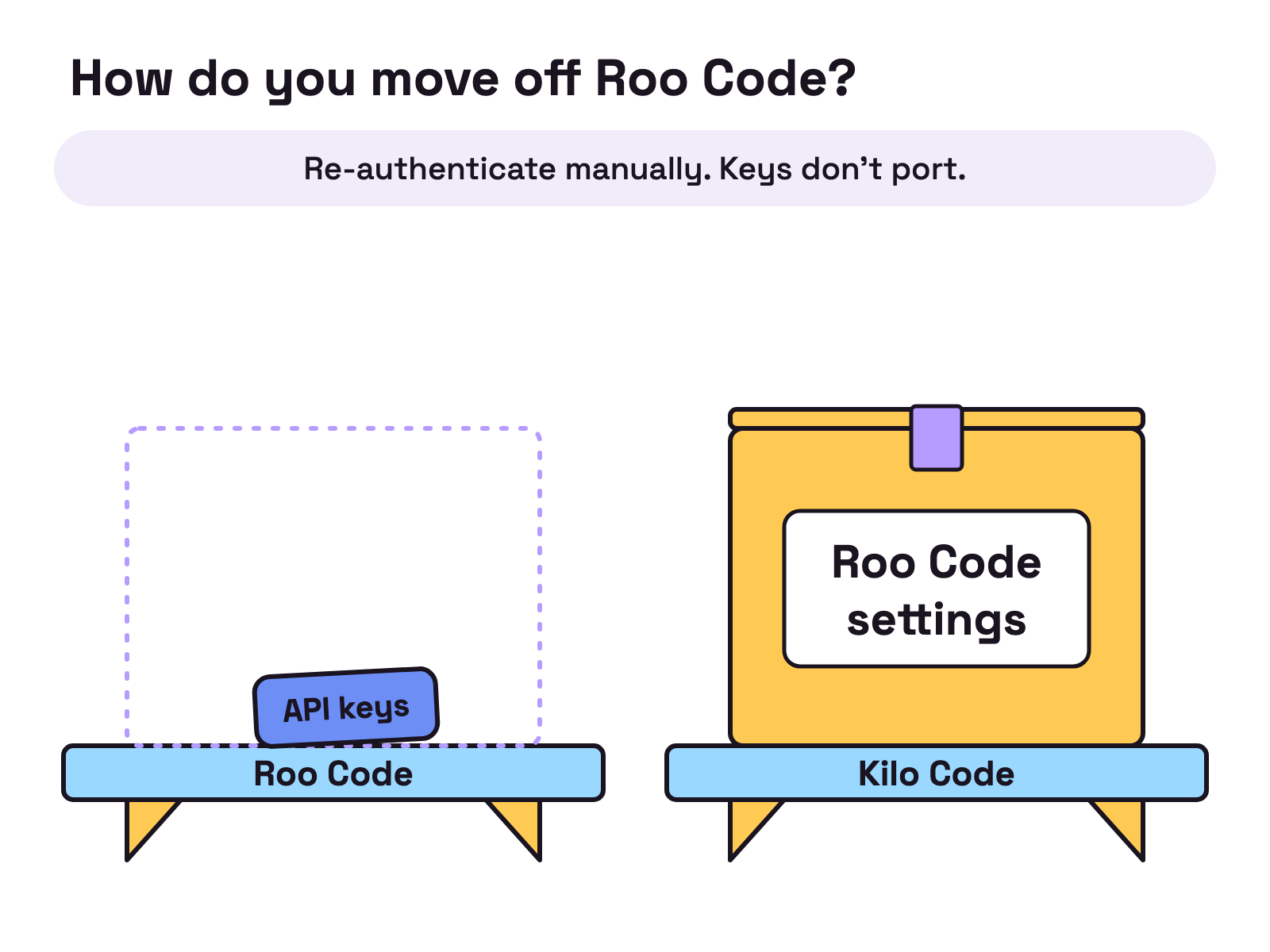
Pick a successor, then carry your settings across by hand where the guides say so. ZooCode’s README links a Roo to Zoo migration guide. Kilo’s migration guide spells out the steps. It maps Architect mode to Kilo’s plan agent and custom modes in YAML to custom agents in Markdown with YAML frontmatter. It also says the command namespace changes from roo-cline.* to kilo-code.*, so you find and replace in keybindings.json. On API keys it is blunt: “Re-authenticate manually. Keys don’t port.”
What to use instead
Roo Code’s README points to ZooCode, covered above, and Cline. Here are five ways to go, Cline included, each with its own source:
- Cline. Its README says “The open source coding agent in your IDE, terminal, & desktop.” Apache 2.0; latest extension release v4.1.25 (16 Oct 2026). See Cline vs Munder Difflin.
- Munder Difflin. Munder Difflin is what we make, and it is not an editor extension. It is free and open source: a desktop app that runs a team of coding agents such as Claude Code, Codex and Gemini CLI on your own computer. Start with how to install and use Munder Difflin.
- Kilo Code. Kilo’s README offers VS Code, JetBrains and a CLI, MIT licensed, and its Roo migration guide maps
RooVeterinaryInc.roo-clinetokilocode.Kilo-Code. - Claude Code. Anthropic’s overview says it is “Available in your terminal, IDE, desktop app, and browser.” Its licence file says “All rights reserved”. See Claude Code alternatives.
- Codex. OpenAI’s README says Codex installs in your code editor, naming VS Code, Cursor and Windsurf. The CLI is Apache 2.0.
FAQ
Is Roo Code dead?
Roo Code itself is no longer developed. On 17 Oct 2026 GitHub showed the RooCodeInc/Roo-Code repository as archived, which makes it read only, and its README says "The Roo Code Extension was shut down on May 15th." The VS Code Marketplace listing was still up, at version 3.54.0.
Why did Roo Code shut down?
Roo Code's own README does not give a reason. ZooCode's README says the Roo team wound down active Roo Code work to focus on Roomote, and Kilo's migration guide quotes the announcement: "We're shutting it down to go all-in on Roomote." roocode.com now redirects to roomote.dev.
Is Kilo Code a fork of Roo Code?
It began as one, by Kilo's own account; its current extension was rebuilt on OpenCode server. Kilo's Roo migration guide says "We started Kilo as a Roo fork in 2025" and that the two codebases share real git history. Roo Code's README, in turn, names Cline as the project Roo Code originated from.
Can I still use Roo Code?
The extension is still listed on the VS Code Marketplace, but its README says it was shut down and that Roo Code, Inc makes no warranties about it. Kilo's migration guide says "BYOK continues working after archive." An archived repository gets no new commits, so plan a move.