OpenClaw Alternatives: 7 Picks for Chat, Code and Cloud
Seven OpenClaw alternatives sorted by job: Hermes Agent, Munder Difflin, NanoClaw, ZeroClaw, nanobot, Goose and Claude. Licences and prices checked 5 Oct 2026.
The best OpenClaw alternative is Hermes Agent if you want the same job done, a personal assistant in your chat apps, and Munder Difflin if your real work is code. NanoClaw, ZeroClaw, nanobot, Goose and Claude cover tighter isolation, smaller installs and a hosted option. Checked 5 Oct 2026.
This guide sits in our Comparisons hub, next to the wider list of open source AI agents.
What is OpenClaw, and why would you leave it?
OpenClaw is an open source AI assistant that runs on your own computer and answers in the chat apps you already use. Its README names Discord, iMessage, Slack, Teams, Telegram and WhatsApp, “and 20+ more”. It is MIT licensed, run by the OpenClaw Foundation, and has “no paid tier, hosted service, or token”. GitHub showed 391,425 stars and release v2026.9.8 (3 Oct 2026) on 5 Oct 2026.
So nobody leaves over price. From OpenClaw’s own README, the reasons are these:
- You host it. There is no hosted service. You install it on your own machine (the installer sets up Node for you), and in our reading it only answers while that machine is running.
- Tools run on your machine. The README says “Tools run on the host for the main session unless you configure sandboxing”.
- It is a personal assistant. If your work is a codebase, you may want a tool built for that.
Seven OpenClaw alternatives, by job
Two of the seven kept the claw in the name. Nobody said naming was easy.
1. Hermes Agent. Hermes Agent from Nous Research is the closest swap. It is MIT licensed, creates skills from experience, has a cron scheduler, and answers on Telegram, Discord, Slack, WhatsApp and Signal. hermes claw migrate imports your OpenClaw settings, memories, skills and API keys. Our Hermes Agent explainer covers the install. Best for: the same job, with memory that grows.
2. Munder Difflin. This is what we make, and it is free and open source: a desktop app that runs a team of coding agents such as Claude Code, Codex and Gemini CLI on your own computer. Each agent is a real CLI in a real terminal, with a role, shared memory and messages to the others. It runs on macOS, Windows and Linux. The limits: it is for coding work, it does not run personal errands or answer your WhatsApp, and agents work while your computer is on. The install guide takes you from download to a first agent. Best for: people who used OpenClaw mostly to get code written.
3. NanoClaw. NanoClaw (MIT) is described on its repo as “a lightweight alternative to OpenClaw that runs in containers for security”. It runs on Anthropic’s Agents SDK by default, and its README lists Codex, OpenCode and Ollama as add-on providers. Each agent runs in its own Linux container and sees only what you mount. It needs Docker, on macOS, Linux or Windows through WSL2. Best for: isolation first.
4. ZeroClaw. ZeroClaw is a single Rust binary, dual licensed MIT or Apache 2.0. Its README lists 30+ channels and a default autonomy level called supervised, where medium risk operations need your approval. It also drives hardware such as a Raspberry Pi. Best for: a small always on service.
5. nanobot. nanobot (MIT) is a personal agent framework in Python 3.11 or newer. It runs in a web UI, a terminal or chat apps such as Telegram, Discord and Slack. Best for: Python people who want to read the core.
6. Goose. Goose (Apache 2.0) is a general agent with a desktop app for macOS, Linux and Windows, plus a CLI. It works with 15+ model providers and belongs to the Agentic AI Foundation at the Linux Foundation. Best for: a desktop app first.
7. Claude. The one hosted pick. Anthropic’s help page says Cowork work “runs on Anthropic’s servers” (in beta) and that scheduled tasks “don’t need your computer to be awake”. The pricing page now says “Claude Cowork is now just Claude”, and our Claude Cowork explainer has the background. Best for: no server to run.
OpenClaw alternatives compared, checked 5 Oct 2026
| Tool | What it is | Licence | Price | Runs where |
|---|---|---|---|---|
| OpenClaw | Personal assistant in your chats | MIT | Free. | Your own devices |
| Hermes Agent | Personal assistant that learns | MIT | Free. | Your computer, a VPS or serverless |
| Munder Difflin | Team of coding agents | MIT | Free and open source. | Your computer: macOS, Windows, Linux |
| NanoClaw | Assistant in containers | MIT | Free. | Docker on macOS, Linux, WSL2 |
| ZeroClaw | Agent runtime, one Rust binary | MIT or Apache 2.0 | Free. | Your machine |
| nanobot | Python agent framework | MIT | Free. | Your computer or a server |
| Goose | General agent, desktop and CLI | Apache 2.0 | Free. | macOS, Linux, Windows |
| Claude | Hosted agent | Proprietary | Pro: $20 a month, billed monthly (5 Oct 2026). | Anthropic’s servers |
Licences come from each repo, checked on 5 Oct 2026. The Claude price is from claude.com/pricing on the same day.
What is the best OpenClaw alternative?
Hermes Agent, for most people who liked what OpenClaw does. It does the same job under the same licence, and it is the only pick here whose README documents an import from ~/.openclaw.
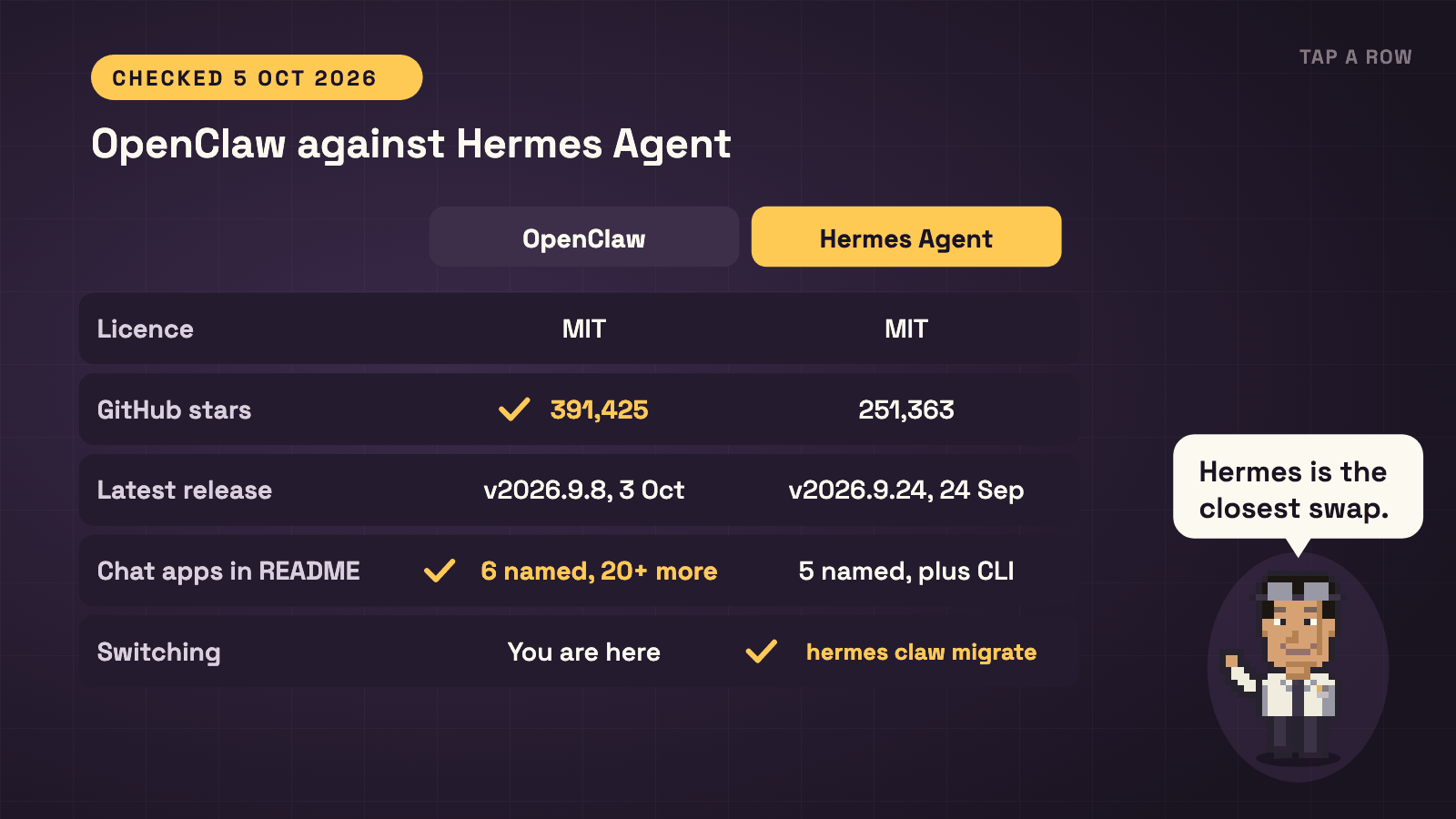
OpenClaw still wins on size and reach: more stars, more channels, and native apps for macOS, iOS, Android, Windows and Linux. If none of the three reasons above bothers you, stay. That is a fair outcome for a list like this.
Is there a free OpenClaw alternative?
Yes: six of the seven are free and open source, and so is OpenClaw. The software costs nothing. The model does, unless you run a local one or reuse a plan you already pay for. Goose, for example, can use an existing Claude, ChatGPT or Gemini subscription.
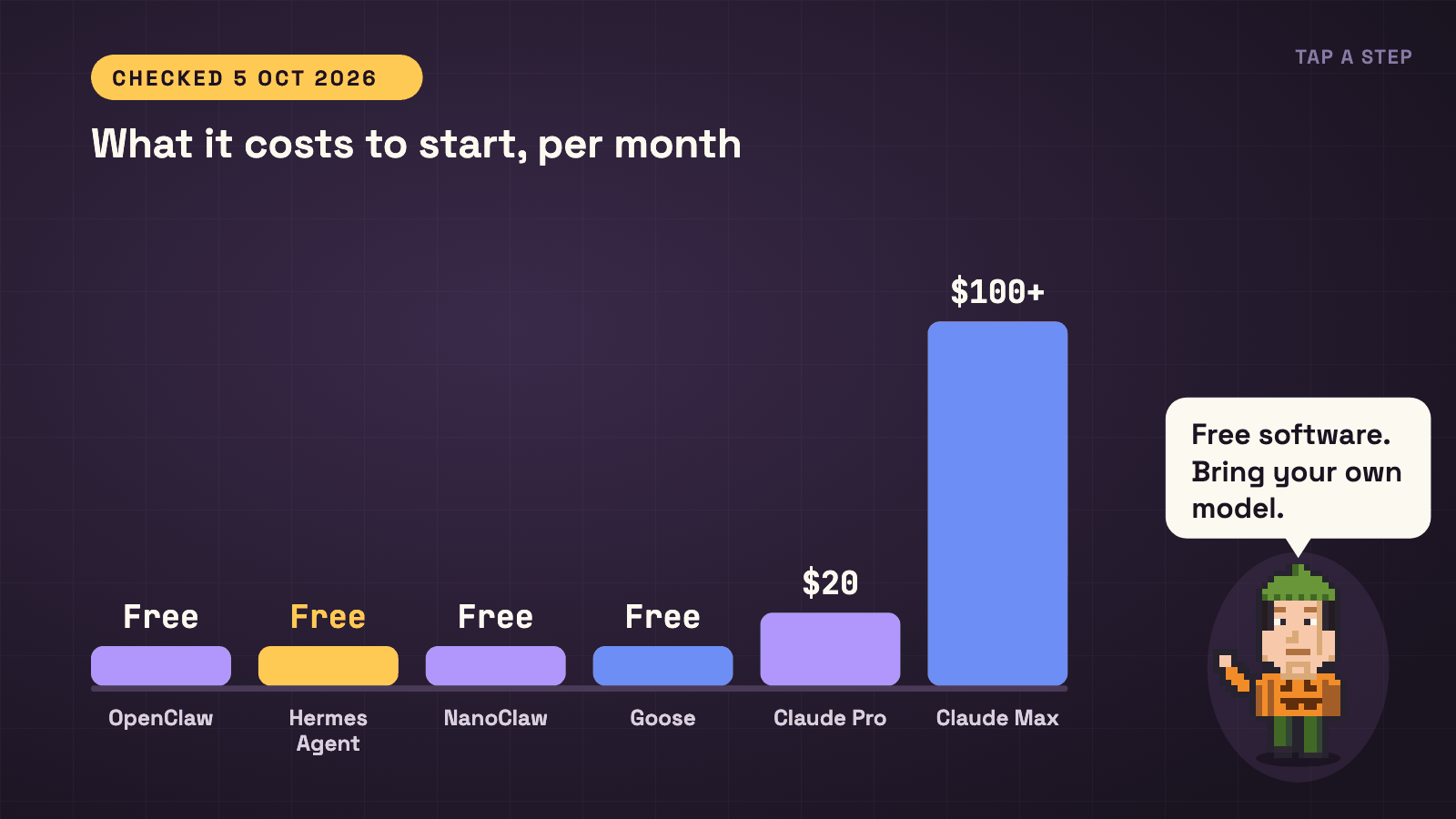
Claude is the one pick here where the agent work starts on a paid plan: on 5 Oct 2026, Pro is $20 a month billed monthly, and Max is listed “From $100”.
Who should pick what?
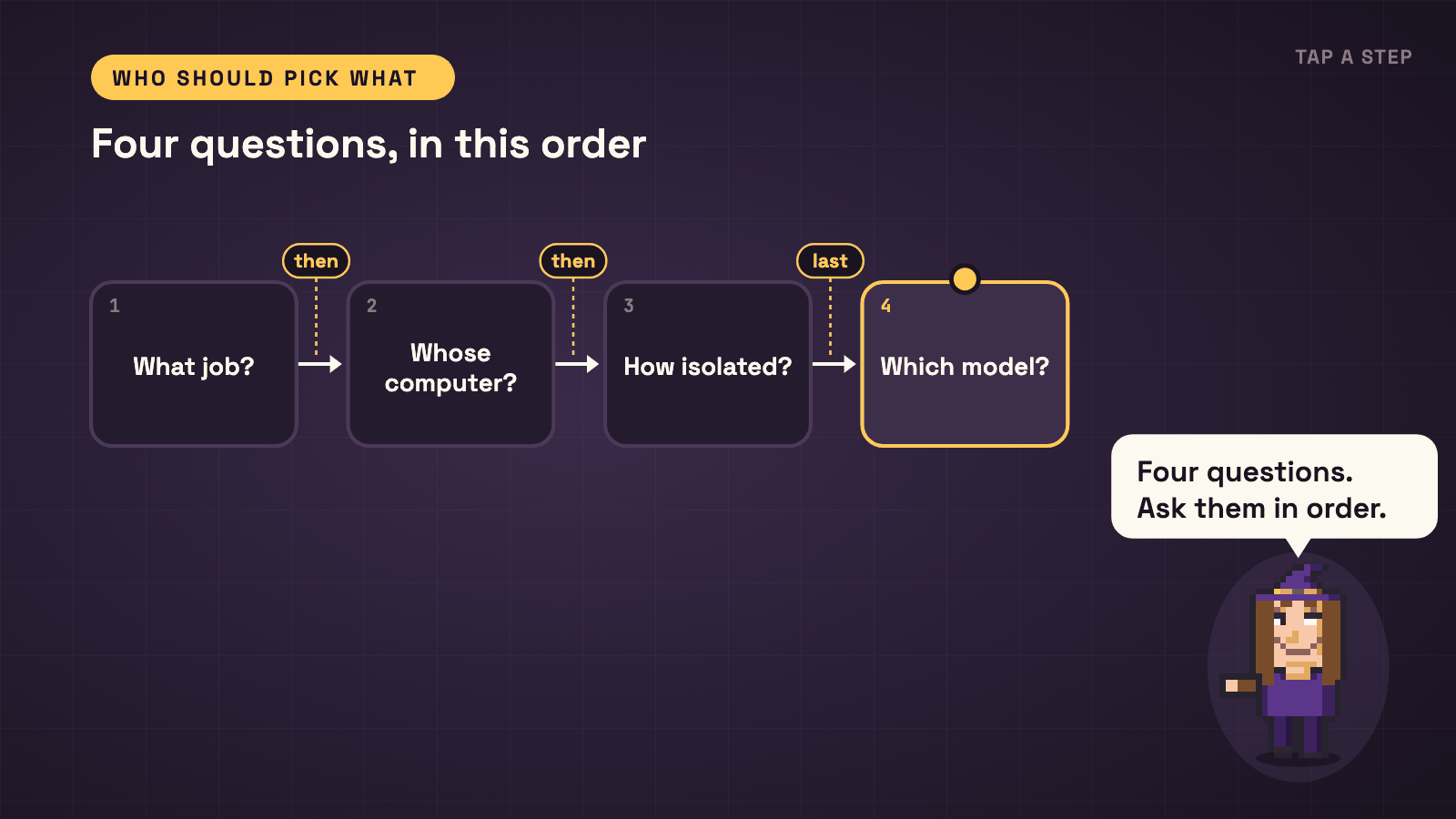
Pick by the job first, then by whose computer does the work.
- Hermes Agent if you want OpenClaw’s job with a learning loop and an import command.
- Munder Difflin if the work is code and you want several agents on it at once.
- NanoClaw if every agent should sit in its own container.
- ZeroClaw if you want one small binary running as a service.
- nanobot if you live in Python.
- Goose if you want a desktop app first (its Telegram gateway is experimental).
- Claude if you would rather pay than host.
For hosted agents from the other big vendors, see ChatGPT dots alternatives.
FAQ
What is the best OpenClaw alternative?
Hermes Agent, if you want the same job: a personal assistant in your chat apps that you host yourself. It is MIT licensed and ships a command that imports an OpenClaw setup. If your real work is code, Munder Difflin fits better.
Is there a free OpenClaw alternative?
Yes. Hermes Agent, Munder Difflin, NanoClaw, ZeroClaw, nanobot and Goose are all free and open source, checked on 5 Oct 2026. You still bring a model: an API key, a subscription you already pay for, or a local model.
Can I move my OpenClaw setup to another agent?
To Hermes Agent, yes. Its README says `hermes claw migrate` imports your settings, memories, skills and API keys, and `--dry-run` previews the import first. The setup wizard also offers the migration when it finds `~/.openclaw`.
Is there an OpenClaw alternative for coding?
Munder Difflin is the one built for it: a desktop app that runs a team of coding agents such as Claude Code, Codex and Gemini CLI on your own computer. Goose also handles code, as one general agent with a desktop app and a CLI.
Is there a hosted OpenClaw alternative?
OpenClaw's README says it has no hosted service, so you always run it yourself. Of the picks here, only Claude is hosted: Anthropic says the work runs on its servers and scheduled tasks do not need your computer awake. It needs a paid plan.