Orca Alternatives: 6 Picks for Parallel Coding Agents (Nov 2026)
Orca runs coding agents in parallel worktrees, free under MIT. Six Orca alternatives with platforms, licence and price, checked 19 Nov 2026.
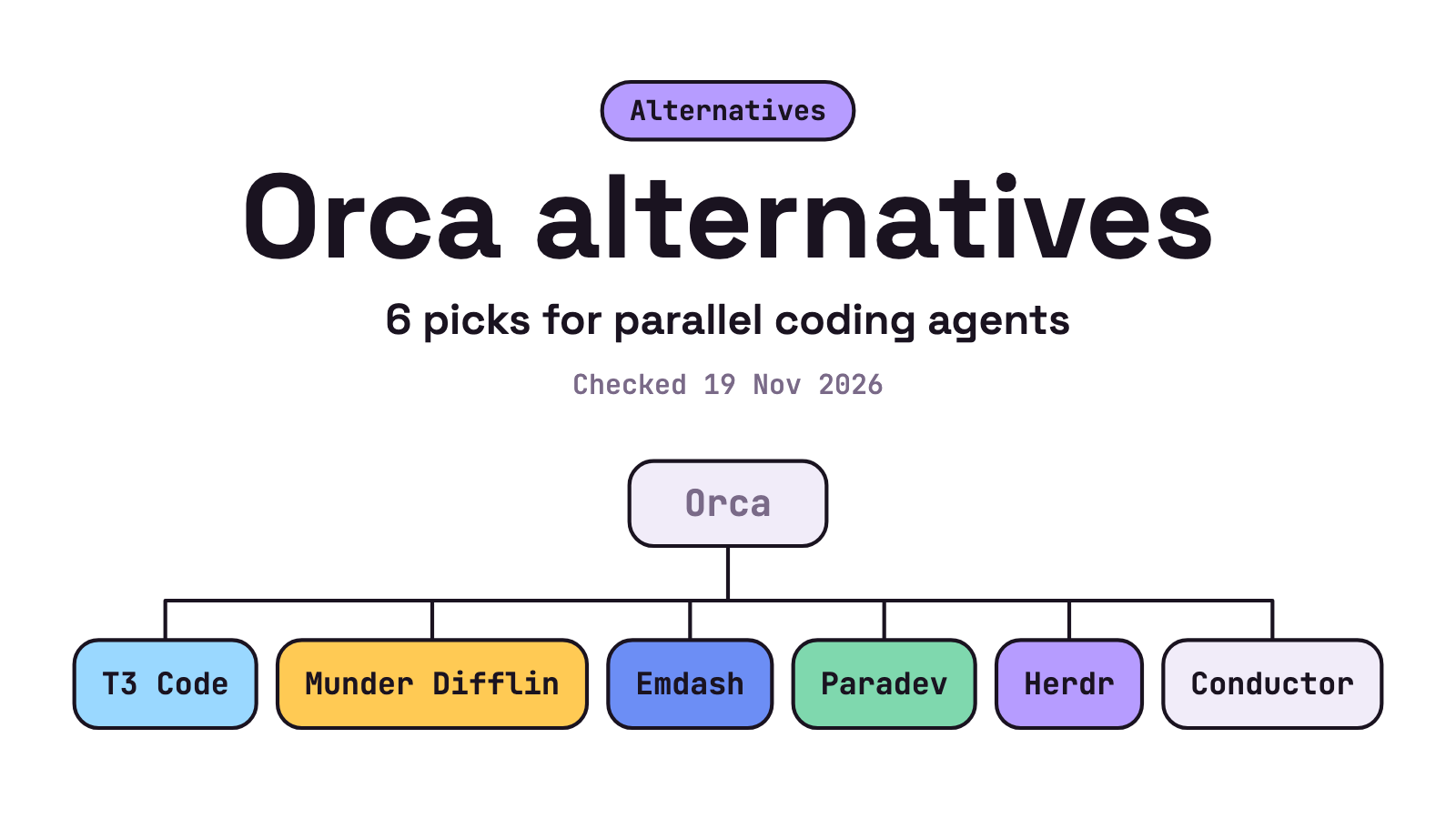
Our view: T3 Code is the closest of the Orca alternatives, because it is also free, MIT licensed, and runs the agents you already pay for from a desktop or a phone. Checked 19 Nov 2026.
We build Munder Difflin, which is free and open source: a desktop app that runs a team of AI agents for all kinds of knowledge work, coding included, on your own computer. Head to head: Orca vs Munder Difflin.
What is Orca?
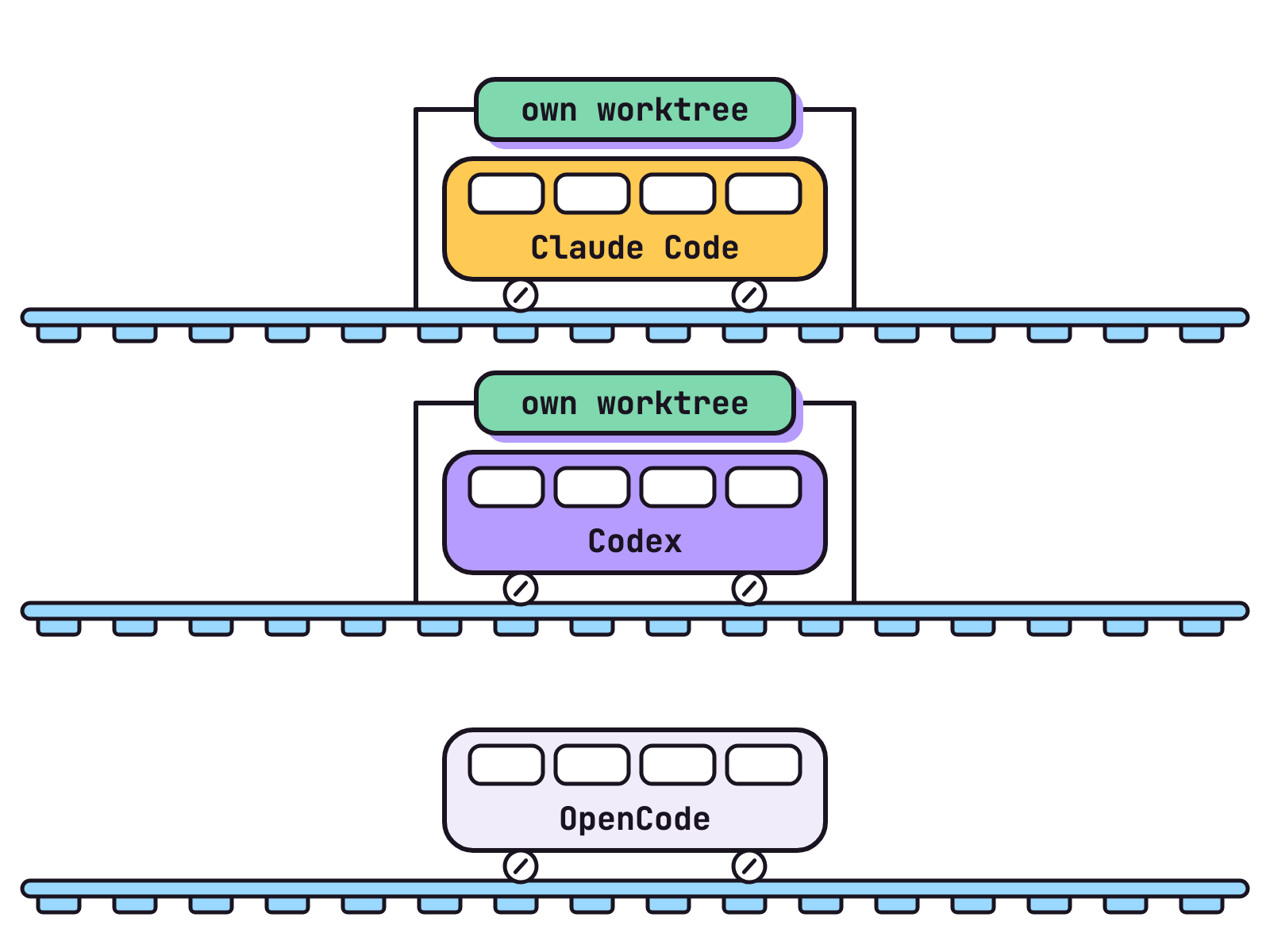
Orca is a desktop app that runs many coding agents at once, each in its own Git worktree. Its README, read 19 Nov 2026, calls it “The AI Orchestrator for 100x builders” and says: “Run Claude Code, Codex, and any other coding agent in parallel, each in its own worktree. Chat or terminal, on your laptop or in the cloud, with diffs, a browser, and a CLI in one app.”
It does a lot well, in its own words. One agent splits a big task, starts “worker agents in their own workspaces, and brings their results back to you.” The mobile app pings you “when an agent needs you”. You can “leave notes on exact changed lines” of a diff. The home page says it “Works with Claude Code, Codex, OpenCode, Grok, and any other agent CLI” on macOS, Windows and Linux. The GitHub API showed 129,607 stars on 19 Nov 2026.
How much does Orca cost?
Orca is free. Its home page FAQ, read 19 Nov 2026, says “Orca is completely free and open source under the MIT license.” You bring your own agent subscriptions, and the ways to run doc says “Orca does not sell managed VPS hosting.”
Why look for an Orca alternative?
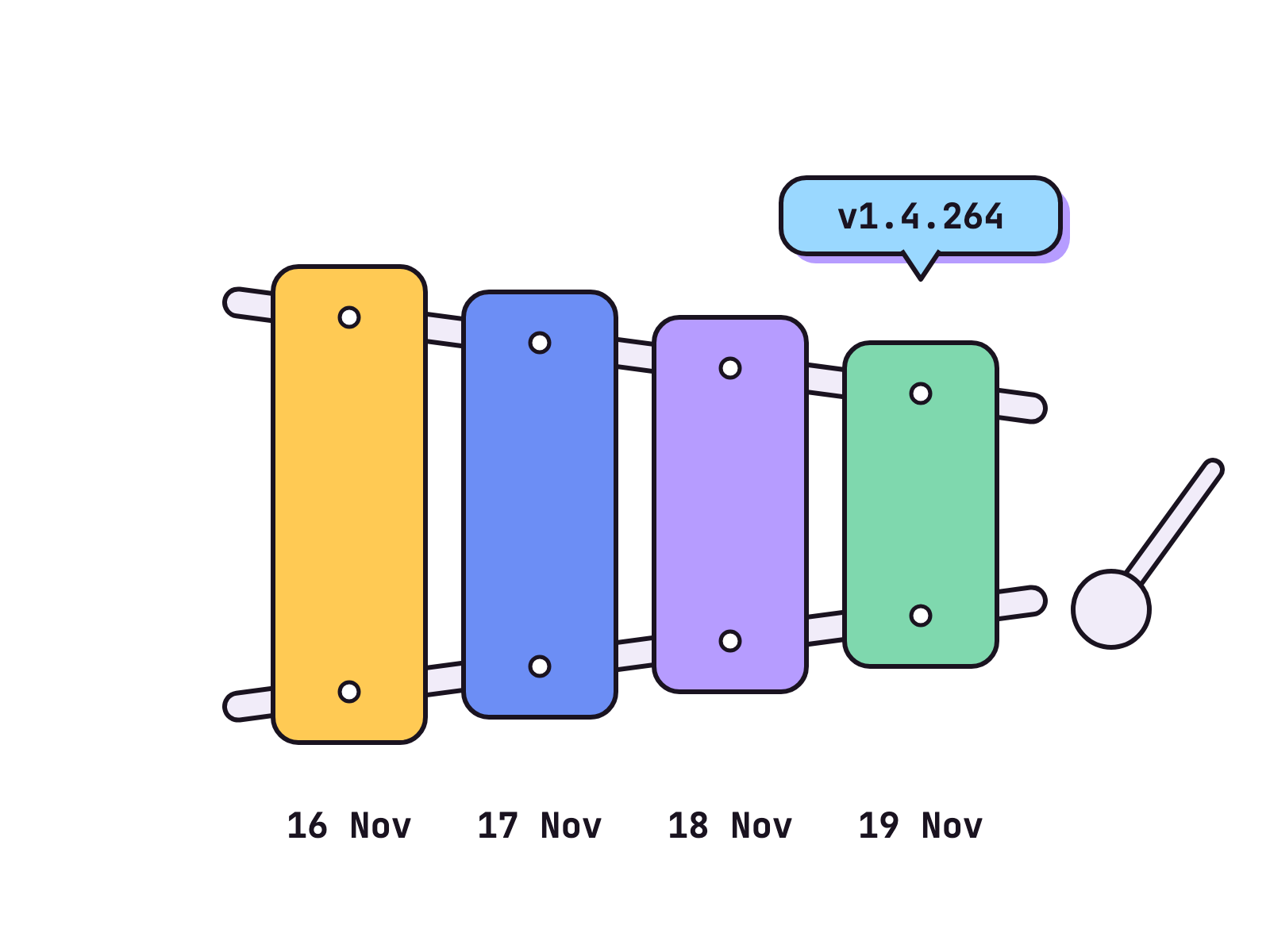
Our view: three reasons, and quality is not one of them. Orca is built for code; its FAQ calls it “a free, open-source desktop app for shipping with coding agents.” It has no hosted cloud to pay for. And it moves fast: the GitHub API lists stable releases on 16 Nov, 17 Nov, 18 Nov and 19 Nov 2026, the last being v1.4.264. The README says “we ship daily, so this list is perpetually behind.”
What are the best Orca alternatives?
Six, each opened on 19 Nov 2026.
| Tool | Where it runs | Licence and price, 19 Nov 2026 |
|---|---|---|
| T3 Code | macOS, Windows, Linux, web, iOS, Android | MIT, free |
| Munder Difflin | Your computer, or the Cloud Office | Free and open source |
| Emdash | Classic on macOS, Windows, Linux; 2.0 in early access | Classic is Apache 2.0, open source |
| Paradev | macOS; Linux experimental | MIT; free tier and paid plans |
| Herdr | macOS, Linux, Windows, iPhone, iPad, Android | Apache 2.0, free |
| Conductor | macOS, iOS; joining Meta | No price on its site |
| Orca, for comparison | macOS, Windows, Linux, iOS, Android | MIT, free |
1. T3 Code: the closest match to Orca
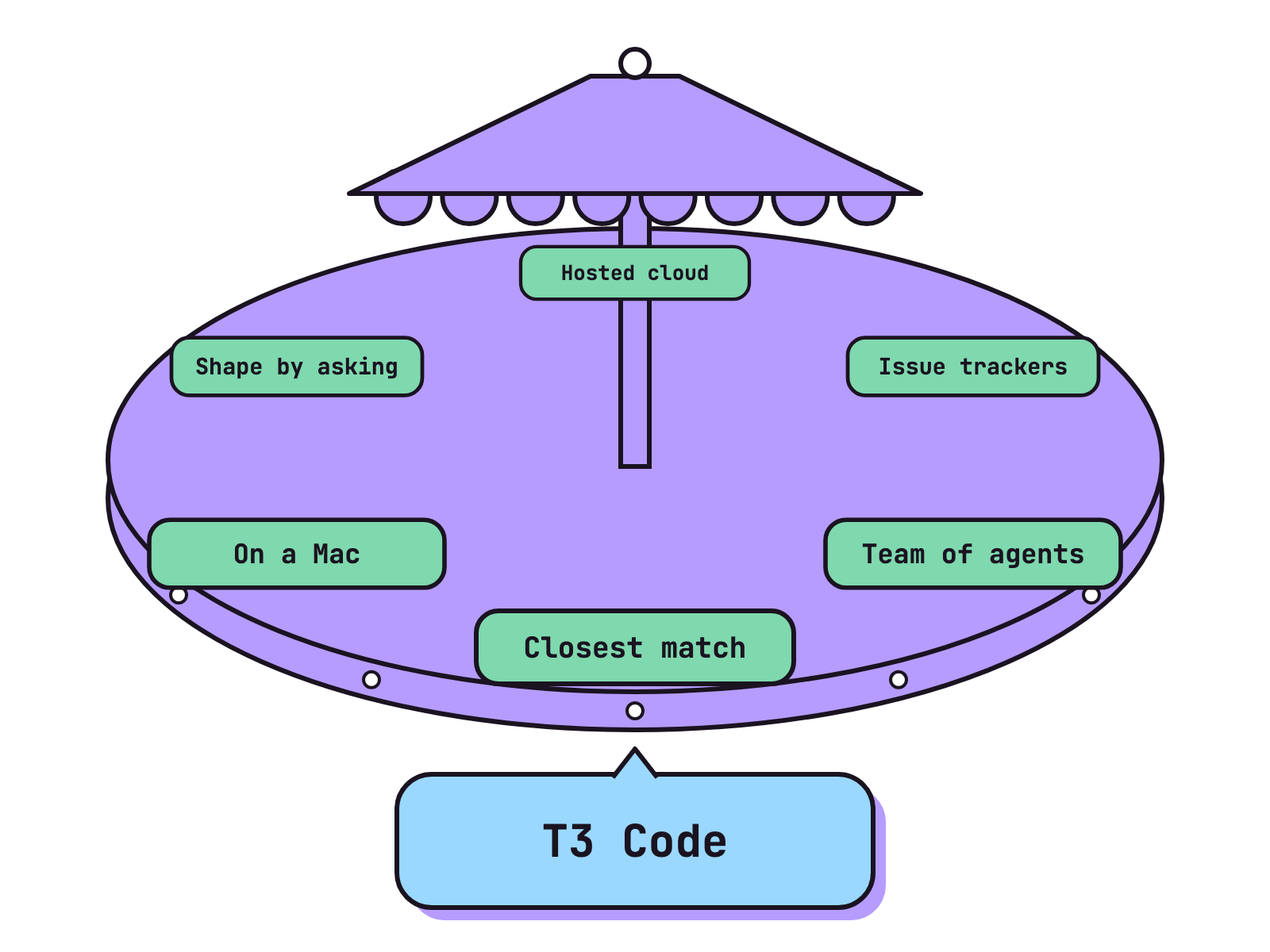
T3 Code is the nearest fit: free, MIT licensed, with desktop, web and phone apps. Its README, read 19 Nov 2026, says “T3 Code runs the coding agents on your machine and gives them one fast interface.” Each thread “can work in its own worktree”, and asked “Wait, what are you selling me?”, it answers “Nothing.” v0.1.10 came out on 17 Nov 2026. We think it suits people who want to “Let Claude hand a task to Codex.”
2. Munder Difflin: a team of agents for more than code
Munder Difflin is the pick when the work is wider than code. harnessmd.com, read 19 Nov 2026, says agents “take on any knowledge work you can describe: research, writing, design, planning, support and operations, and code too.” Its README, read the same day, says it “Wraps Claude Code, Antigravity (Gemini), OpenAI Codex” and lists “Per-agent git worktrees. Optional isolation so parallel agents never collide on branches.” The Cloud Office runs your agents in the cloud, always on, so work goes on with your computer off. Setup: how to install and use Munder Difflin.
3. Emdash: if your work starts in an issue tracker
Emdash suits work that starts as a ticket. Its README, read 19 Nov 2026, says “Each task runs in its own Git worktree” and pulls issues from ten trackers, Linear, GitHub and Jira among them. It is Apache 2.0, and v1.2.12 came out on 19 Nov 2026. The home page leads with Emdash 2.0, which runs agents “on your own infrastructure or Emdash cloud”, behind an early access form. Of Classic it says: “It still gets fixes, but new development has moved to Emdash 2.0.”
4. Paradev: if you want a hosted cloud you pay for
Paradev, formerly Superset, sells the hosted cloud workspaces Orca does not. Its README, read 19 Nov 2026, says “Each task gets its own Git worktree, branch, and terminals”. It targets macOS, Linux is experimental, and “Windows is not yet available.” On 19 Nov 2026 its pricing page listed Free at $0 for “1 user”, Pro at $20 per user a month ($16 a month billed yearly), and Team at $60 per user a month ($54 billed yearly) with cloud workspaces, “150 hours per seat each month”. It is MIT licensed, and desktop-v2.0.10 came out on 19 Nov 2026.
5. Herdr: if you want an app your agent can reshape
Herdr began as a terminal tool and is now a desktop and phone app. The Herdr site, read 19 Nov 2026, says “Herdr is an app for running coding agents that you shape by asking.” Agents “run in herdr-core, so they keep going when you close the window”. It lists macOS on Apple silicon, Linux and Windows, plus iPhone, iPad and Android. It says “The app, herdr-core and Herdr TUI are open source under Apache 2.0.” More in our herdr alternatives guide.
6. Conductor: a Mac app that is joining Meta
Conductor’s home page, read 19 Nov 2026, says it plainly: “Conductor is joining Meta.” It also says “Conductor runs the first-party Claude Code, Codex, Cursor, and OpenCode agents under the hood”, shows version 0.96.0 on 18 Nov 2026, and lists macOS, iOS and an API. Its announcement, read the same day, says Conductor Cloud “will shut down over the next few weeks” and “We’ll still be developing Conductor.” More in Conductor alternatives.
Orca vs Conductor: which should you pick?
Our view: Orca, unless you are happy on a Mac and with the Meta move. Orca’s migration guide, read 19 Nov 2026, says “Conductor workspaces are ordinary git worktrees, so Orca opens them in place.”
How do you choose an Orca alternative?
Our view: pick by the one thing Orca lacks for you.
- Closest match: T3 Code.
- Team of agents for research, writing, ops and code: Munder Difflin.
- Issue trackers: Emdash.
- Hosted cloud: Paradev.
- Shape by asking: Herdr.
- On a Mac: Conductor, if the Meta move does not worry you.
- Parallel coding agents on any OS, free: stay on Orca.
FAQ
What is Orca?
Orca is a desktop app from Stably AI that runs coding agents side by side. Its README, read 19 Nov 2026, says: "Run Claude Code, Codex, and any other coding agent in parallel, each in its own worktree." It runs on macOS, Windows and Linux, with a mobile app for iOS and Android.
Is Orca free?
Yes. Orca's FAQ, read 19 Nov 2026, says "Orca is completely free and open source under the MIT license." You bring your own agent subscriptions, and its docs say "Orca does not sell managed VPS hosting."
What is the closest Orca alternative?
Our view: T3 Code, because it is also free, MIT licensed, and drives the agents on your machine from a desktop, the web or a phone. Munder Difflin comes second, for a team of agents across all kinds of knowledge work, coding included, with a Cloud Office that keeps working with your computer off.
Orca vs Conductor: which should I pick?
Our view: Orca if you need Windows or Linux, or would rather not wait to see what Conductor's move to Meta brings. Conductor's site, read 19 Nov 2026, says "Conductor is joining Meta", and its announcement says Conductor Cloud "will shut down over the next few weeks". Orca's migration guide says Conductor workspaces are ordinary git worktrees that Orca opens in place.
Is there an open source Orca alternative?
Yes. On 19 Nov 2026, per their own pages, T3 Code was MIT licensed, Munder Difflin was free and open source, Paradev was MIT licensed, and Emdash Classic and Herdr were Apache 2.0.