The Office Parody Behind Munder Difflin (and Why It Helps)
Why Munder Difflin is a loving parody of The Office — and how the office metaphor makes a hive of AI agents genuinely easier to understand and trust.
Munder Difflin is a loving parody of Dunder Mifflin from The Office — "the world's best agents, the world's worst paper company." But the joke isn't only a joke. An office is the most intuitive mental model humans have for "a group of workers coordinating toward a goal," which is exactly what a hive of AI agents is. So the metaphor does real work: it makes an otherwise abstract multi-agent system something you can see, reason about, and trust at a glance.
Plenty of AI tools take themselves very seriously. Munder Difflin opens with a paper-company pun. That’s a deliberate choice, and it goes deeper than a punchline — the parody is also the product’s best explanation of itself. Here’s the story behind the name, and why a sitcom about a failing paper company turned out to be the perfect frame for a serious piece of agent infrastructure.
The joke, briefly
Munder Difflin is an open-source multi-agent harness for Claude Code — and it’s dressed as a parody of Dunder Mifflin, the fictional paper company from The Office. The tagline sets the tone: “The world’s best agents. The world’s worst paper company.” The avatars are the show’s cast, each with its own look, working at desks on a visual office floor rendered in a friendly pixel aesthetic with a Dunder-Mifflin-maroon-and-gold coat of paint. (To be clear up front: it’s an affectionate, unaffiliated parody — not associated with NBC’s The Office or Dunder Mifflin.)
It would be easy to read all of that as set dressing. It isn’t. The metaphor was chosen because it teaches.
Why an office is the right metaphor for a hive
Here’s the quiet insight: humanity has spent a century refining an answer to the question “how do a bunch of workers coordinate to get things done without stepping on each other?” The answer is an office — and a multi-agent AI system needs to solve the exact same problem. So the office isn’t a costume on top of the tech; it’s a one-to-one map of it:
- A manager who routes work. Every office has someone deciding who does what. In a hive, that’s the orchestrator — and naturally, it’s Michael running the room, the control surface the whole floor reports through.
- Specialists at their desks. An office is a set of people with roles. A hive is a set of agents with roles. “Give that to the researcher” and “give that to Dwight” are the same instruction.
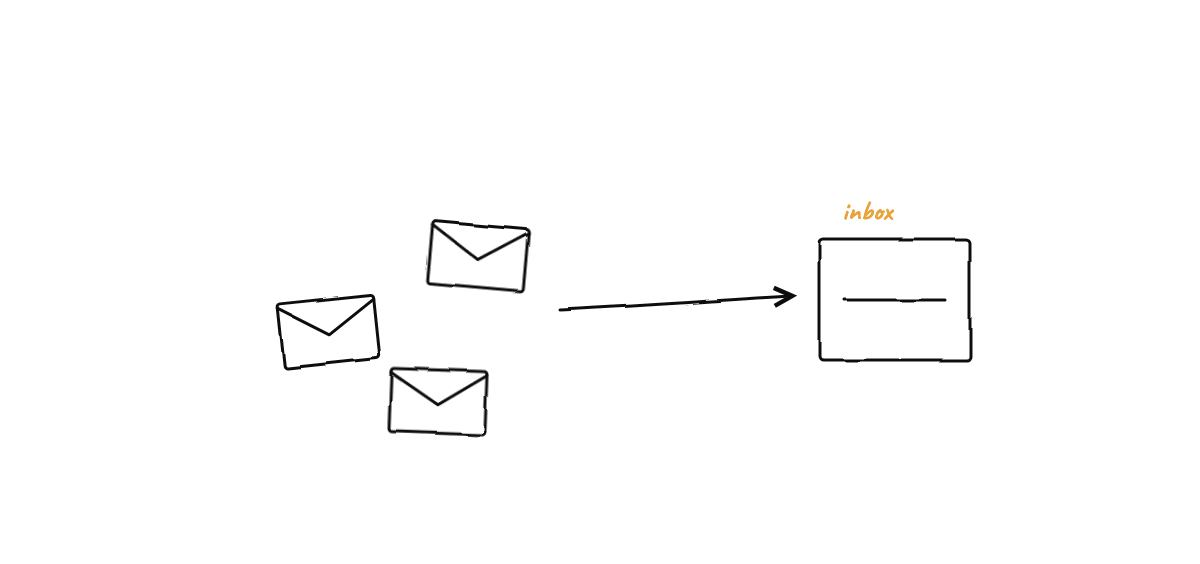
- Mailboxes and memos. Coworkers pass notes and messages instead of interrupting the boss for everything. Agents pass messages through inboxes the same way.
- Institutional knowledge. A good office remembers — nobody re-explains last quarter’s decision every morning. A hive remembers through shared memory.
- A place you can walk through. You can glance across an office and see who’s busy, who’s blocked, who’s at the coffee machine. That’s observability — and it’s why the floor is something you actually watch.
When a new user opens the app and sees an office with a boss, desks, and workers passing notes, they already understand the architecture — because they’ve worked in (or watched a show about) exactly that structure. The metaphor pre-loads the mental model so the documentation doesn’t have to.
How the bit shows up in the product
The parody isn’t skin-deep; it’s wired through the real software:
- Michael’s control surface. The command center you drive the hive from is literally framed as Michael’s office — the one room everything routes through.
- A living office floor. A Pixi.js scene renders the cast as avatars at desks, walking the floor with real pathfinding, carrying messages between coworkers. It’s a developer tool you can watch like a room, not a wall of logs.
- The cast as your team. The avatars are the show’s ensemble, each visually distinct, so “who’s doing what” reads at a glance instead of as a list of process IDs.
- The little touches. Idle agents wander off for coffee. The brand wears Dunder-Mifflin maroon and gold. None of it is required to run agents — all of it makes running them feel like managing a team instead of babysitting a script.
Why playful beats po-faced here
There’s a real argument that the humor is a feature, not a distraction:
- It lowers the intimidation. “Autonomous AI agents editing my codebase” is a slightly scary sentence. “A little office of workers I can watch and approve” is not. The frame makes a powerful system approachable without dumbing it down.
- Named characters are memorable and assignable. It’s easier to think about — and delegate to — a cast than a pool of anonymous workers. A name is a handle.
- Watching a familiar room builds trust. Seeing the work happen in a layout your intuition already parses is reassurance you can’t get from a terminal scroll.
- Self-aware confidence. In a space thick with breathless hype, a tool willing to call itself “the world’s worst paper company” is signaling that it would rather show you the work than oversell it.
The serious version of multi-agent coordination and the funny version turn out to be the same diagram. The parody just makes the diagram delightful.
The honest footnote
It’s a tribute, made with affection and not a small amount of respect for the source material. Munder Difflin is an affectionate parody and is *not affiliated with NBC’s The Office or Dunder Mifflin — the homage is the whole point, and the credit belongs to the show that made an office feel like a family. Under the costume is a real, MIT-licensed multi-agent harness; the bit is how we make it make sense.
Come meet the team. Download Munder Difflin to run your own office of Claude Code agents — Michael’s already at his desk. Free and open source.
FAQ
Why is it called Munder Difflin?
It's an affectionate parody of Dunder Mifflin, the fictional paper company from The Office. The tagline says it best: 'the world's best agents, the world's worst paper company.' The joke also does real work — an office is the most intuitive way to picture a team of AI agents coordinating.
Are the agents really named after The Office characters?
Yes. The avatars are the cast of The Office, each differentiated by its own look, working at desks on a visual office floor — with Michael running the room as the orchestrator.
Is Munder Difflin affiliated with The Office or NBC?
No. It's an affectionate, unaffiliated parody — not associated with NBC's The Office or Dunder Mifflin. The homage is a tribute, not a partnership.
Is the parody just a gimmick?
No — the office metaphor is a teaching tool. Organizations already solved how many workers coordinate (roles, a manager who routes work, mailboxes, shared knowledge), so mapping a multi-agent system onto an office makes it instantly legible.