How AI Agents Remember: Semantic Memory in a Hive
A code-grounded guide to how AI agents remember — the MemPalace mine loop, per-agent wings, and wake-up digest that give a Claude Code hive shared recall.
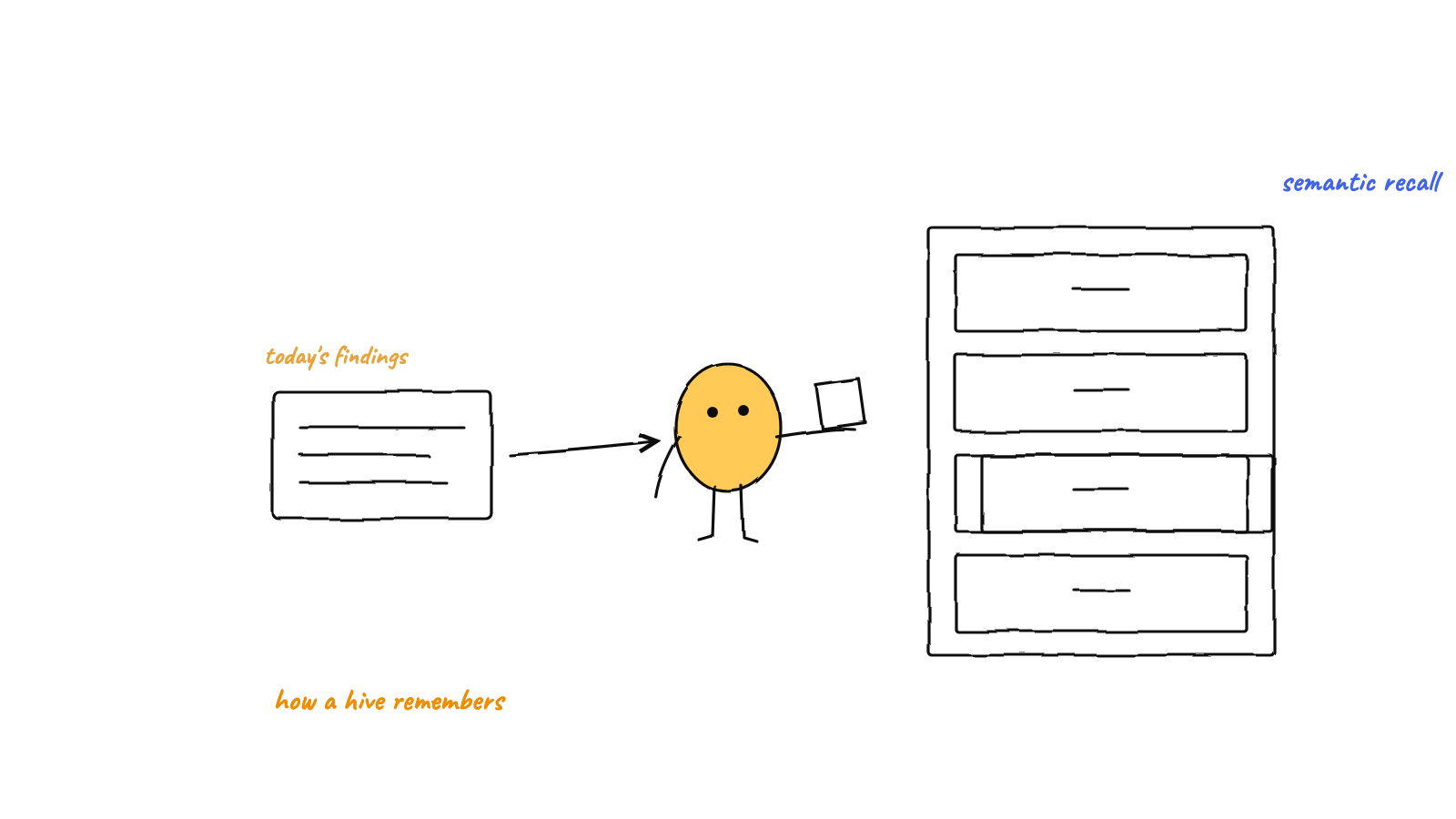
An agent's working memory — its context
window — is wiped at the end of every session. So agents "remember" in two moves: they write durable
facts to a plain-markdown file, and the harness mines that file into a shared
semantic index. Later, any agent recalls by meaning with mempalace search
or boots with a wake-up digest. This is the hands-on version, grounded in the real code in
src/main/memory.ts — the mine loop, the per-agent wings, and the gotchas we hit
making it not hang.
If you’ve read what semantic memory is and why markdown-first beats a heavy database, this is the companion that shows the machinery actually working. No new theory — just the moving parts, the exact commands, and the small decisions that make shared recall reliable in a coordinated hive of Claude Code agents.
The shape: one palace, many wings
The whole thing lives in one file — src/main/memory.ts, a MemoryManager running in the Electron
main process. It’s deliberately CLI-only (no MCP server): the harness keeps a single shared
palace on disk under the harness home, and points every agent’s MEMPALACE_PALACE_PATH at it. When
an agent is spawned, that env var (plus MEMPALACE_EMBEDDING_MODEL) is merged into its environment, so
the agent’s own mempalace CLI hits the shared store automatically.
Inside the palace, each agent gets its own wing — addressed by its agent id (--wing <id>). This
buys two properties at once:
- Private authorship. Each agent only ever writes its own
memory.md, which keeps the single-writer rule intact — no two agents clobber the same file. - Shared recall. A query can scope to one wing or sweep the whole palace. So the researcher’s notes are recallable by the coder later, with nobody copy-pasting context.
That second property is the entire reason a hive beats a lone agent on memory: knowledge accumulates in one place and everyone draws from it.
Mining: how a note becomes searchable
Agents don’t touch the index by hand. A background mine loop does it for them. From the real code,
MINE_INTERVAL_MS is 180_000 — so every three minutes the manager walks
hive/agents/*, looks at each memory.md, and mines the ones that changed:
mempalace mine <agentDir> --wing <id> --agent <id>The “ones that changed” part matters. The loop keeps a lastMined map of each agent’s memory.md
modification time and skips files whose mtime is unchanged — so it doesn’t reload the embedding
model to re-index notes that haven’t moved. Write a durable fact to your markdown, and a few minutes
later it’s searchable by the whole team, with zero extra steps on your part. (This is also why
PROTOCOL.md tells agents “your memory.md is mined automatically — you don’t run mine yourself.”)
Two robustness details worth copying if you build something similar:
- Re-mining is safe. MemPalace dedups, so mining the same notes again is idempotent. If a mine
exits non-zero, the loop simply drops that agent from
lastMinedso the next tick retries it. - stdin is closed. The child is spawned with stdin ignored, because the CLI can prompt — and a spawned process waiting on a prompt nobody answers hangs forever.
Why we don’t run mempalace init
This is the kind of detail you only learn by hitting it. The obvious bootstrap is mempalace init,
but it ends in an interactive Mine now? [Y/n] prompt that --yes doesn’t cover — so a spawned child
would hang on it indefinitely. The fix in memory.ts is to skip init entirely and let the first
mempalace mine lazily create the palace (downloading the local embedding model once, on first run).
One less moving part, and no hang.
Recall: search and wake-up
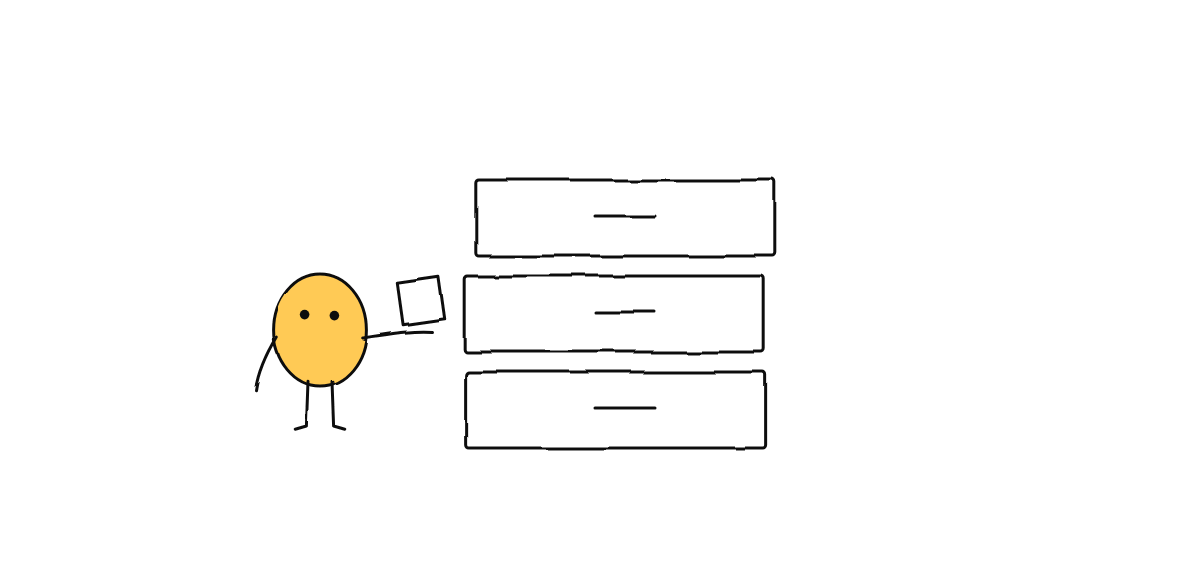
With notes mined, an agent recalls in two ways — both plain CLI calls it runs itself:
mempalace search "how do we build the web bundle?" --results 5
mempalace search "build quirks" --wing dwight-abc123   # scope to one agent's wing
mempalace wake-up # session-start digestsearchreturns the most relevant notes by meaning — so “how do we build the web bundle?” finds a note about electron-vite even with no shared keywords. You can widen with--results Nor narrow with--wing <id>.wake-upreturns a short digest (a few hundred tokens) structured into an identity layer and an “essential story” of what matters across the team. It’s meant to be read at the start of a task, so an agent boots with the hive’s relevant knowledge already in hand instead of cold.PROTOCOL.mdbakes this into the routine: runwake-upat the start of a task,searchwhen you need to recall something specific.
Both calls run with a generous timeout and an empty stdin (again: never wait on a prompt). The reason recall feels instant is that the expensive work — turning notes into vectors — already happened during mining; at recall time you embed one short query and compare against pre-computed vectors.
Graceful degradation is the safety net
The manager exposes a status() with four honest booleans — available (is the mempalace CLI on
PATH?), enabled (user setting), active, and initialized. It resolves the binary across the
shell PATH plus the usual ~/.local/bin, Homebrew, and /usr/local/bin spots. And critically: if
the CLI isn’t installed, the whole layer is a silent no-op. Agents fall back to reading their
markdown memory.md directly. The semantic index is a recall accelerator sitting on top of the
markdown — never a single point of failure that takes the memory down with it.
The embedding model is configurable (minilm by default for snappy local recall, embeddinggemma
when you want a heavier multilingual model). Everything runs locally — the palace, the model, the
mining — so memory stays local-first and private.
Why this matters for a hive (not just one agent)
A single agent with memory is useful. A hive with shared memory compounds:
- Your briefs get shorter every week, because the team stops needing context re-explained.
- Agents stop contradicting each other, because they recall the same shared decisions.
- A brand-new agent is useful immediately — it wakes up into the team’s accumulated knowledge instead of a blank slate.
That shared, durable recall is also what lets the GOD orchestrator route well: it can recall what’s been tried and who knows what, instead of asking you every time.
FAQ
Where does the palace actually live? Under the harness home, in a palace/ directory. Every
agent’s MEMPALACE_PALACE_PATH points there, so it’s genuinely one shared store, not a copy per agent.
How often is memory refreshed? Every three minutes the harness re-mines any memory.md that
changed since last time. Unchanged files are skipped, so it’s cheap.
Do I have to write notes a certain way? Small, atomic, factual notes recall sharply; rambling ones recall fuzzily. Good memory hygiene is the one thing that’s on you — see why we built agent memory markdown-first.
Munder Difflin gives every Claude Code agent plain-markdown memory plus a shared semantic palace the whole hive can recall from — local, fast, and graceful when the index isn’t there. Download Munder Difflin to give your agents memory that actually sticks; it’s free and open source.
FAQ
How do AI agents remember between sessions?
They write durable facts to a plain-markdown memory file, and the harness mines that file into a shared semantic index — so any agent can recall it by meaning in a later session, even after its context window is wiped.
What is MemPalace?
MemPalace is the CLI-driven semantic memory layer Munder Difflin uses: one shared palace on disk, a wing per agent, mined from each agent's memory.md and queried with `mempalace search` and `mempalace wake-up`.
Do agents manage the search index themselves?
No. The harness re-mines each changed memory.md every few minutes; agents just write notes and later run `mempalace search` or `wake-up` to recall — there's no database to administer and no MCP server to stand up.
What happens if MemPalace isn't installed?
Nothing breaks. The semantic layer degrades to a no-op and agents fall back to reading their markdown memory directly — the fast path is an upgrade, not a dependency.