A Small-Team Playbook for AI Coding Agents
How a small team adopts a hive of AI coding agents without chaos — the roles to assign, the cadence to run, and the guardrails that keep it safe.
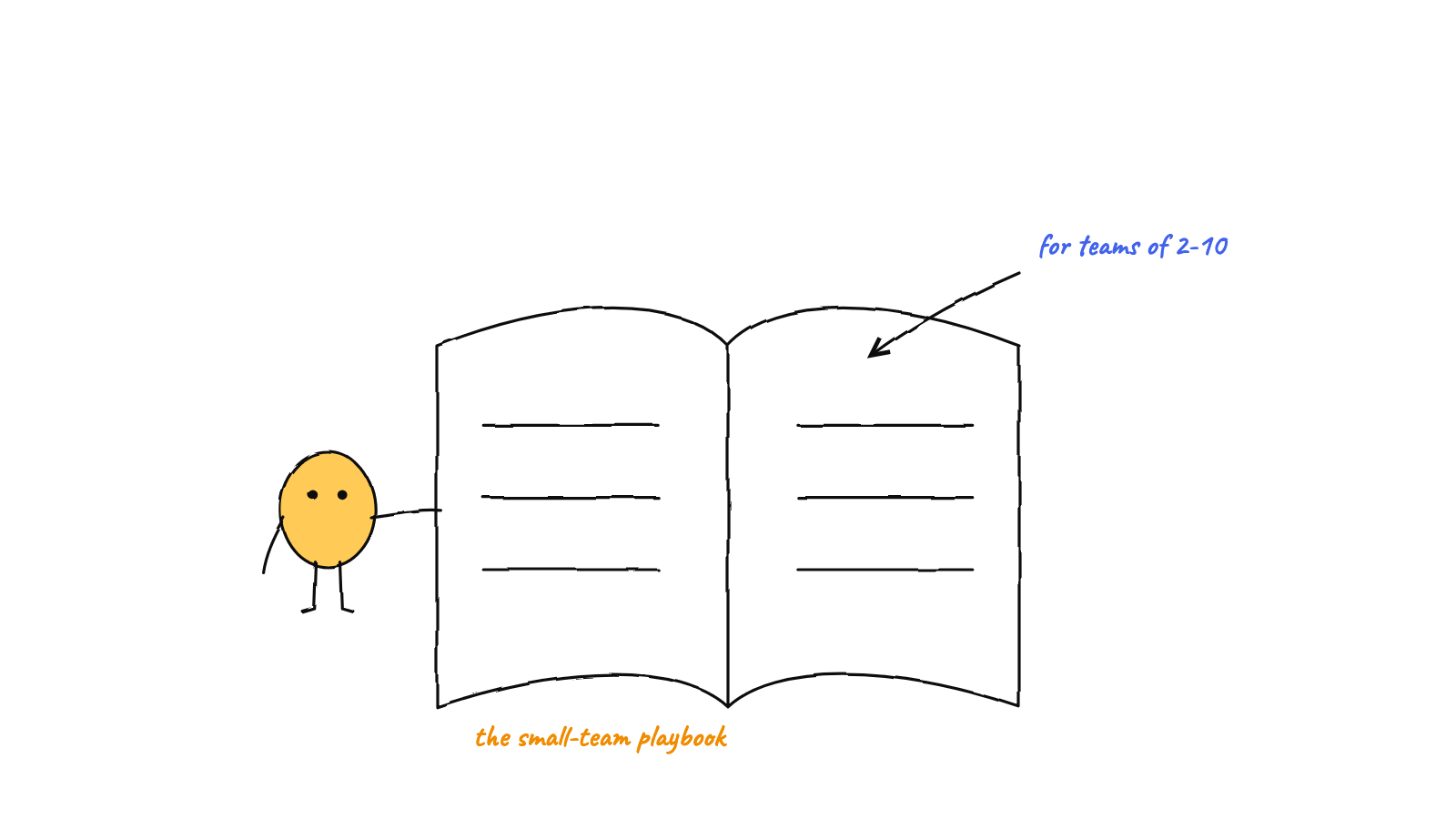
Adopting AI coding agents as a small team isn't about having more agents — it's about roles, cadence, and guardrails. Start with one orchestrator plus a few specialists. Run a predictable cadence with file-based handoffs and a shared board. Make the safe path the default: branch-only work, a single committer, human gates on anything hard to reverse, and isolated worktrees. Get those three things right and a handful of agents behaves like a small, reliable team instead of a swarm you're constantly chasing.
The instinct when you first run multiple coding agents is to launch a dozen and watch them go. It feels productive for about an hour, until two of them edit the same file, a third pushes a half-finished branch, and you’re refereeing instead of building. The teams that succeed with agents don’t have more agents — they have structure. This is a practical playbook for that structure: who does what, how the work flows, and which rails keep it from going off the road.
Roles: one orchestrator, a few specialists
Treat your agents like a small team with a lead, not a pile of interchangeable workers.
Start with one orchestrator — the agent that holds the plan, breaks work into tasks, assigns them, and decides what’s ready to integrate. Everything routes through it, so there’s a single place that knows the state of the world. (This is the role the GOD orchestrator plays in a hive — the human’s proxy on the floor.)
Around it, run two or three specialists: maybe one for a feature area, one for review and verification, one for docs or research. The point isn’t rigid job titles — it’s that each agent has a lane, so when a task lands you know who it goes to and the agents aren’t all reaching for the same files.
Resist scaling the headcount early. A small set is supervisable; you can read every handoff and catch problems while they’re cheap. Add an agent only when a real bottleneck asks for one, and let the orchestrator coordinate the work rather than having agents free-lance.
Cadence: predictable handoffs beat constant chatter
Agents coordinate best the same way a remote team does — asynchronously, in writing, on a rhythm.
Use file-based handoffs. Instead of agents interrupting each other, have them drop messages into each other’s inbox as plain files, picked up on the next cycle. Atomic file mailboxes make this dead simple and debuggable: every request and reply is a file you can read, replay, or audit. There’s no shared mutable channel to corrupt.
Keep a shared board. One markdown file the orchestrator owns, holding the current plan and decisions, gives every agent the same picture without a meeting. It’s the team’s working memory between cycles.
Run a standup on an interval. A periodic check-in — every hour, every morning, whatever fits — where agents report what they did, what’s next, and whether they’re still on track, keeps drift from compounding silently. It’s also where you catch two agents about to collide and re-route before they do.
Pair this with durable markdown memory so the team stops re-learning the same facts every session. The cadence is what turns a set of independent agents into something that accumulates progress instead of restarting cold.
Guardrails: make the safe path the default
This is where most agent adoptions live or die. Capable agents with no rails will eventually do something expensive. The trick is to make the safe action the path of least resistance.
- Branch-only by default. Agents work on their own branches and never push or merge on their own. The orchestrator (and a human) decide what lands. A bad change stays contained on a branch instead of in main.
- One committer. Let exactly one process own commits to the shared repo so concurrent agents never corrupt each other’s history. The single-committer pattern removes a whole class of race conditions.
- Isolated worktrees. Give each agent its own git worktree so parallel work physically can’t touch the same files. Collisions become impossible instead of merely unlikely.
- Human gates on the hard-to-reverse. Deploys, merges to main, deleting data, anything outward-facing — route those to a human approval step. Agents propose; a person disposes on the decisions that actually carry risk.
- Scope the task. Tell an agent exactly which files or directories a task may touch, and have it report the diff. A tight scope makes a wandering agent obvious immediately.
- Verify, don’t trust. Require every “done” to come with evidence — the command that was run and its output — and have a second agent re-run the checks before integration. Plausible isn’t the same as checked.
None of these slow a good agent down. They just make the failure modes shallow and recoverable, which is the whole game when you’re not watching every keystroke.
A realistic first week
You don’t need all of this on day one. A sane rollout:
- Day 1–2: Run one orchestrator and one specialist on a low-stakes task. Turn on branch-only and a single committer first — those two rails alone prevent most early messes.
- Day 3–4: Add a shared board and file-based handoffs. Introduce a standup so you get a written pulse of what the agents are doing.
- Day 5+: Add a second specialist and isolated worktrees so they run in parallel. Add the human gate on merges and deploys. Now you have a small team you can leave running and trust to stop at the lines that matter.
Grow from there only when a bottleneck demands it. The structure scales; the chaos of “just add agents” does not.
FAQ
Can a small team really benefit, or is this just for big orgs? Small teams benefit most — you’re the ones short on hands. A handful of well-coordinated agents covers the tedious breadth (tests, docs, research, cleanup) so the humans spend time on the decisions only they can make.
What if an agent does something wrong? With branch-only work and a single committer, “wrong” lives on a branch you can throw away. That’s the point of the guardrails: make mistakes cheap and reversible so you can let agents work without hovering.
How is this different from just running several chat sessions? Sessions don’t share memory, a board, or a committer, so they duplicate work and collide. A coordinated hive gives them a shared picture and rails — that’s the difference between several tools and one team.
Munder Difflin gives a small team exactly this playbook out of the box — an orchestrator, file-based handoffs, shared memory, and the guardrails that keep a hive safe, all running locally on your machine. Download Munder Difflin to put a small team of agents to work today; it’s free and open source.
FAQ
How many AI agents should a small team start with?
Start with one orchestrator and two or three specialists, not ten. A small set is easy to supervise, and you learn the coordination patterns — handoffs, reviews, guardrails — at a scale where mistakes are cheap. Add agents only when a specific bottleneck is begging for one, and let the orchestrator route work to them.
What's the biggest mistake teams make adopting agents?
Skipping guardrails. Teams wire up agents that can commit, push, and merge freely, then spend their time cleaning up. The fix is to make the safe path the default: branch-only work, a single committer, human approval on anything hard to reverse, and isolated worktrees so agents can't step on each other.
Do agents replace code review?
No — they add a layer before it. Agents verify their own work and re-verify each other's, which catches the obvious failures early, but a human still approves anything that ships. Think of it as a funnel: cheap automated checks first, scarce human attention last, on the decisions that matter.